
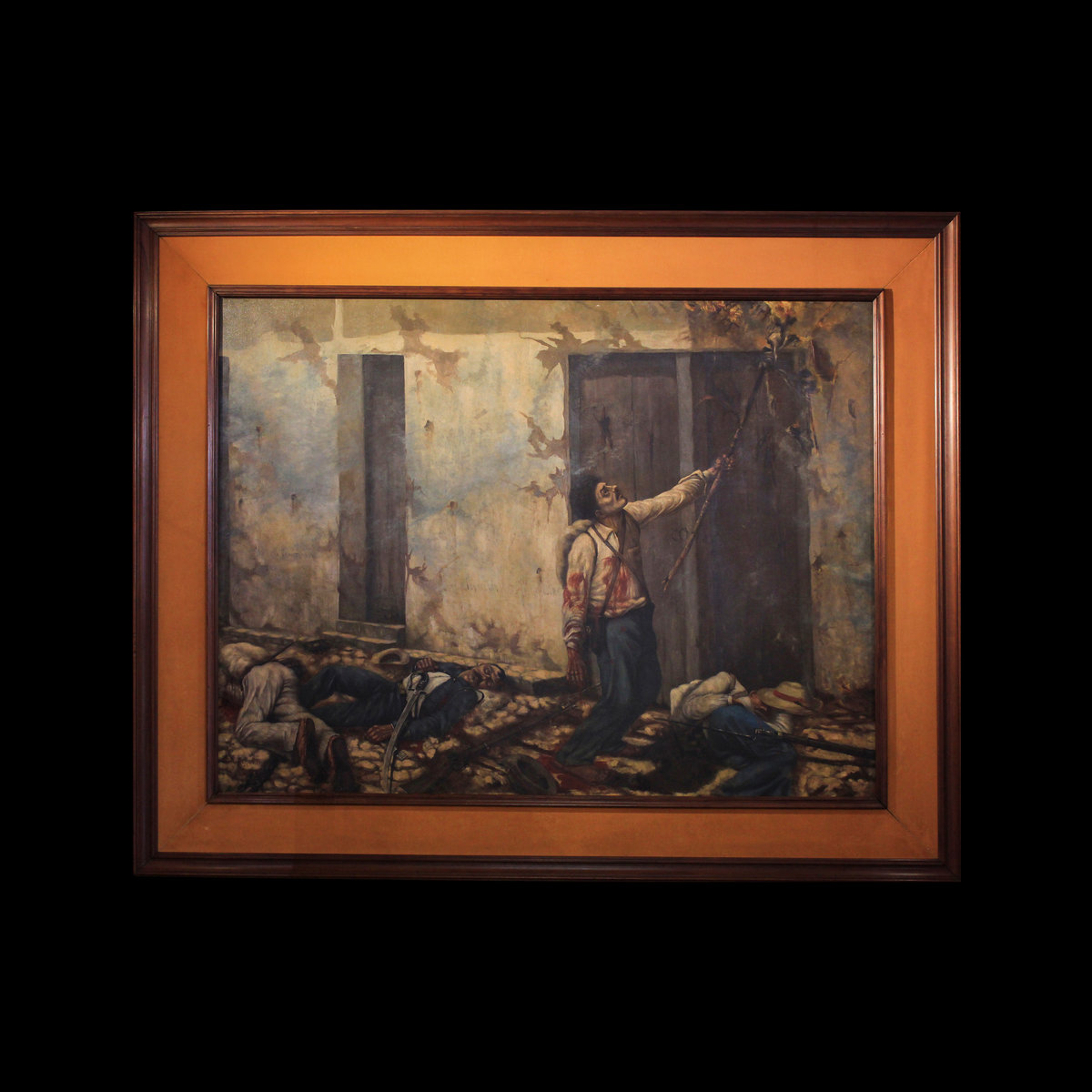
Band: Cime | Album: The Cime Interdisciplinary Music Ensemble | Genre: Avant-prog, Art-punk | Year: 2024
From: Aliso Viejo, USA | Label: Independent
For fans of: black midi, At the Drive-In, Frank Zappa
Monty Cime is the eponymous leader of this album’s titular ensemble. She covers vocals and bass, but beyond her, a huge cast of other musicians pitch in to flesh things out. On the Bandcamp page for this record, a friend of Monty’s describes how she recorded all the demos on a guitar and a cheap keyboard in their closet over the span of several days. It really is impressive knowing that these huge, sprawling, and lush tracks had such humble origins.
The Cime Interdisciplinary Music Ensemble (handily abbreviatable to CIME) opens with “A Tranny’s Appeal to Heaven”. This massive, diverse, and ambitious nine-minute cut features some impressive music, but Monty’s vocals are rough, to put it politely. She sings in an impassioned and angry way, and they help to drive home the songs’ messages. However, her vocal delivery certainly isn’t going to be for everyone. I wouldn’t go so far as to say I like this record in spite of her vocals, but I wouldn’t necessarily count them as a positive.
This first song features a warm jazziness underpinning desperate lyrics. As it progresses, the intensity amps up, and the saxophone player puts on an impressive showing. Cime’s vocals again are rough, but they do manage to work well during the particularly intense middle part of this song. In its final minutes, there are some very interesting instrumental excursions, with glassy organ tones and synthesizers that are somewhere between static and laser guns. This jamming can get a bit drawn-out, but it’s distinctive enough that it’s more fun than it is tedious.
“The Ballad of Tim Ballard” is unsubtly political, and this record’s maximalist raw emotion suits such slap-you-in-the-face obviousness well. There’s a bouncy, country-like vibe in this cut, and that tongue-in-cheek pastiche style suits the subject matter well, though it does grow a little tiresome by the end of the song. Things feel ramshackle in a meticulously-crafted sort of way. The instrumental passages here call to mind some of Zappa’s work on albums like Hot Rats or Uncle Meat, and it’s some of my favorite music on the whole album.
The next song, “DIYUSA” is in Spanish, and my Spanish isn’t great (I can get the gist of signs and ask for directions, but I’m in no position to analyze lyrics). It opens with a weird-but-funky bassline and some wonderfully ominous guitar, sax, and synth atmospherics. The verses feature a tumbling, disorienting rhythm, and the various (non-percussion) instruments bleed together into a pleasantly confusing fog. This song ends on a bit of funky Latin jazz that works as a fitting coda.
“Lempira” starts off with a bit of anxious guitar noodling that is reminiscent of Omar Rodriguez-Lopez. The sense of chaos here is so intense that parts feel jumbled or perhaps a little underbaked, but the overall effect is still felt, especially in its closing sax solo.
Clocking in at over 25 minutes, “The North” is the clear centerpiece of CIME. Flute and piano swirl about in a way evocative of minimalist film scores. After a while, though, it starts to feel a bit aimless. There’s this sense that it’s building toward something, but I do eventually reach the point of thinking, “Get on with it!” This introductory flute-and-piano passage does not need to be this long. Really, it should have been tightened up and presented as its own song. Just psychologically, I view overlong introductions less favorably than overlong standalone songs.
After nine minutes, the focus of the music shifts to a bass clarinet, spoken vocals, and sharp, brittle guitar. The vocals become gradually angrier and more frenzied. The blend of rough, punkish guitar and rich reed instruments is a great contrast, and the galloping rhythm is really captivating.
In slower, shout-spoken sections, Cime’s vocal style can grate on me, and the instrumental backing at times doesn’t do enough to elevate the lyrics. In certain moments, it does, but at other times, passages of this song can border on spoken-word, which isn’t exactly my thing. There are some wonderful moments of avant-prog jazziness, but there is also a lot of bloat in “The North”.
CIME closes on the brief “Goodnight from La Ceiba”, which sounds like a rough recording of a radio.
Cime’s kinda-self-titled album is an ambitious release that provides a lot of solid music. It’s not 100% my thing, mind you. There’s a lot of harsh, noisy punk influence, most songs could be significantly trimmed, and Monty’s vocals aren’t exactly my favorite. Despite all those elements working against this record, I’m still quite impressed by it. She managed to harness her raw, intense emotions and channel it into a lot of inventive and original music. With a little more focus and refining, I think Cime could put out something absolutely fantastic in the near future.
Score: 74/100
 The Elite Extremophile