
Band: Quivira | Album: Quivira | Genre: Progressive rock | Year: 2026
From: Topeka, USA | Label: Melodic Revolution Records
For fans of: Kansas, Marillion
Quivira is a Topeka-based trio, and while this might be their first album, all three members have extensive resumes in progressive rock. The mastermind behind this project is composer and keyboardist Lisa LaRue. She is joined by guitarist John Baker and vocalist Jake Livgren. Livgren is the brother of Kansas guitarist, songwriter, and co-founder Kerry Livgren. Jake Livgren is also a member of Proto-Kaw, an offshoot of Kansas, which actually predates it. (Kansas had a confusing early history, and I’ll dig into more if I ever do a Deep Dive on them.)
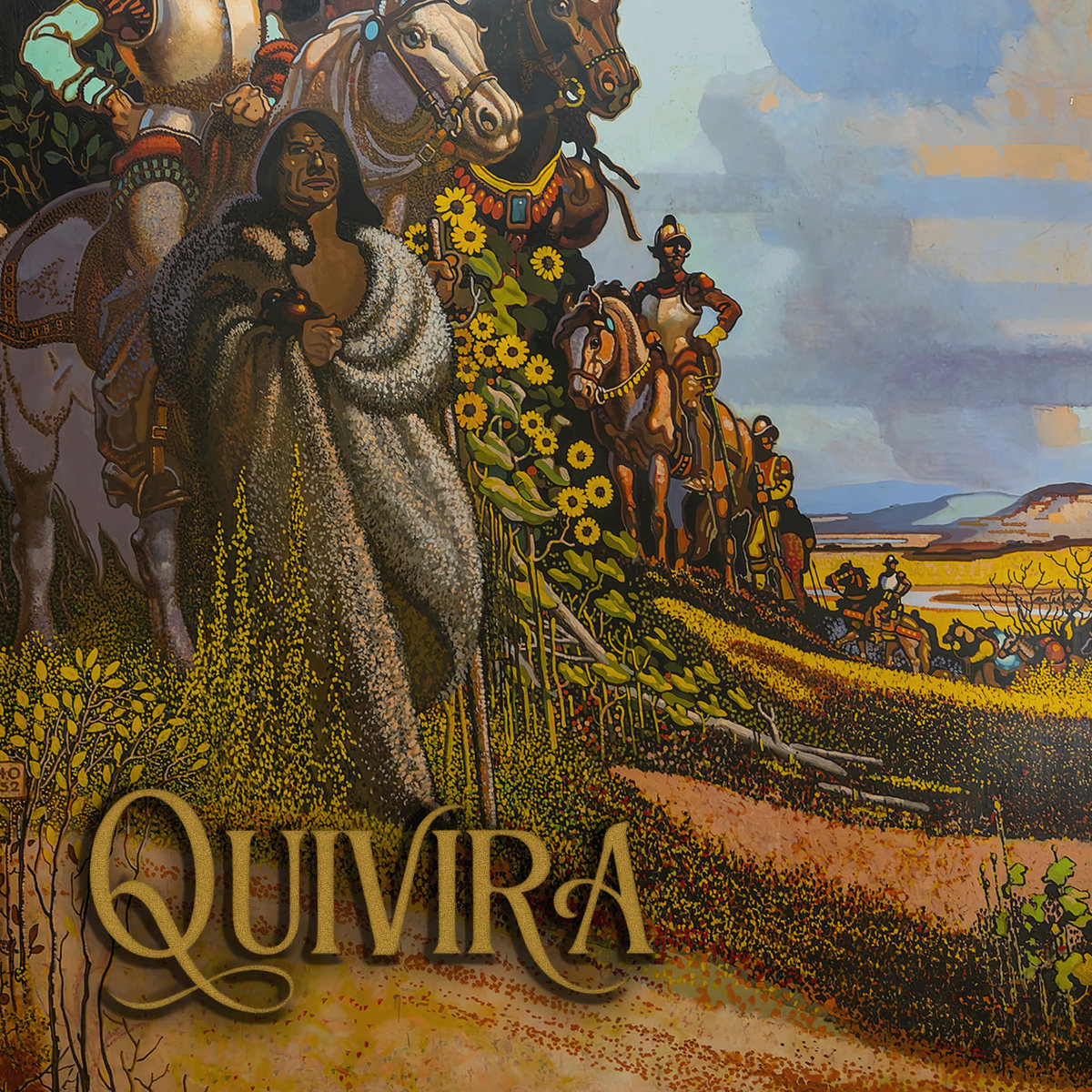
LaRue is a member of the Cherokee Nation, and her heritage is reflected in the story of the album. Though not about the Cherokee, this album tells the story of the encounter of the expedition of the conquistador Vasquez de Coronado with the native people of Quivira, in modern-day central Kansas. Quivira was likely populated by the Wichita people, and Coronado was searching for the mythical Seven Cities of Gold.
The album opens with the instrumental “The Coming of the Spaniards”. Cinematic string tones and wordless vocals paint a dramatic picture. It’s an effective mood-setter, but it doesn’t need to be four minutes long. This leads smoothly into “The Benefits of Breathing Quietly”. The legacy of bands like Kansas, which blended prog and arena rock, is evident immediately, even in the understated, piano-led opening of this cut. Quivira effortlessly blends classical and folk influences into their music, with the lead synth tone evoking violin.
The instrumental “The Plains’ Truth” continues with the rich tones. According to the credits of this album, a violin is only used on track five, so whatever synthesizer or computer program they’re using here to emulate the sound is very impressive. Arpeggios of chiming synths and pianos make for an airy, wide-open feel, effective evoking the Great Plains.
“Quivira Bound” alternates between moments of flashy synth lines and more subdued verses. There’s a sense of solemnity here, matched by the lyrics. “Moving Forward”, in contrast to the preceding cut, is an energetic composition. Synthesizer and violin weave and twist around each other as folky guitar provides a peppy backing. There’s an exciting ebb and flow, but even in quieter moments, there’s some underlying tension that keeps things pushing forward.
“The Turk – Follow the Wind” dials things back. Piano and strings underpin dramatic vocals. Even as percussion enters the picture to add some urgency, guitar remains a minor, supporting element. As things progress, the band again manages to build to a powerful climax.
A trio of instrumentals follows. “Nothing Is Everything” is energetic, with violin (or I suppose a violin emulator) taking the lead. Between that and the prominent role played by piano, classical influence is prominent in this cut. Parts of it remind me of Liquid Tension Experiment, with flashy, jumpy keyboard lines lending subtle jazzy tones.
“Carved from the Sun” leans into some airier tones. Bright and shining synths glimmer over summery guitars. Guitar gets its turn in the spotlight, too, twisting over this song’s luminous backing. Despite being the longest song on the album, it flies by. The structure is varied but highly coherent, and there’s a strong dramatic arc to it. “Kicking Rocks” complements the preceding cut nicely. It feels more grounded but still features plenty of dazzling instrumental displays.
The final song with lyrics is “Prelude to Anywhere – Weekend Conquistadors”. This is probably my least-favorite song on the album, as it leans into some of the schlockier elements of Kansas’s sound. It’s not bad, but it doesn’t do much to stand out. The vocal melody is clunky and unwieldy, and the structuring feels a hair jumbled.
The album ends with “Still Breathing”. It’s a rich and hopeful piece that acts as a nice bow to tie things up.
Quivira’s debut is a solid release. The band does a great job at evoking classic progressive rock sounds without coming off as hacky or unoriginal. The compositions are exceptional, and they do a great job at telling a story with a relatively minimal use of words.
Score: 78/100

