Band: Handwrist | Album: The Golden Swan | Genre: Progressive rock, Zeuhl, Avant-garde rock | Bandcamp
The Golden Swan was originally envisioned by its composer to have a choir sing in Basque and for there to be symphonic orchestration. Due to budgetary and logistical constraints, these ambitions had to be shelved, but the result is a distinct blend of rock, jazz, and classical music, nonetheless. The four movements of this album flow together seamlessly. Elements of the Canterbury sound are evident, and the jazzy atmosphere makes me think this would have been even better had it been recorded as originally intended. Moments on this album do meander, but those shortcomings are well worth it.
Entomology isn’t entirely new ground for progressive rock. The 2015 album Hivemind from the band Plank is about bugs. And while perhaps not the exact same branch of science, the band Slugdge have built their whole career around mollusks, including slugs and snails, which are colloquially grouped together with insects. Opsi, however, focuses on a specific entomologist, which is more distinct.
Based on his great-great-grandfather’s diaries from his time studying butterflies in Siberia, folk musician Jens Carelius pairs his unique style of finger-picking and strumming with rich synthesizers to create evocative soundscapes. Opsi is far more daring in its song structures and textures than Carelius’s previous releases. Elements of his smart folk-pop still manage to shine through, making this album both complex and surprisingly accessible. Continue reading “Album Review: Jens Carelius – Opsi”→
Welcome to entry number two in my Deep Dive series, where I look at the full studio discographies and histories of some of the major names in progressive rock and progressive metal. It’s here that I highlight output beyond an act’s “classic” releases.
For those who don’t feel like reading this massive entry, I’ve included a TL;DR and ranking of albums at the end. I’m opting to explore albums chronologically, as opposed to a ranked-list format. The context in which albums were made is important, and this is an element often missed in a ranked-list.
For this second entry, I’ve opted to cover Jethro Tull. Tull are best known for their pair of early ‘70s masterpieces, Aqualung and Thick as a Brick, as well as winning the inaugural Best Hard Rock/Heavy Metal Grammy over Metallica in 1989. But beyond those few common knowledge highlights, as well as the notable quirk of being the best-known rock act with a flautist, this band’s discography holds an impressive breadth of music, ranging from blues to folk to synthpop to world music.
I really love Jethro Tull. My love of Jethro Tull is so deep, in fact, that the first email address I ever made was a rather blatant reference to said fandom. (And that Yahoo address is still in use 14 years later, as well as a very similarly-named Hotmail account.) In high school, I made it my mission to collect a physical copy of every studio release from Jethro Tull. I still have all those CDs (including both the US and UK versions of Benefit), as well as several vinyl records, which I acquired both from my mom’s old record collection and from my own purchases. I also managed to see Jethro Tull in concert in 2011. Even then, Ian Anderson (plus Martin Barre and the other motley musicians) could still put on a hell of a show.
Despite my deep fondness for this group, I’ll do my best to be as objective as one can be when reviewing music. They did put out some crap albums, and I’ll be honest about other albums’ shortcomings.
Odds & Ends is a recurring column where I cover short releases and albums I wasn’t able to commit enough time to for a full-length review.
Band: Custard Flux | Album:Echo | Genre: Psychedelic rock, folk rock | Bandcamp
Custard Flux has a neat little gimmick. With the exception of one electric guitar solo, all instrumentation is acoustic. This band’s particular blend of psychedelic pop and folk rock with progressive leanings results in something unique. Despite being almost all acoustic, the music is bombastic and impactful, and there’s a nice mix of the straightforward and the weird.
Band: Zerfas | Album:Zerfas | Genre: Psychedelic rock, Progressive rock, Folk rock | Year: 1973
From: Indianapolis, USA | Label: 700 West
For fans of: The Beatles post-1967, Yes, Yezda Urfa, The Grateful Dead
Zerfas are one of those bands that there isn’t much information about beyond their music. I’ve ascertained they were formed in Indianapolis in the late 1960s by brothers Dave (drums, vocals) and Herman Zerfas (keys, vocals), and they persisted under a series of names until the early 1980s. They released one album, Zerfas, in 1973.
Zerfas, however brief their career, showed a lot of potential to fill several niches in the realm of progressive rock. Prog is a genre notorious for taking itself too seriously, with the music being played with near-surgical precision. A lot of the music on Zerfas, while structured and arranged in uncommon ways, has a loose, fun atmosphere to it. The timbre is frequently warm and sunny, thanks in large part to the vocals. Imagine if The Beatles (c. 1968) had tried to record a progressive rock album, and you’ll get a decent idea of what’s here. Continue reading “Lesser-Known Gem: Zerfas – Zerfas”→


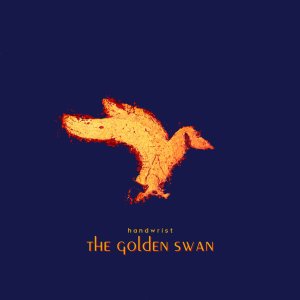 Band: Handwrist | Album: The Golden Swan | Genre: Progressive rock, Zeuhl, Avant-garde rock | Bandcamp

 Band: Custard Flux | Album: Echo | Genre: Psychedelic rock, folk rock |
 The Elite Extremophile