I’m pretty sure this is the first record I’ve reviewed with a completely unpronounceable title. Thankfully, this is a text-based site, so I don’t need to say “greater-than sign, greater-than sign, greater-than sign, greater-than sign.” Such odd, ASCII-inspired titles are not entirely uncommon in certain styles of music. Math rock and many types of electronica dabble in it, and Beak> are math-rock adjacent. Most of this record is more in the vein of hazy, psychedelic, kraut-y post-rock, but post-rock and math rock do share quite a bit of DNA.
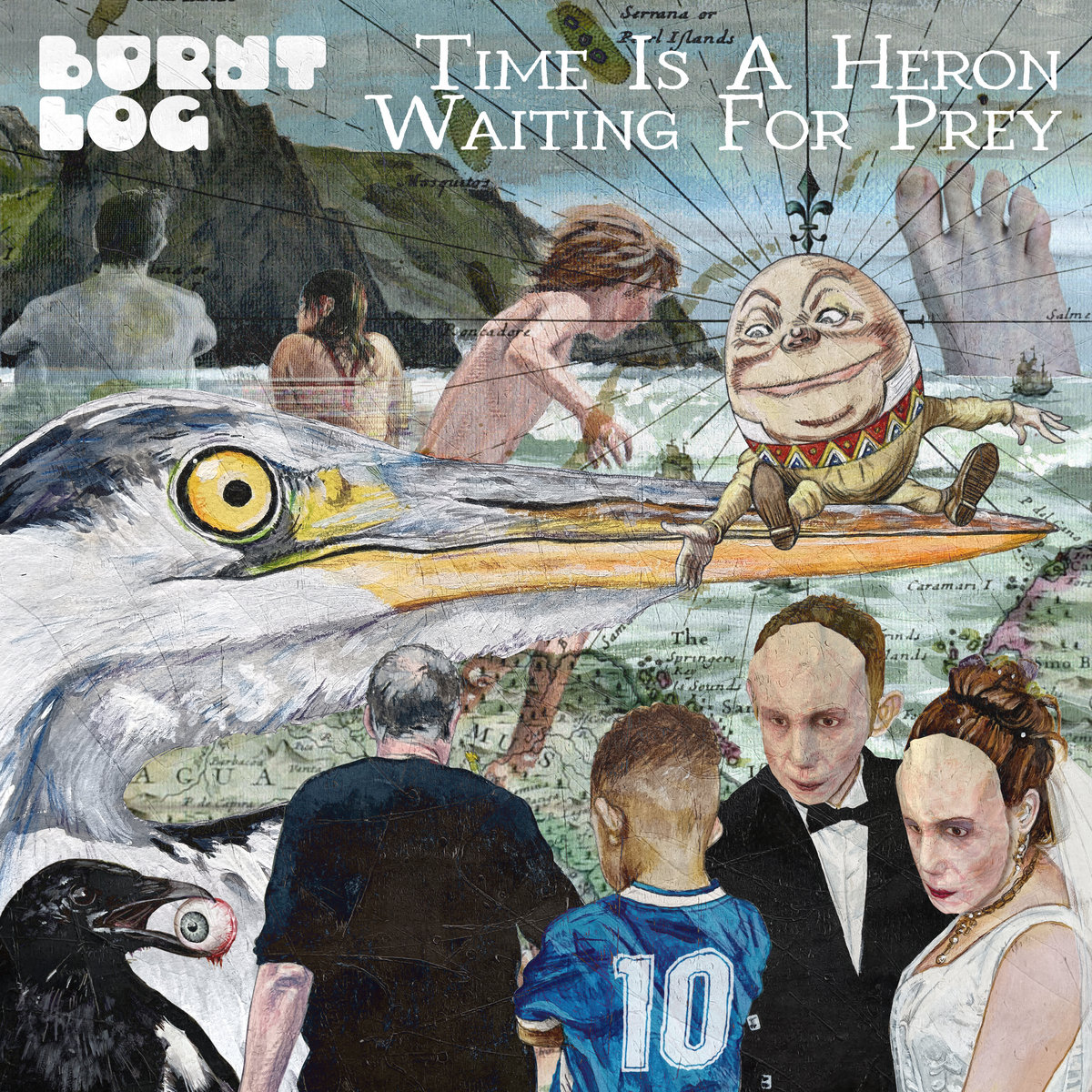
Band: Burnt Log | Album:Time Is a Heron Waiting for Prey | Genre: Progressive rock, Dream pop | Bandcamp
Burnt Log is a one-man project based out of Scotland. The songs skillfully combine intelligent, progressive song structures with floating, dreamy atmospheres. Melodies are smart but accessible, and there’s a vague sense of nostalgia to much of the music here. Touches of post-punk, new wave, and even post-rock crop up here and there. Some passages are perhaps a bit too dream-poppy for my taste, but this is still an overall solid and interesting release.
Score: 72/100
Band: FILESHAREMAIDEN | Album:Veuve | Genre: Progressive metal, Technical death metal | Bandcamp
The first full-length release from Quebecois death metallers File Share Maiden is a swirling, tangled thicket of finger-twisting riffs, guttural vocals, and even moments of surprising lightness. There are many exciting, fun passages that demonstrate both technical skills and songwriting smarts. However, this band also falls victim to the common excesses of other tech-death acts. Many songs are longer than they need to be, and a number of cuts border on purposelessness. That said, there’s still plenty of great material here.
Hailing from Milwaukee, this classical-influenced ensemble plays a spacey, morose variety of post-rock. Violin and piano weave evocative textures, and the individual passages range from fluid and mournful to jittery and technical. Guitar is minimized overall on this release, but when it shows up, either as a lead instrument or as support, the tones utilized are always a perfect complement to the atmosphere. I often find post-rock to be aimless, but this album does a great job at maintaining focus. The rich orchestration does an amazing job of adding emotional weight to everything as well. The closing drone track isn’t even that bad, though it definitely didn’t need to be 8 minutes long.
Gender Studies is a Ukrainian band that plays a garage-y, jazz-inflected variety of progressive rock. The six songs on this LP demonstrate intelligent and creative writing, catchy melodies, and diverse influences. Slavic folk crops up here and there amid Return to Forever-style jazz-rock and harder-rocking passages.
Hail Spirit Noir is a Greek experimental metal act hailing from the Macedonian city of Thessaloniki. I have briefly touched on Greece’s relative influence within the metal scene before, and I have covered Hail Spirit Noir once before, as well. HSN is one of my favorite contemporary metal bands, and they are responsible for two of my favorite albums of the 2010s: their 2012 debut, Pneuma, and their 2016 third album, Mayhem in Blue. 2020’s Eden in Reverse was a solid release, too, though their last album–2021’s Mannequins–was a weird, one-off synthwave project. And I’m really not a fan of synthwave.
Fossil Gardens, the band’s sixth full-length release, sees HSN get back to their core sound. I once saw someone describe their music as “blackened psychedelic folk,” and while I don’t necessarily agree with that description, they were admittedly onto something. This band’s sound is undoubtedly and undeniably metallic, but influences from psychedelic rock pervade their music more than any metal band this side of Sigh.
This Russian quartet plays a smart, artsy variety of folk rock. They blend their own Slavic roots with jazz, modern classical, indie rock, and other bits and pieces from around the globe. The instrumentation is often intricate and full of unexpected twists. They build lush and varied textures, and they’re able to blend strong pop sensibilities with a spirit of adventurousness and experimentation.
Score: 81/100
Band: Agusa | Album:Noir | Genre: Progressive rock, Space rock | Bandcamp
I liked this release a lot more than I expected to. Agusa is a band I like–each of their last two albums have made my year-end Top 50 lists, after all–but one of my gripes is that they can be a bit noodly and long-winded. This album is a soundtrack for a film, so I was particularly cautious. Would the scattershot nature of soundtracks hamstring this work? Instead, this is a delightfully varied yet purposeful and coherent release. Folk, jazz, and space rock elements are incorporated naturally, alongside Agusa’s usual prog stylings. This album is also more consistently lighthearted than much of their other work, which is a nice change of pace. The shorter runtimes for these tracks also behoove the band, as they’re able to put forward fun ideas and meditate on them for a bit without needing to build some huge suite. Things do sag and slow down a bit near the album’s end, but it’s far from a fatal flaw in this case.
One of my primary motivations for starting this site was highlighting small-time bands that are easy to overlook. One such act is Ulls. Ulls (Catalan for “eyes”) is a one-man project based out of Barcelona that plays a somewhat heavy, eerie, organ-fueled variety of prog. The music often leans heavily on atmosphere, evoking certain acts who have scored films, like Goblin or early Pink Floyd.
Their 2019 LP, Anoia s’apodera (“Boredom sets in”) was one of my favorites of that year. However, it was released in December 2019, and I didn’t discover it until a few months into 2020. Thus, all it got on this site was a brief Odds & Ends entry. That is a big reason why my year-end best-of lists now cover December-to-November. When I got the alert from the Bandcamp app that Ulls was releasing a new record, titled Cripta nau (“Ship crypt”), I was quick to pre-order it.
Band: April 1830 | Album:The Adventures of Space Pig | Genre: Progressive rock | Bandcamp
This Philadelphian band claims to write songs about “pig failure,” and that alone grabbed my attention enough to give this record a spin. (For what it’s worth, the vocals are relatively low in the mix and somewhat willowy, so actual themes of pig failure can be hard to discern.) The music is energetic, often drawing from pop and punk. Certain passages remind me of Cardiacs, if Cardiacs were a very synth-forward, female-fronted band. It’s fun and inventive, and I had a good time listening to this.
Custard Flux’s fifth full length album is their first fully-electric endeavor. They’ve ditched their (mostly) acoustic schtick, and it has resulted in a pretty good release. The band tightened up their songwriting after 2022’s bloated-as-hell Phosphorus, and that renewed focus is appreciated. The music here is catchy and punchy, and the swirling, psychedelic textures are enjoyable. Hints of alternative rock crop up on occasion, too.
As I mentioned in a recent review, I’ve been on something of an avant-prog kick, almost by accident. In the last month or so, the most exceptionally and intentionally weird things have leapt out the most to me. In turn, this oversaturation of weirdness is starting to cause a bit of avant-burnout on my end. I feel like I need a palate cleanser. So, instead of scouring through Bandcamp in the hopes of finding something new and wonderful to cover, I’ve dipped back into my (very) occasional series, Lesser-Known Gems. As far as potential candidates for this series go, T2’s debut album, It’ll All Work Out in Boomland, is probably the best-known that I’ll cover. I recently compiled a list of around forty potential LKG subjects, and this album has, by far, the most reviews and ratings on Rate Your Music of anything on that list.
It’ll All Work Out in Boomland may be the framing device I’ll use for this column, but you can almost think of this as a mini-Deep Dive (Shallow Dive?). Boomland will be the primary focus, but I’ll also write to some extent about the archival release, T.2., and their three albums they put out in the 1990s.
T2 was founded in 1970 and led by drummer-vocalist Pete Dunton. Dunton had been a member of a few psychedelic bands prior to this, including Please, Neon Pearl, and Gun (another future LKG candidate). Joining Dunton in T2 were Neon Pearl bassist Bernie Jinks and guitarist-keyboardist Keith Cross (who was only 17 at the time), whom Jinks knew from another band he was in, Bulldog Breed.
This trio captured lightning in a bottle on what was for many years their only release. They took the hard-charging, blues-influenced hard rock of acts like Cream and The Jimi Hendrix Experience and blended it with forward-thinking jazz, folk, and experimental flavors. This is one of those pieces of music where human language feels especially inadequate for describing it, but I’ll do my best. Seriously, just go listen to this.
Scottish one-man experimental act Caverns Measureless plays a creepy, unsettling, and adventurous variety of folk-rock on their self-titled sophomore album. Acoustic guitar and mandolin plink alongside violin and flutes, while the occasional brash stab of electric guitar sends the atmosphere careening in another direction. The compositions are wiry and fluid, often changing path suddenly. All the songs here are complex, creative, and moody.
Hizbut Jámm is an interesting quartet. It consists of two Poles on guitar and drums, a Senegalese musician on guitar and vocals, and a Burkinabe musician playing the kora–a type of lute from West Africa. The lyrics are sung in Wolof and French, and West African melodies and scales are woven into the music. But this fusion also draws heavily from the tradition of Euro-American psychedelia. Textures are lush and dreamy, and the overall mood is hypnotic. Hizbut Jámm is an entrancing listen, and it’s a rewarding experience both as passive background music and as the subject of more active listening.
Arriving three years after their last effort, Perilymph’s fourth album, Progressions Imaginaires, is this group’s newest output. I’ve covered this band a couple times in the past, and I’ve always enjoyed their work. They have always done a great job at contrasting spare, acoustic passages with big, warm retro synth tones.
Perilymph’s past work has often straddled the always-fuzzy line between psych and prog. That has a lot to do with the way that they evoke the instrumental tones of the late 1960s, when psych and prog were both in their infancies and it was all a big mushy blob of forward-thinking rock music. This album, though, sees the band pushing in a more clearly progressive direction. The tones and textures are as lush and psychedelic as ever, but the songwriting is more dynamic, mature, and inventive.