I hesitate to use a label more restrictive than “rock” to describe King Gizzard & The Lizard Wizard. These astonishingly prolific Aussies have one of the most diverse back catalogs in modern popular music, ranging from garage rock to prog to thrash metal to synthpop to microtonal music and beyond. Their latest release is a dizzying encapsulation of their always-shifting style. The appropriately-titled Omnium Gatherum (a faux-Latin phrase meaning “a collection of many different things”) is a sprawling, 80-minute record that has a bit of everything.
Regal Worm is a solo project by Jarrod Gosling, one half of the duos I Monster (trip-hop) and Cobalt Chapel (psychedelic rock). Regal Worm blends Gosling’s usual psychedelic leanings with more progressive and ambitious song structures. His last release under this moniker, 2018’s Pig Views, was my favorite album that year, so I naturally had high hopes for this release.
The album cover for The Hideous Goblink lives up to its name. It is an ugly piece of art and not nearly as enchanting as the art on his past releases. However, this is an instance where that old axiom about book covers and judging them holds true. Regal Worm’s fourth full-length release is a fantastic collection of songs which sound like one unified whole. The six compositions here all work in harmony with each other to deliver something fantastic.
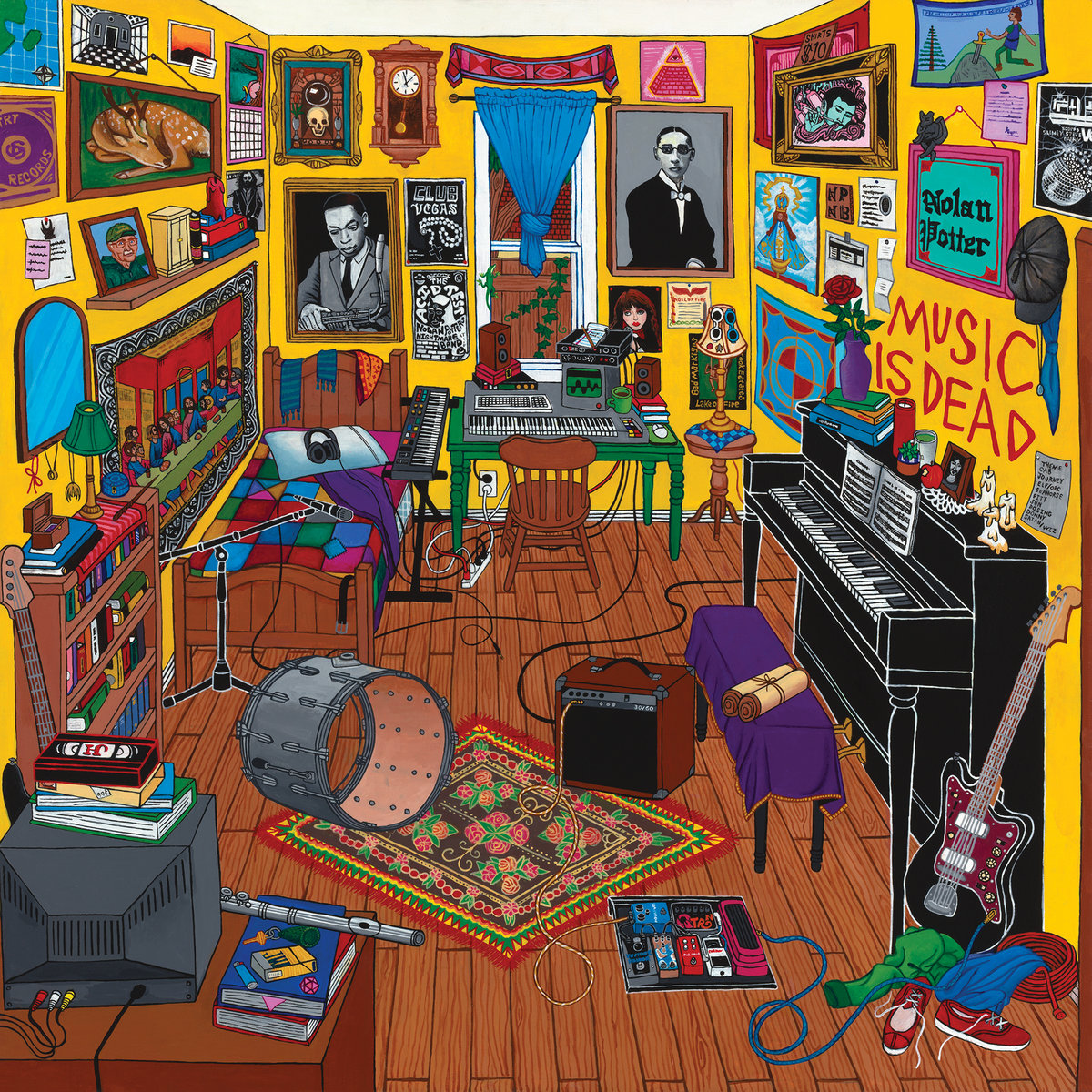
Nolan Potter is a Texas-based multi-instrumentalist, and Music Is Dead is his second full-length release. His 2019 debut was a strong collection of tracks which blended together a healthy melange of influences, like psych, folk, pop, prog, and experimental music. Music Is Dead further improves on that strong debut, and Potter demonstrates some serious instrumental and compositional chops.
While I purposely use pretty broad, amorphous genre definitions on this site, I generally aim to highlight acts who are musically adventurous or inventive. A common way artists spice up their music is through various forms of contrast. This is especially common in metal and various subgenres which start with “post,” where it’s often a harsh-clean contrast. Another dichotomy occasionally used is an electronic-acoustic one.
I’ve previously covered Perilymph, the brainchild of multi-instrumentalist Fabien de Menou. The band’s last album, Deux, was a wonderful blend of synth-led space-kraut balanced smartly against pared-back acoustic passages. Tout en Haut (Eng. On Top) follows in a similar sonic and textural path.
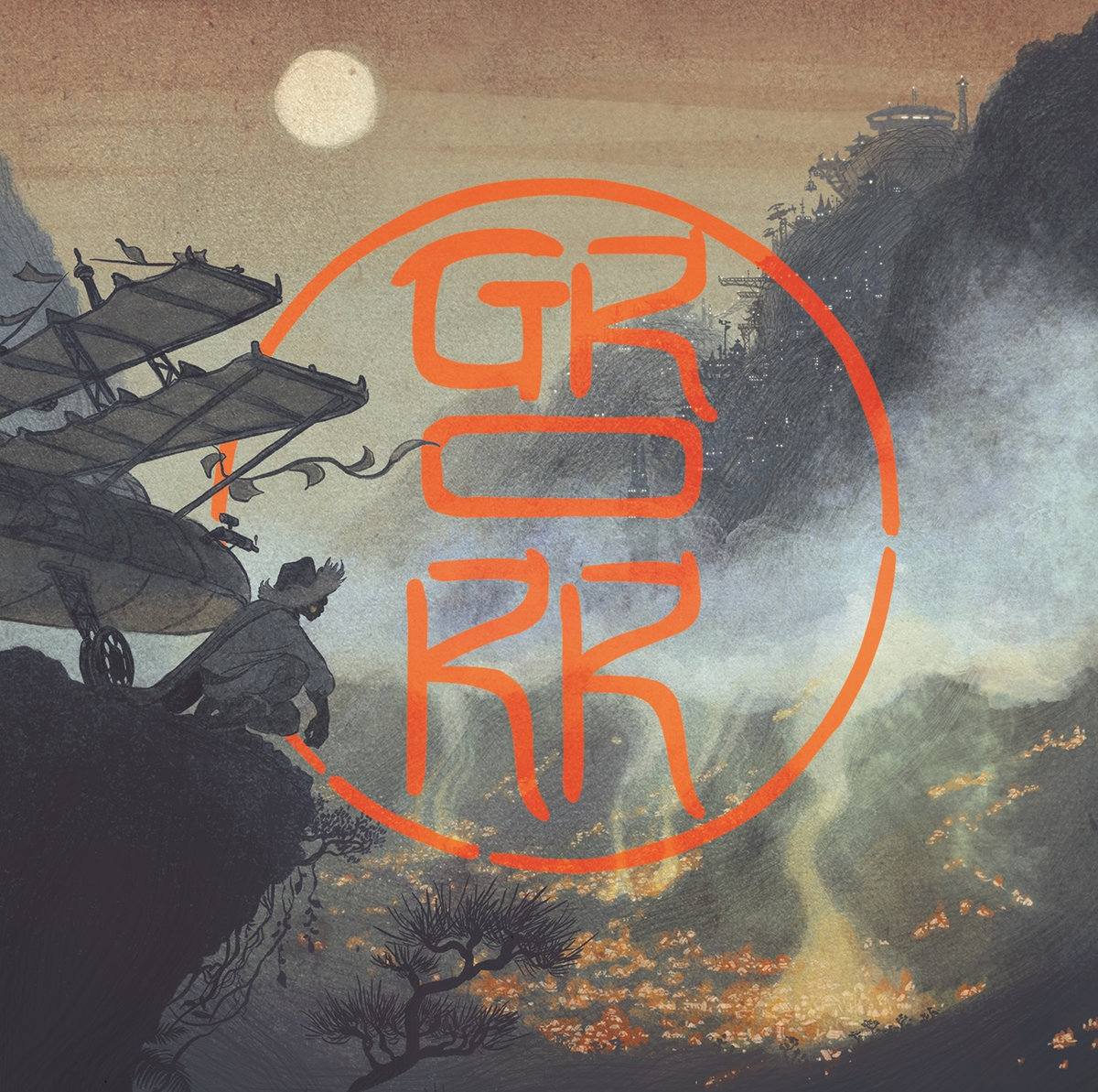
Band: Grorr | Album:Ddulden’s Last Flight | Genre: Progressive rock, Progressive metal | Bandcamp
Grorr are clearly trying to conjure up vaguely “Eastern” aesthetics on this album. The band’s logo evokes Chinese seals, and the album art draws from Chinese and Japanese styles. This continues in the music, though the influences are muddled and slapdash. The opening track is mostly scene-setting, but it give the listener musical whiplash by swirling together the entire continent of Asia. It’s got throat singing (from Mongolia and southern Siberia), sitars and tablas (from the Indian subcontinent), and the melodies are stereotypically “Chinese.” (Instruments which sound like guzhengs and erhus can be heard later on the album.) Moving beyond this mish-mash, Ddulden’s Last Flight is an alright album. The metal is melodic, and there are some inventive riffs. I’m especially impressed with the textures and timbres deployed here. After a while, though, the Oriental instrumentation becomes distracting. I absolutely hated the sitar by album’s end. And that’s unfortunate because Grorr demonstrated that they’ve got a creative vision and that they’re capable of composing some strong cuts. Ultimately, this record’s overbearing and half-baked Asiatic flare is what does it in. I really wish they would have toned it down a bit, or at least shown a bit more geographic restraint.
Score: 58/100
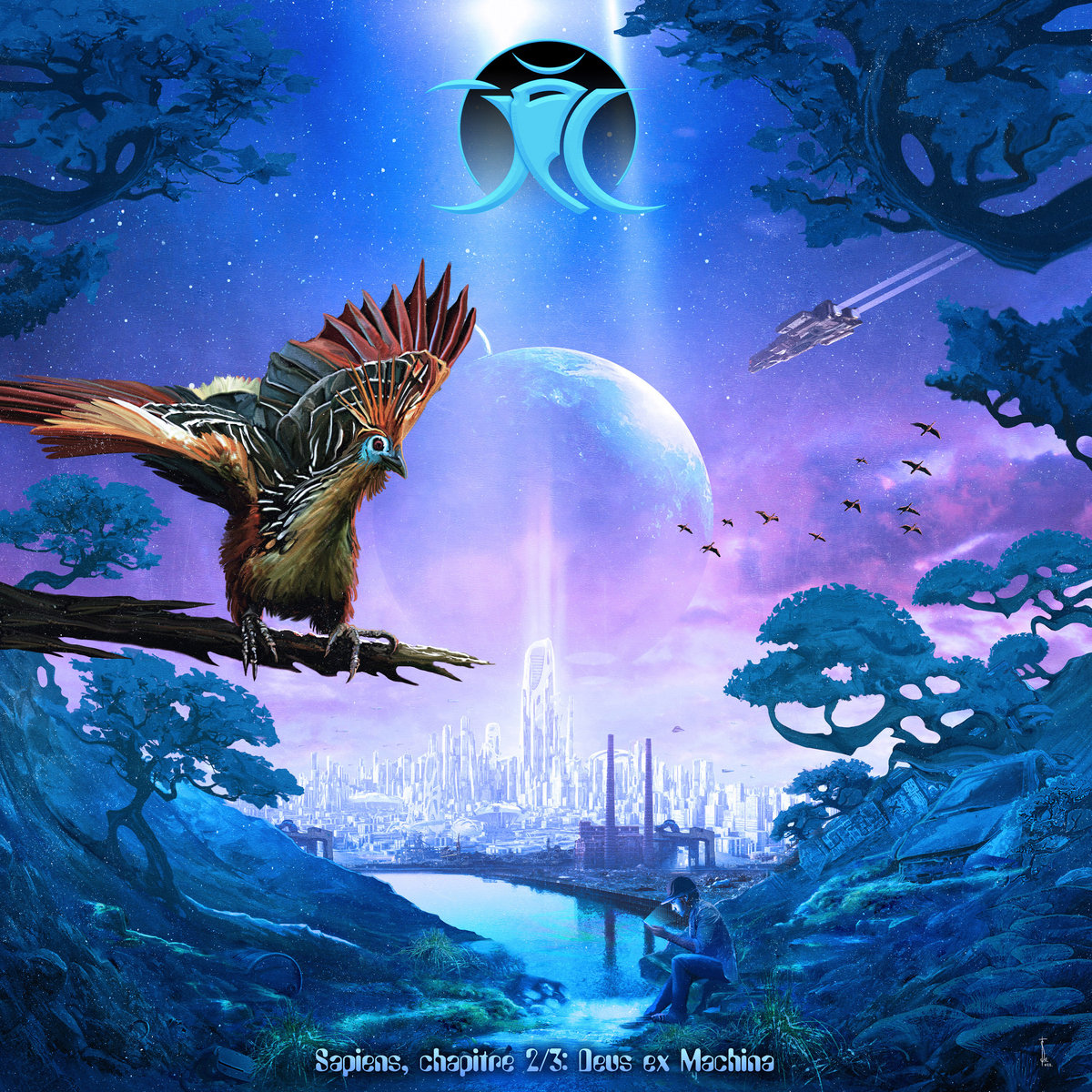
Artist: Jean Pierre Louveton (JPL) | Album:Sapiens – chaptire 2/3: Deus ex Machina | Genre: Progressive rock, Progressive metal, Jazz-fusion | Bandcamp
When I saw JPL is the leader of the band Nemo, I didn’t get my hopes up. Nemo is an alright act, but I classify them in the same group Spock’s Beard and other schlocky, overblown retro-prog acts. Thankfully, this album wound up being a pleasant surprise. Sapiens is a bit more metallic than Nemo’s usual fare, and while there’s plenty of pomp and show-off-y instrumental moments, it mostly avoids needless indulgence. Jazzy touches are present throughout, and the overall bloat is minimal.
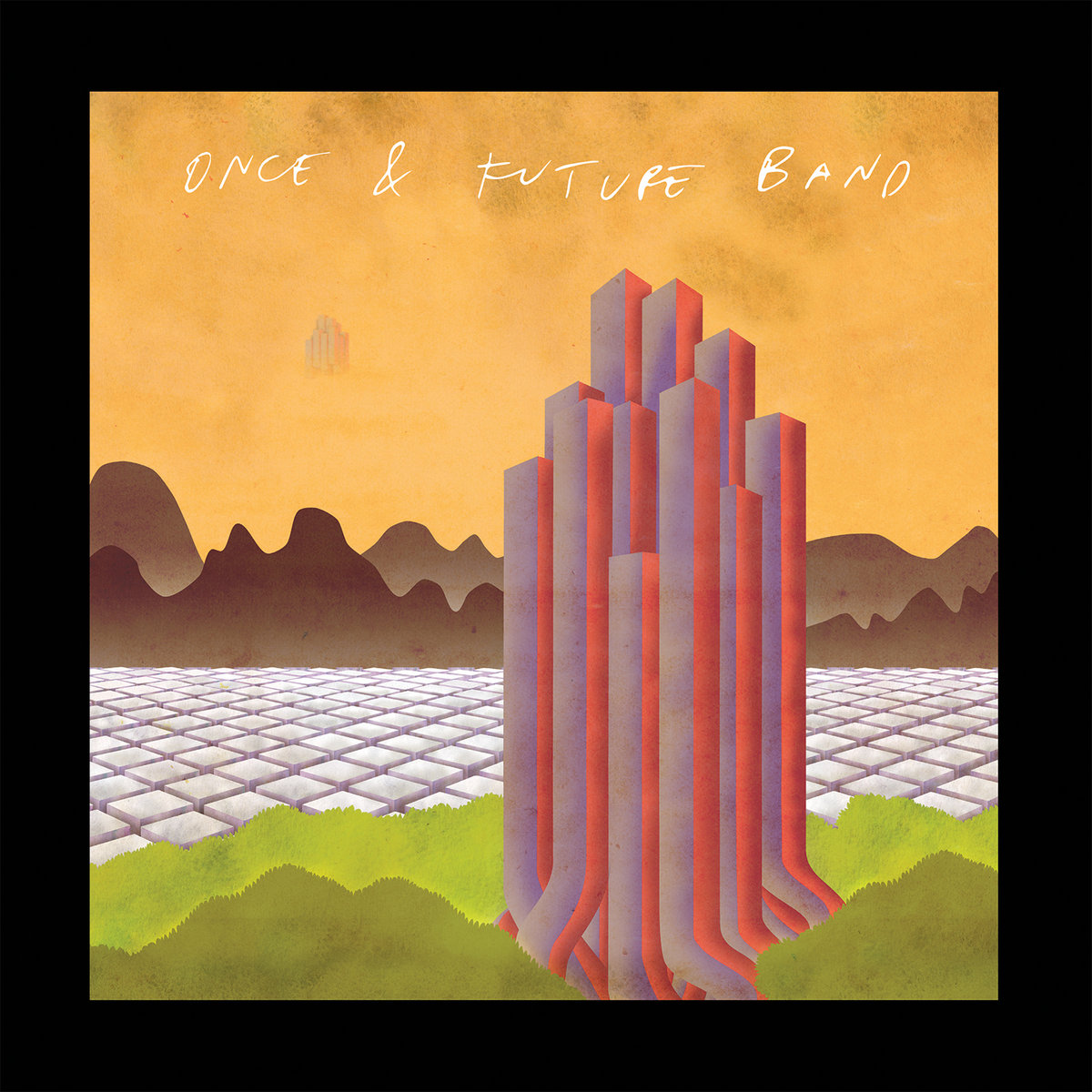
Deleted Scenes is the second album from Oakland prog-pop outfit Once and Future Band (hereafter called OAFB). I was introduced to them via their self-titled 2017 album, which was their first full length release. Their self-titled is a sunny slice of prog-pop with ample jazz and folk touches. However, almost every song on that album felt one to two minutes too long.
The songs on Deleted Scenes are more focused than on OAFB’s self-titled, much to this record’s benefit. Rich electric pianos and synthesizer tones take center stage for most of the album, and vocalist Joel Robinow has just the right tone and timbre to complement it. Continue reading “Album Review: Once and Future Band – Deleted Scenes”→




 The Elite Extremophile