I swear I cover more than just avant-prog. Please ignore the fact that this is the fourth consecutive full-length review I’ve posted of an avant-prog act. 2024 is shaping up to be kind of a slow year in most of the other pico-genres I cover, but the crazy stuff is having a decent one. But you know what I don’t cover that often? New Zealanders!
Half Empty Glasshouse is a New Zealandic avant-prog and experimental metal band that takes the classical influences of bands like Eunuchs and integrates it even more. The Exit Is Over There! is their second full-length release, and it’s a concept album about public backlash to experimental music throughout history. The twisted, disgusted and disgusting faces on the album’s cover are a perfect complement to this theme.
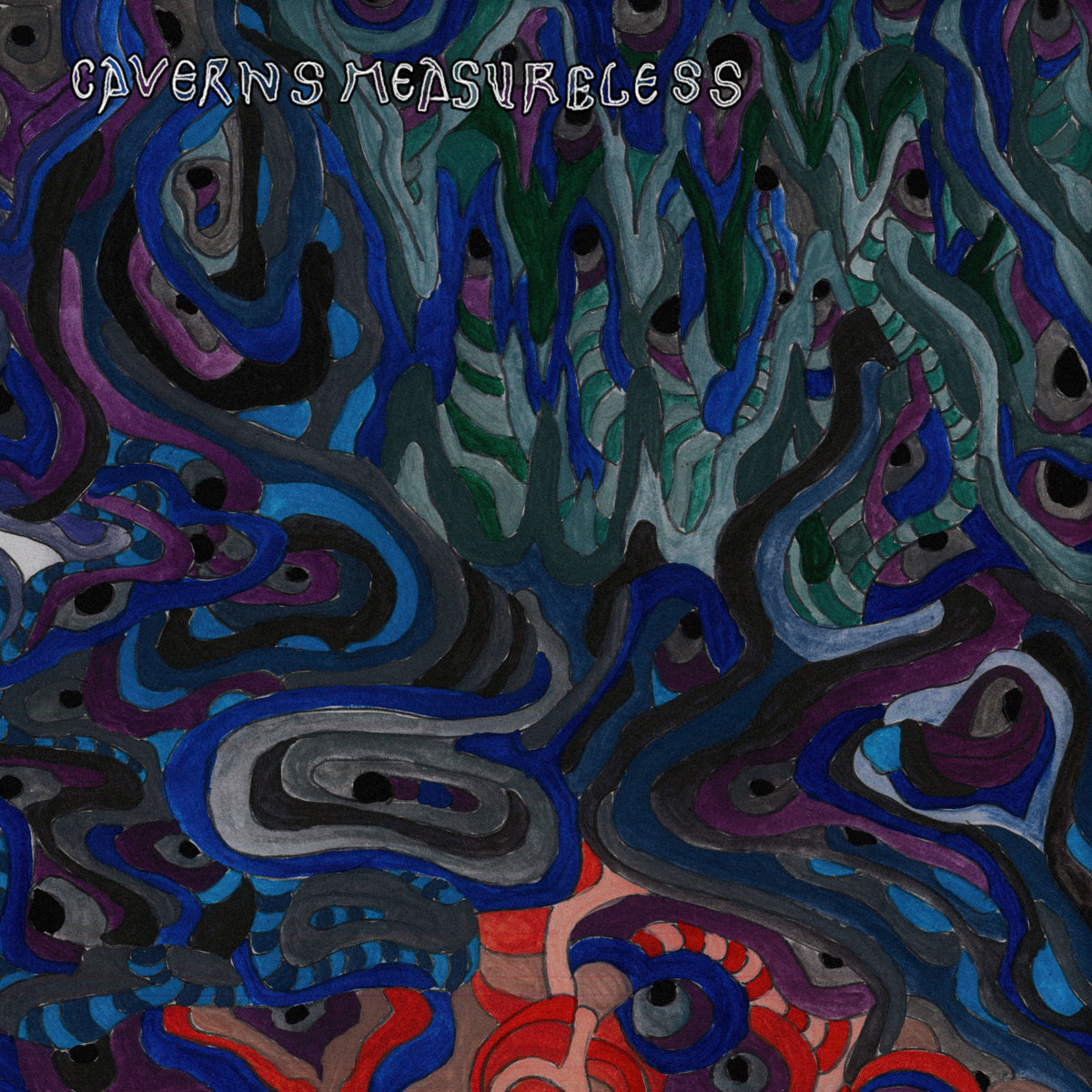
Scottish one-man experimental act Caverns Measureless plays a creepy, unsettling, and adventurous variety of folk-rock on their self-titled sophomore album. Acoustic guitar and mandolin plink alongside violin and flutes, while the occasional brash stab of electric guitar sends the atmosphere careening in another direction. The compositions are wiry and fluid, often changing path suddenly. All the songs here are complex, creative, and moody.
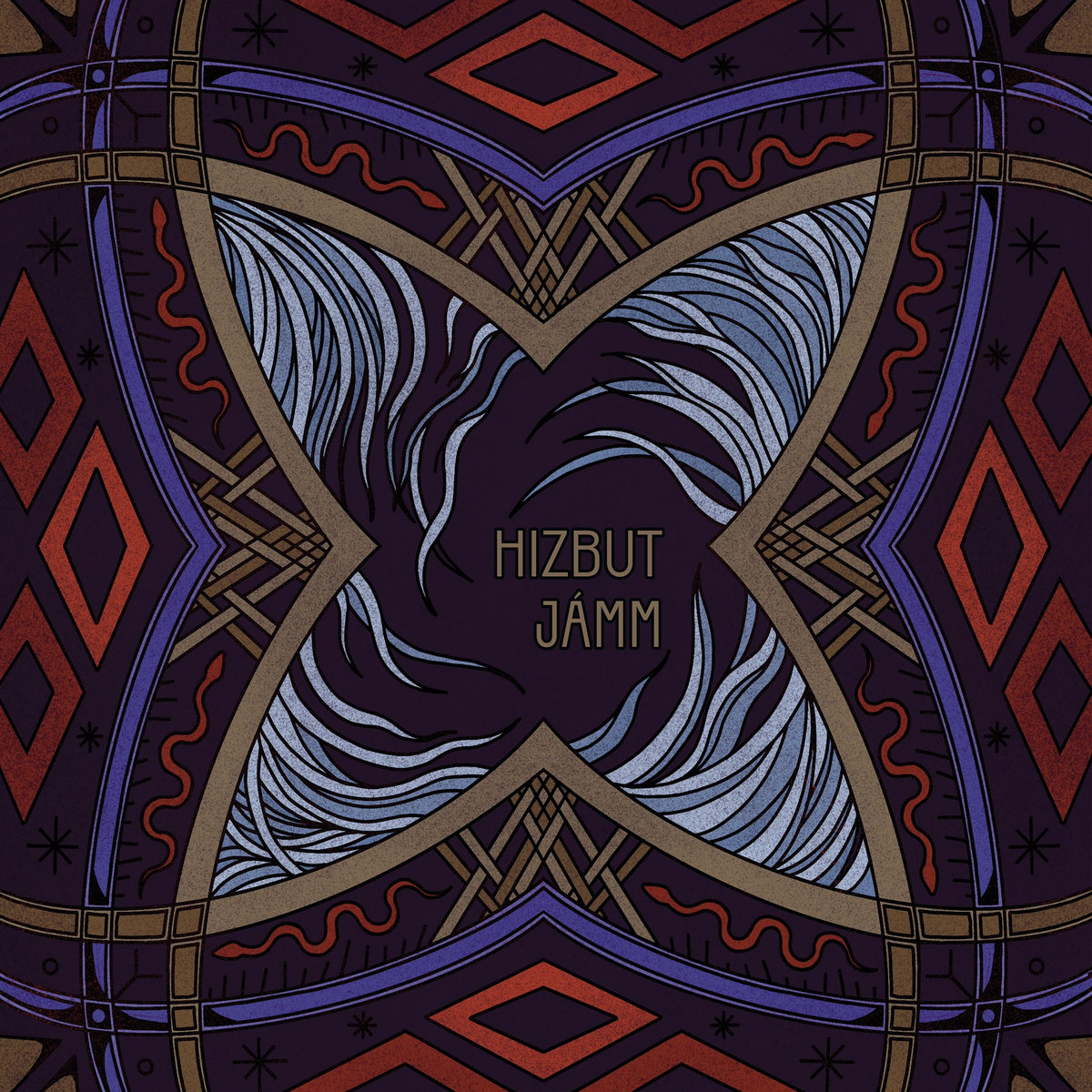
Hizbut Jámm is an interesting quartet. It consists of two Poles on guitar and drums, a Senegalese musician on guitar and vocals, and a Burkinabe musician playing the kora–a type of lute from West Africa. The lyrics are sung in Wolof and French, and West African melodies and scales are woven into the music. But this fusion also draws heavily from the tradition of Euro-American psychedelia. Textures are lush and dreamy, and the overall mood is hypnotic. Hizbut Jámm is an entrancing listen, and it’s a rewarding experience both as passive background music and as the subject of more active listening.
Dvne (presumably pronounced like “dune,” though Google Translate also tells me it’s Bosnian for “days ago”) is a Scottish quintet, and they’re one of the more talked-about bands on the parts of the Internet where I spend my time. Voidkind is their third full-length album, coming three years after their last release. Dvne is a band I’ve listened to and contemplated covering before, but for whatever reason Etemen Ænka, their 2021 album, just didn’t quite catch my fancy. (2021 was also an exceptionally good year for the type of music I like, so they had some stiff competition for my attention. 2024, in contrast, is shaping up to be a slower year for me.)
Disregarding my above disparaging of the current year, Voidkind is a legitimately good album. Dvne’s sludge metal roots have gone in a more atmospheric, post-metal-type direction. Normally, I’d be a bit wary about that–unless it’s preceding the word “punk,” the prefix “post-” is often an indicator there’s a higher risk I’ll be a bit bored–but the songwriting is smart, and the playing is crushing and dynamic.
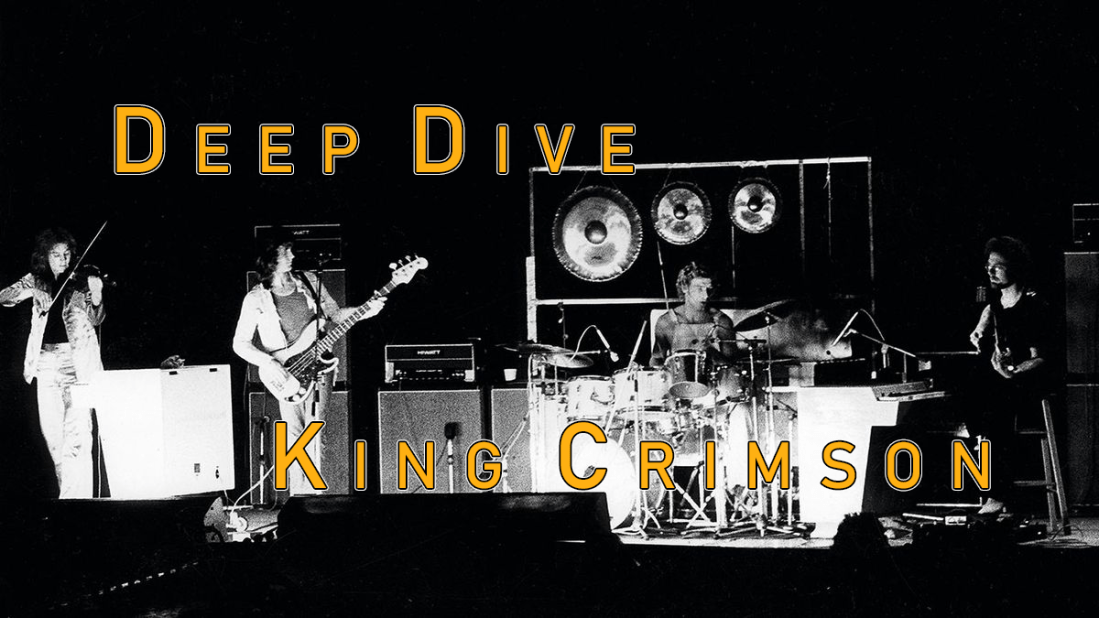
Welcome again to Deep Dive, the roughly-yearly column exploring the extended studio discographies of the giants of progressive rock and metal. It’s here that I delve into releases beyond an act’s best-known albums.
For those who don’t feel like reading this massive entry, I’ve included a TL;DR and ranking of albums at the end. I choose to explore albums chronologically, as opposed to a ranked-list format. The context in which albums were made is important, and this is an element often missed in a ranked-list.
Prior to writing this column, I posted a poll asking for reader input for the act I should cover next. Had the results been more ambiguous, I probably would have covered Emerson, Lake & Palmer; but King Crimson was the runaway winner. They garnered roughly one-third of the vote, with the second-place finishers taking only about ten percent.
King Crimson was one of the earliest progressive rock bands, and no one man has done more to cement the image of progressive rock musicians as joyless and self-serious than guitarist and bandleader Robert Fripp. They’ve got some absolutely stellar albums under their belt, but there’s also plenty to criticize. A lot of my critiques of this band come from the fact that I’m simply not a big fan of improvised music. (That’s not to say improvised music can’t be fun or enjoyable, but it’s usually best enjoyed in a live setting. The magic is largely lost when it’s recorded, at least for me.)
There are also a few side-projects I’ve opted to include in this entry. Much in the way I included Univeria Zekt in the Magma entry and Anderson Bruford Wakeman Howe in the Yes entry, there have been a few releases that are King Crimson albums in all but name. Many of these are the “ProjeKcts” from the 1990s. Though ProjeKcts were primarily live endeavors, three of them did record in the studio, putting them in-scope for this column.
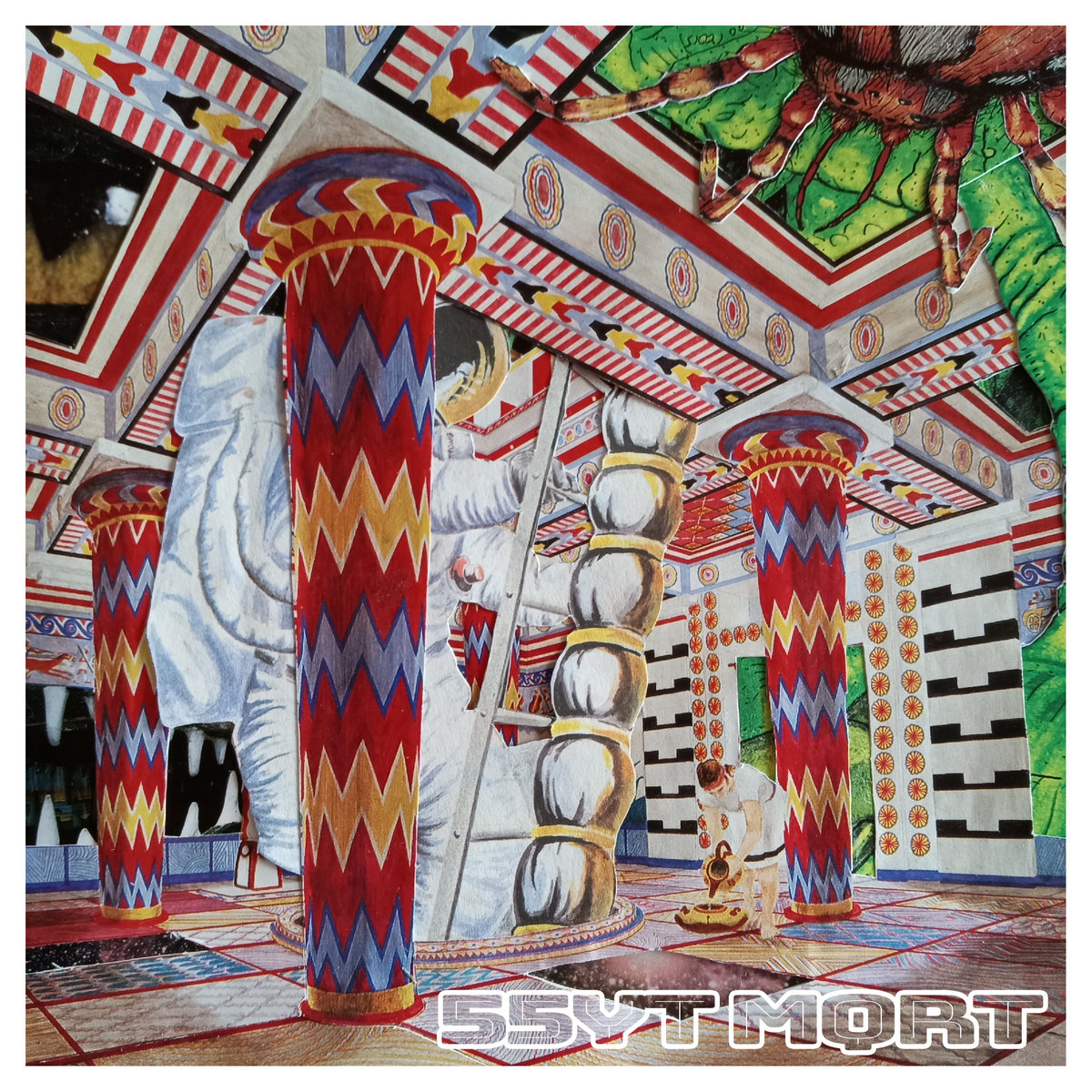
Band: 55YT MQRT | Album:55YT MQRT | Genre: Space rock, Progressive rock | Bandcamp
This band’s name might look like a license plate number, but their sound isn’t nearly that ordinary. They play a vast, cosmic variety of heavy psych and prog, and the album art of an astronaut traveling through an ancient temple is weirdly fitting. The soundscapes are vast and huge, and everything has a massive amount of weight behind it. Even though this album is a bit on the long side, it works. This is the sort of music where stretching out benefits the band.
Score: 80/100
Band: AKU | Album:Solipsism | Genre: Jazz-fusion | Bandcamp
The six songs on Solipsism effortlessly blend jazz and progressive rock into a rich, organic melange. Each of the four members of the band puts on a great showing. Guitar is the lead instrument more often than not, but the keys are smartly deployed and add a great depth. The bass playing is punchy and energetic, and the drumming is skillful and varied.
When Job for a Cowboy first came onto the scene in the late ‘00s, I remember them being derided as just another deathcore band with a stupid name. I listened to some of their early work, and I agreed with that assessment. I don’t like deathcore, and their name is dumb. Seriously, it sounds like a lousy innuendo from a bro-country song. There are some bands I haven taken too long to give a shot because of how much I dislike their name (for example, Between the Buried and Me, And So I Watch You from Afar; pretty much any band whose name is a full clause), but JfaC is a band where my distaste for their name was backed up by a distaste for their music.
In the ensuing decade-and-a-half, though, they’ve taken a considerably more technical and progressive turn. When I saw Moon Healer rather high up on the 2024 chart on Rate Your Music, I was baffled. Aren’t these guys just some shitty deathcore band? I thought. My curiosity was piqued, so I gave Moon Healer a listen. I’m glad I did.
My view of what is actually popular and successful is probably skewed by where I spend my time online. A lot of that time is on Reddit, and a not-insignificant portion of that time in turn is spent perusing r/progmetal. One of the most beloved bands on that subreddit is Caligula’s Horse, and if you’ve paid attention to my comments on other darlings of that subreddit (Nospūn, recent Leprous, and recent Haken) or compared my year-end list to theirs, it should come as little surprise that this is a band that’s never really clicked with me.
Their brand of prog metal is melodic and in the same general vein as Dream Theater. The vocals are clean, and there’s a strong emphasis on majestic climaxes. Everything is well-played, and the songs are smartly-structured, so I’m struggling to articulate why this record isn’t resonating with me. It’s not particularly derivative of any one act, but I suppose there’s not much that really stands out about it either. The production is a bit soupy, as the guitars bleed together into an indistinct distorted mush, and the vocals get swallowed up by the backing. That lack of definition can make it tough for individual elements to stand out.
Ellesmere is an Italian band whose music draws heavily from neo-prog and ‘80s arena rock. It’s big, loud, complex, and showy, and if you like acts like Marillion, IQ, or Asia, you’re probably going to like Ellesmere. The production isn’t great, and the vocals are fairly rough, but nevertheless it’s clear the music has some strong bones. The 12-minute title track is especially good, featuring smart structuring choices and dynamic musicianship.
I pride myself on generally being pretty good at pronouncing non-English words reasonably closely to how they would be by a native speaker. (I make no claims about my ability to string together a coherent sentence, mind you.) However, the spelling systems of Irish and Scottish Gaelic truly baffle me. I’ve been told that they actually make a lot of sense and are fairly consistent, if you sit down and learn the conventions. I haven’t done that, though, so this band’s name, Sgàile, made me raise an eyebrow. It turns out it’s pronounced roughly “sky-lee,” (which is not too far off what I would have guessed), and it means “shade” in Scottish Gaelic.
Sgàile is the brainchild of multi-instrumentalist Tony Dunn, and Traverse the Bealach is their second full-length release. (“Bealach” means something like “way” or “road,” according to Google Translate.) There is an unmistakable Scottishness to this music, and there are some passing similarities to Saor, another notably Caledonian metal act. But where Saor tends to be more atmospheric and impressionistic, Sgàile’s riffs have a bit more punch and definition behind them.
Band: Everything Oscillating | Album:The Taboo Against Knowing Who You Are | Genre: Progressive rock | Bandcamp
Everything Oscillating is an instrumental act that focuses on flashy, technical shredding. Two of the three members are the guitarist and bassist for the Seattle-based band Moon Letters, whom I’ve covered a couple times. EO does a great job threading the needle of balancing flashy instrumental antics and engaging songwriting. The best moments here call to mind classic bombastic ‘90s and early ‘00s prog bands like Liquid Tension Experiment and Transatlantic, with a bit more of a classic heavy metal influence. Jazz and Latin flavors are included naturally, and the (abbreviated) instrumental cover of “Achilles’ Last Stand” is done well, too. (I feel like I could write a short essay on my love for the original version of that song, and EO absolutely does it justice here. It’s right up there with “Carouselambra”, “In the Light”, and “The Rain Song” among my favorite Led Zeppelin cuts. (I know, shocker, my favorite Zeppelin songs are all among the band’s longest.))
Score: 79/100
Artist: Peter Gabriel | Album:i/o | Genre: Art pop | Bandcamp
Peter Gabriel’s first new album in 20 years is enjoyable. It’s decent, fairly arty pop with some good melodies and interesting ideas. His vocal performance is strong, and the production is clean, crisp, and professional. Compositionally, though, it doesn’t stand out. Post-rock flavors weave themselves into Gabriel’s usual somewhat-spacey writing style. It’s competent but not particularly memorable. i/o comes in two different mixes: the so-called “bright-side” and “dark-side” mixes. These two mixes are not meaningfully different. Yes, if you listen to each song’s bright and dark version, you can tell them apart, but the differences between the two are insubstantial, surface-level, and borderline-gimmicky. Publications (especially prog-focused ones) that included this on their best-of 2023 lists make me question if they just reflexively put every release from major ‘70s players on their year-end lists, regardless of quality. (In fact, I know several included Yes’s abysmal The Quest on their 2021 lists, so I suppose they do.) If you want some keyboard-forward art-pop to put on in the background, i/o will work, but this album doesn’t leave a lasting impression.
When I covered Anarchÿ’s debut album a couple years ago, I noted that thrash (and especially prog-thrash) is not the most widespread or vibrant metal subgenre at the moment, but the few bands in the current vanguard are pretty solid. Vektor is not known for a rigorous release schedule, and Droid–a Canadian prog-thrash act I like a lot–put out one album seven years ago, and it’s been radio silence since. With Anarchÿ, it’s nice to have a semi-regular flow of new music.
Or, well, mostly new music. Eyeclöser, the band’s second full-length record is three-quarters new material, but it does feature a handful of rerecorded songs originally from their 2021 EP Breathing Necropolis. As a proportion of this album’s total runtime, rerecordings have a combined length less than this album’s centerpiece suite. This is a long record, so get comfortable before settling in for it.