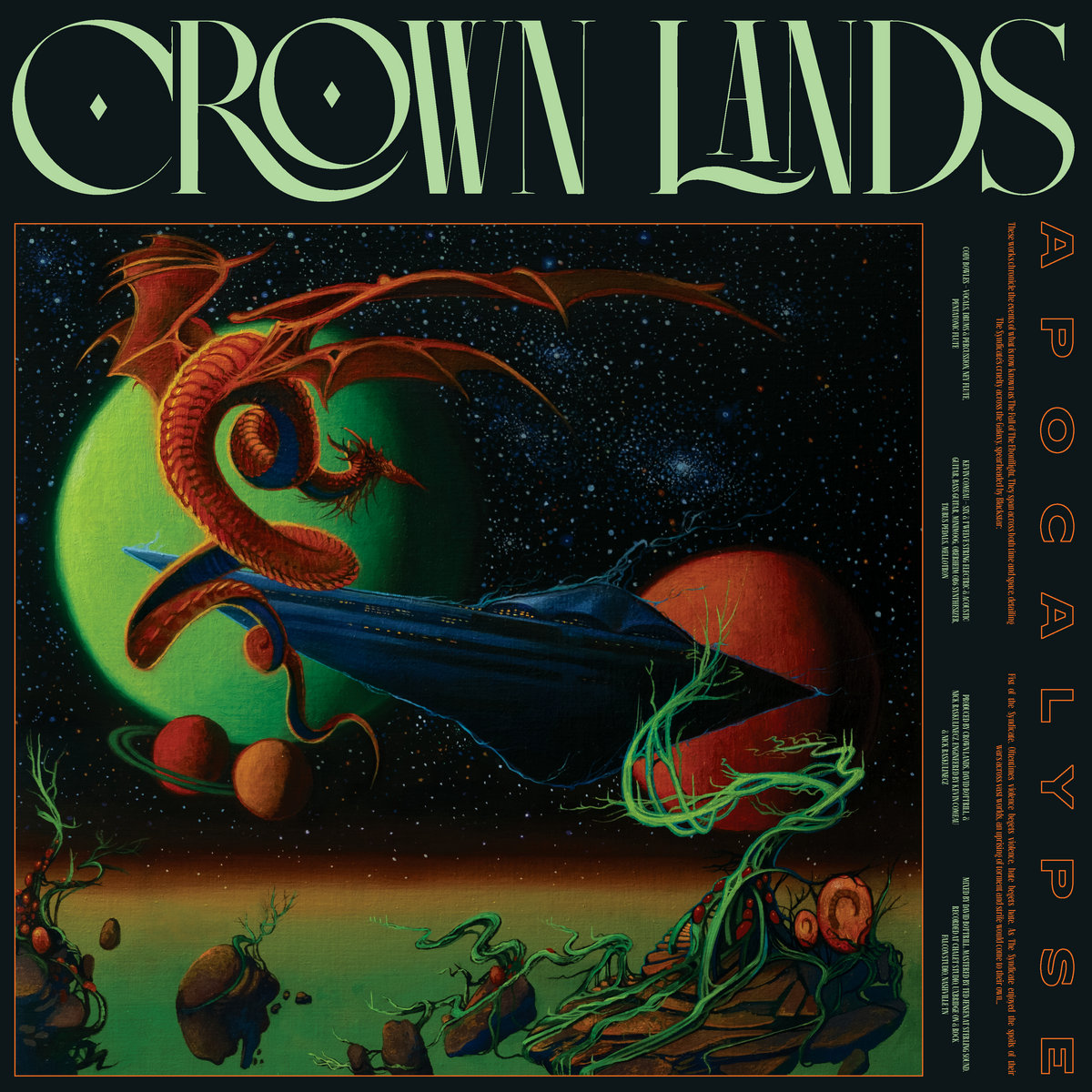
Crown Lands is a Toronto-based duo with a sound firmly rooted in mid-70s hard rock and prog rock. Unlike a number of other retro-focused bands I’ve covered here, this pair do a great job at keeping those sounds fresh and lively. Depending on how you want to classify prior releases, Apocalypse is their second, third, or fourth full-length release.
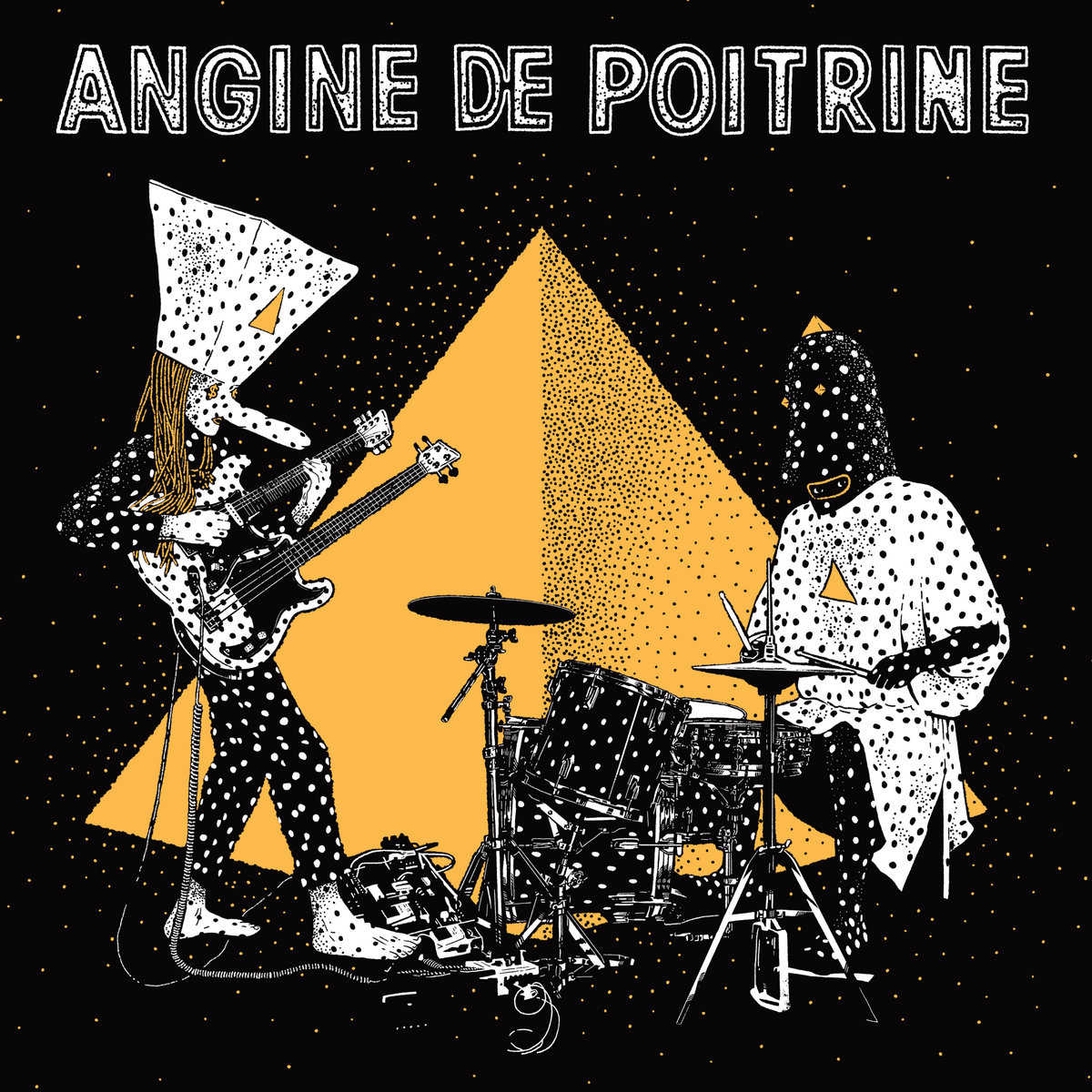
Band: Angine de Poitrine | Album:Vol. II | Genre: Math rock | Bandcamp
I’ve gone on record saying I’m really not a fan of microtonal music, but Angine de Pointrine’s microtonality is more restrained compared to some other acts I’ve heard. Their unusual tunings and oddly-fretted guitars serve to enhance their wild and inventive riffs. Their music is energetic and driving, drawing from psychedelia and garage rock. Some of the individual songs can run a bit long, but overall, Vol. II is a fantastic display of technical prowess and inventive composition. “Utzp” in particular is one of the most exciting songs of the year.
Score: 80/100
Band: Divided by Design | Album:Stages to Osiris: Rebirth | Genre: Progressive metal | Bandcamp
The latest EP from this British instrumental trio is some really solid music. The band draws heavily from Tool, Porcupine Tree, and their ilk on the non-extreme end of alt-influenced prog metal. The music is usually melodic and fairly lush, with each song capturing clear dramatic arcs and motifs that tie everything together. This 30-minute release is, in my view, an ideal vessel for this style of music. It’s long enough to express some interesting ideas without drawing on so long as to become tedious and exhausting. I’ve listened to many 45-to-65-minute versions of this record from a lot of other bands, and this more-digestible size really suits this style well.
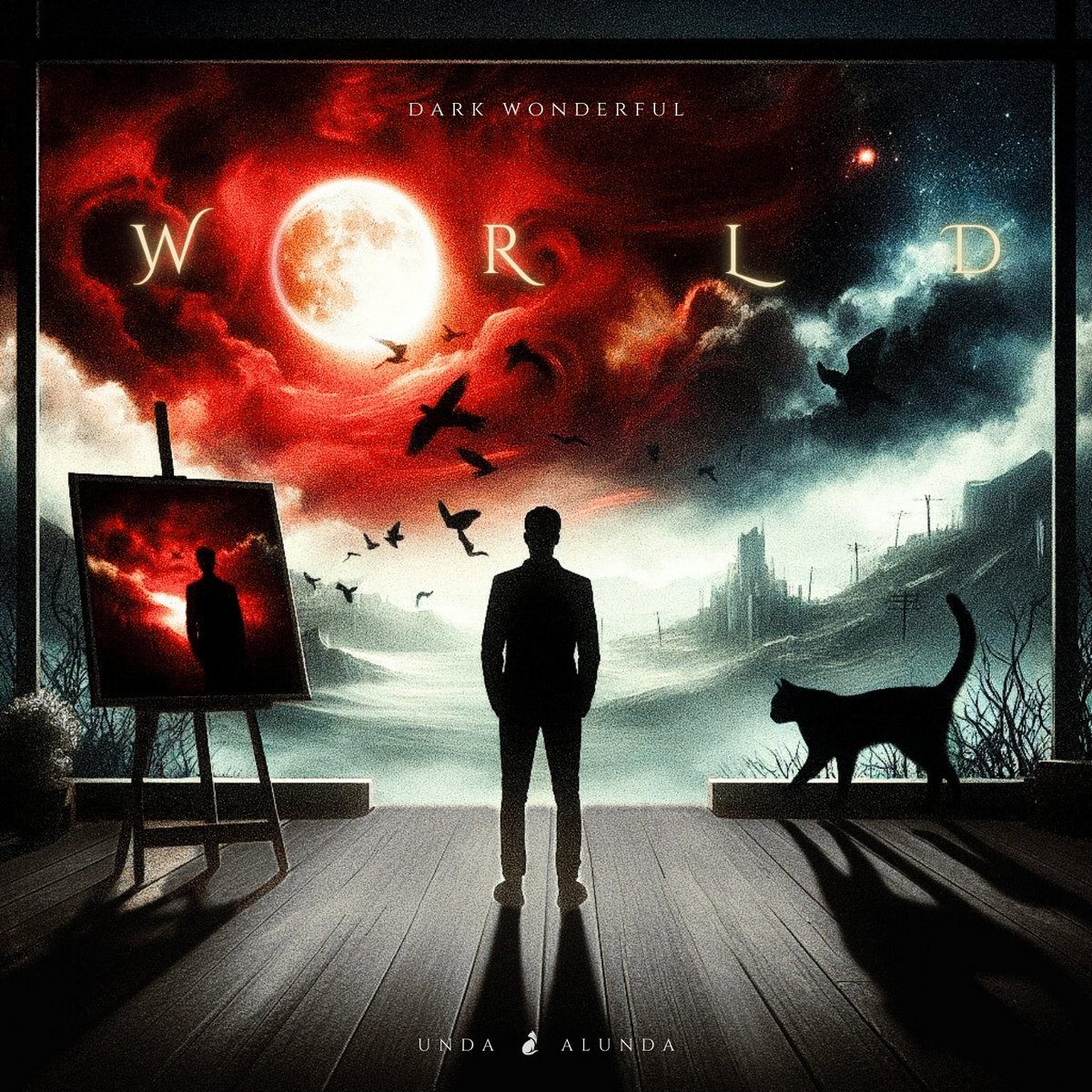
Artist: Unda Alunda | Album:Dark Wonderful World | Genre: Progressive metal, Djent | Bandcamp
This is one of the better djent records I’ve heard in a while. Djent still isn’t my favorite style of metal, but this album has a lot to offer. There are fun, jazzy riffs, exciting builds, and dazzling solos. The soullessness common to djent is minimized here, as these feel like actual compositions and not just instrumental wank-fests. Certain songs run a bit long, but aside from that, the record is a success overall.
Score: 76/100
Band: Cervello | Album:Chaire | Genre: Italian progressive rock | Links
Two things first: Firstly, I had a hard time finding this album. I don’t know who is in charge of marketing for Cervello, but they’re doing an awful job. Secondly, this was released with a live album, which I will not be reviewing.
Cervello is one of many Italian prog bands who put out one album in the 1970s before vanishing. Cervello’s sole release prior to this was the 1972 album Melos, and it’s one of my favorites from the era. I didn’t have high hopes going into this, especially considering other dull reunion records I’ve covered recently, but I was pleasantly surprised by Chaire. That may also be because almost the whole original band returned for this. Everyone except their original drummer appears on this album. (Compare that to Semiramis’s recent “reunion” where the drummer was the only original member to return.)
The music here is surprisingly vital, energetic, and original. That classic Italian prog flair is omnipresent, and the compositions are mostly engaging. Some cuts are better than others, and the record sags a bit in its second half.Synth tones can sound a bit dated, or the production can be too glossy, but this is a solid record on the whole. I especially love the more energetic tracks, where the connections with their first record can really be heard.
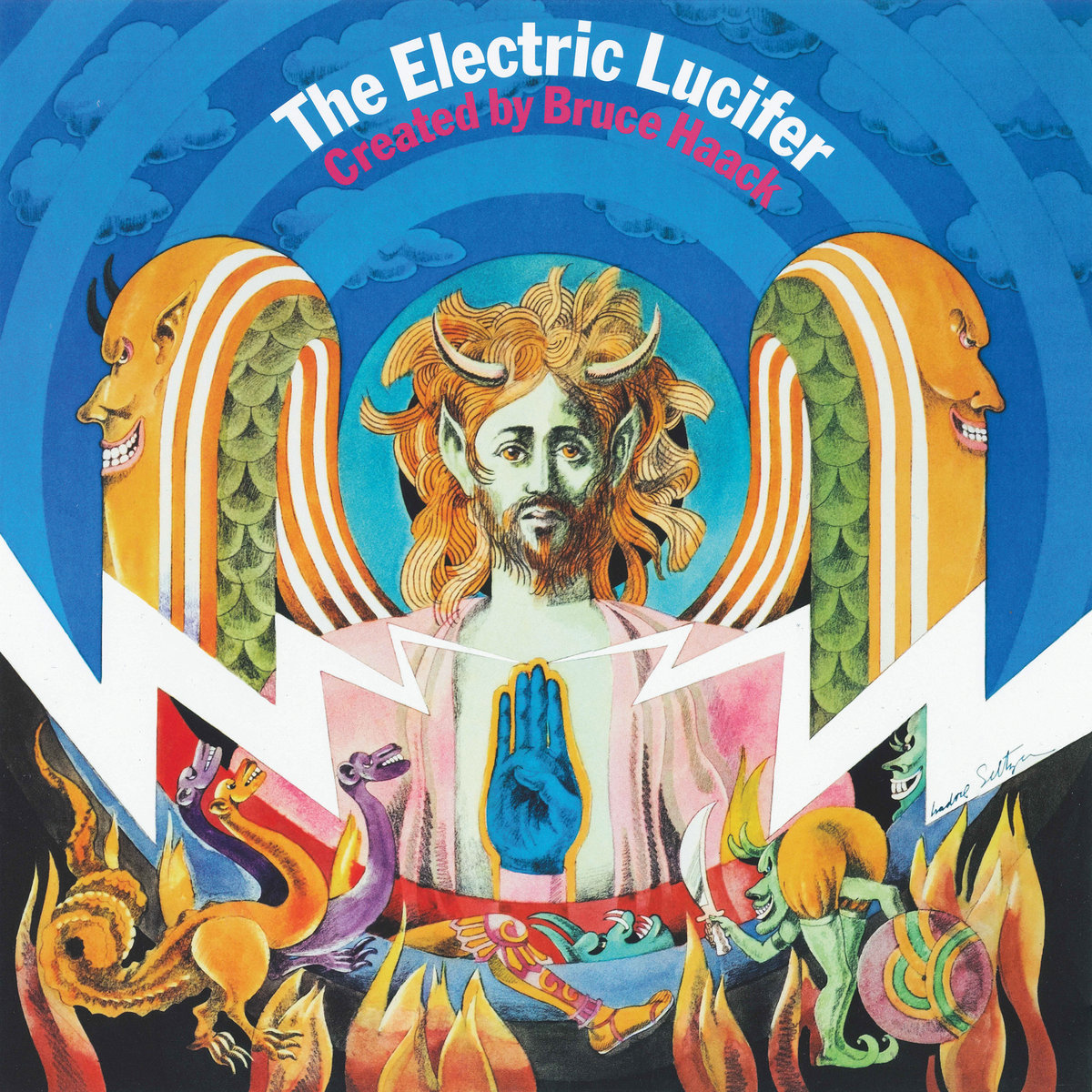
The Electric Lucifer is the kind of crazy, oddball shit that I really love discovering and then sharing. I’ve known about this record for a while, and it is pretty wild. Bruce Haack (pronounced like “hack”) was a Canadian musician who started off his career dabbling in a lot of different styles. He briefly studied at Juliaard, and he also worked in theater, pop, and Ukrainian folk music throughout his early life. As synthesizers became more widely available, he began dabbling in proto-electronic music, and if his poorly-written and shoddily-sourced Wikipedia article is to be believed, he achieved some degree of notoriety.
Starting in the 1960s, Haack began releasing children’s music. But it was really weird children’s music, full of strange synth effects and hypnotic rhythms. Just take a listen to 1968’s The Way-Out Record for Children. So, while there may have been a thematic shift in Haack’s music, he was always dabbling in electronic experiments. The jump from his “children’s music” to The Electric Lucifer wasn’t as big as one might expect. The lyrics are markedly more serious, however, featuring a very strong anti-war message.
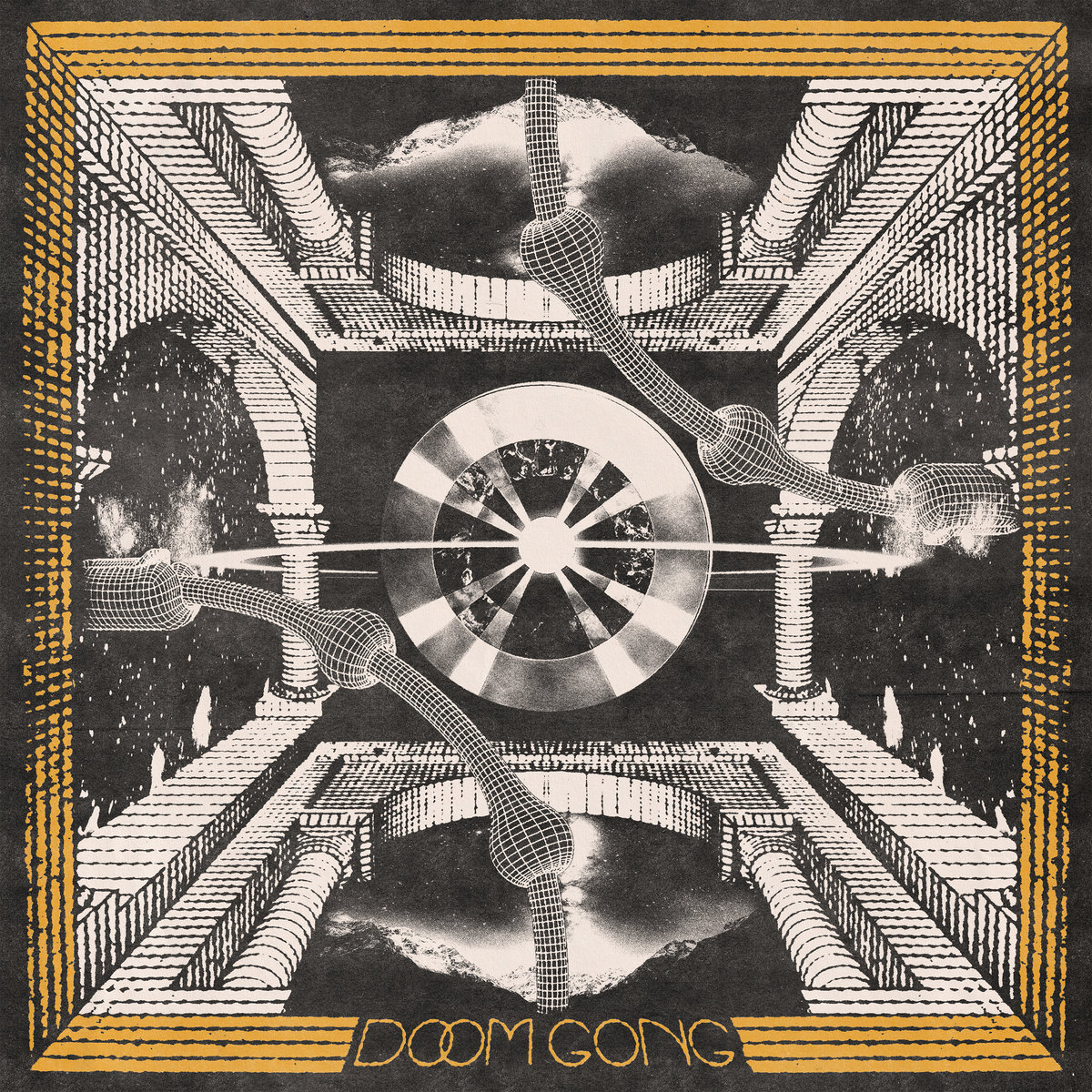
Band: Doom Gong | Album:Megagong | Genre: Psychedelic rock | Bandcamp
Doom Gong’s latest record is by turns exhilarating and idyllic. The band nimbly alternates between speedy instrumental antics and moments of lush abstraction. In general, the tempo is upbeat, and the easiest stylistic comparison here would be King Gizzard. These guys have a bit more fuzz to them, often channeling Ty Segall and Ty Segall-adjacent acts, like Wand or Fuzz. The sound is maximal, often bordering on suffocating, but Doom Gong makes it work.
The debut record from this instrumental duo is an engaging excursion. Riffs are speedy and complex, and song structures are often surprising. The synth inclusions are a lot of fun, and the band demonstrates a good knack for knowing when to take their foot off the gas for a moment.
Drone is a genre that I largely dislike but do occasionally dabble in. When I run across a drone artist that I do enjoy, it’s usually because they’ve melded those influences with something else. With Neptunian Maximalism, they married drone with heavy, experimental metal. And with William Covert, he has blended it with post-rock and avant-garde jazz. Textures are wide and airy, but it’s not just aimless ambience. Drumming helps give this record a sense of direction, and there are clear structures and throughlines in the individual compositions. The music is spooky, spacy, and artful.
Cratophane’s sophomore album sees this self-described “angular rock” band take a lot of stoner and doom metal influences into their music. There are still jagged riffs and irregular rhythms aplenty, but the band also slows down significantly for extended periods of time. Magma’s influence looms large here, but so does that of bands like Pelican. This is a dark, moody, and semi-psychedelic record that goes to some interesting places. As with many instrumental records, I feel a number of the songs are longer than they need to be, but it’s not too bad.
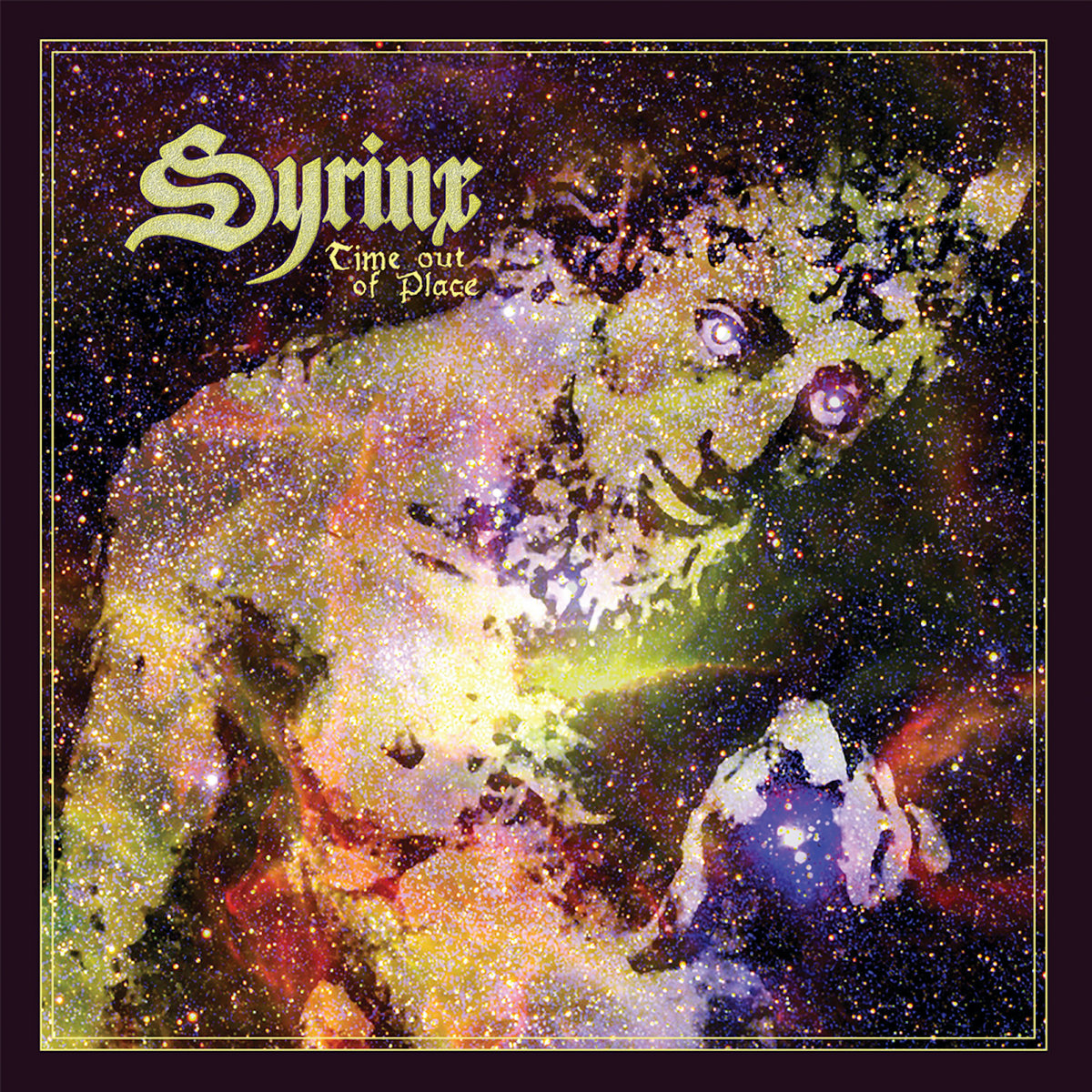
After six years, Vancouver’s Syrinx is back with their sophomore album. Their 2019 debut, Embrace the Dark – Seek the Light blended classic heavy metal with progressive rock to make one of my favorite releases of that year. In particular, “Time out of Place” with its Geddy Lee-inspired synth line and the sprawling suite “ZXY” stood out.
Time Out of Place sees the band even more fully embracing progressive rock than on their debut. They’ve hardly eschewed their heavy metal roots, but they have deemphasized that element of their music a bit. The band also boasts about how this was all recorded on analog, which doesn’t really have any effect on me. I don’t care if this was recorded with tapes or computers; what I care about is the strength of the writing and playing.
The latest EP from this Catalan quartet blends hard-hitting heavy psych with complex song structures and exciting playing. The four songs here range from crushing, Elder-influenced stormers to lighter pieces that draw equally from acts of the late ‘60s and the relatively sunny prog of the early ‘90s. It’s a diverse release with a lot of strong songwriting.
Murrayglossus’s second release is a doomy-yet-warm collection of instrumental compositions. Guitar lines are expansive and unpredictable, and the band is successful at infusing the usual vocabulary of post-metal with a bit more vigor. Influences from stoner metal, krautrock, and even a bit of jazz help to keep this release varied and interesting.
Welcome back to The Elite Extremophile’s Best of 2024 week. Today, I’ll be presenting my Top EPs of 2024. The criteria for this list is always kind of squishy. The number of entries varies year-to-year, and I take an “I’ll know it when I see it” attitude when it comes to differentiating EPs and LPs. This year, I’ve got six strong short releases to highlight. (And as a reminder, these year-end lists cover music released between December 2023 and November 2024.)
Welcome to the first installment of The Elite Extremophile’s Best of 2024. Today we’re starting off with Cool Songs, to be followed by the Top EPs tomorrow and the Top Albums on Wednesday and Thursday.
Before we get to it, let me give my usual Best-Of disclaimers. This is a one-man operation, in regard to writing the reviews. My proofreaders Kelci and Dan are very helpful, but I’m sure there was plenty of great music I just simply couldn’t get around to. I’ve also got my own personal biases against certain styles and trends.
And as a reminder, these year-end lists cover music released between December 2023 and November 2024. I spend much of December compiling and editing these lists, so I don’t bother searching for new music released in December until the new year.
This segment is meant to show off great tracks that do not appear on my other year-end lists. If a release makes my best EPs or best albums list, it is disqualified from appearing in this particular segment.