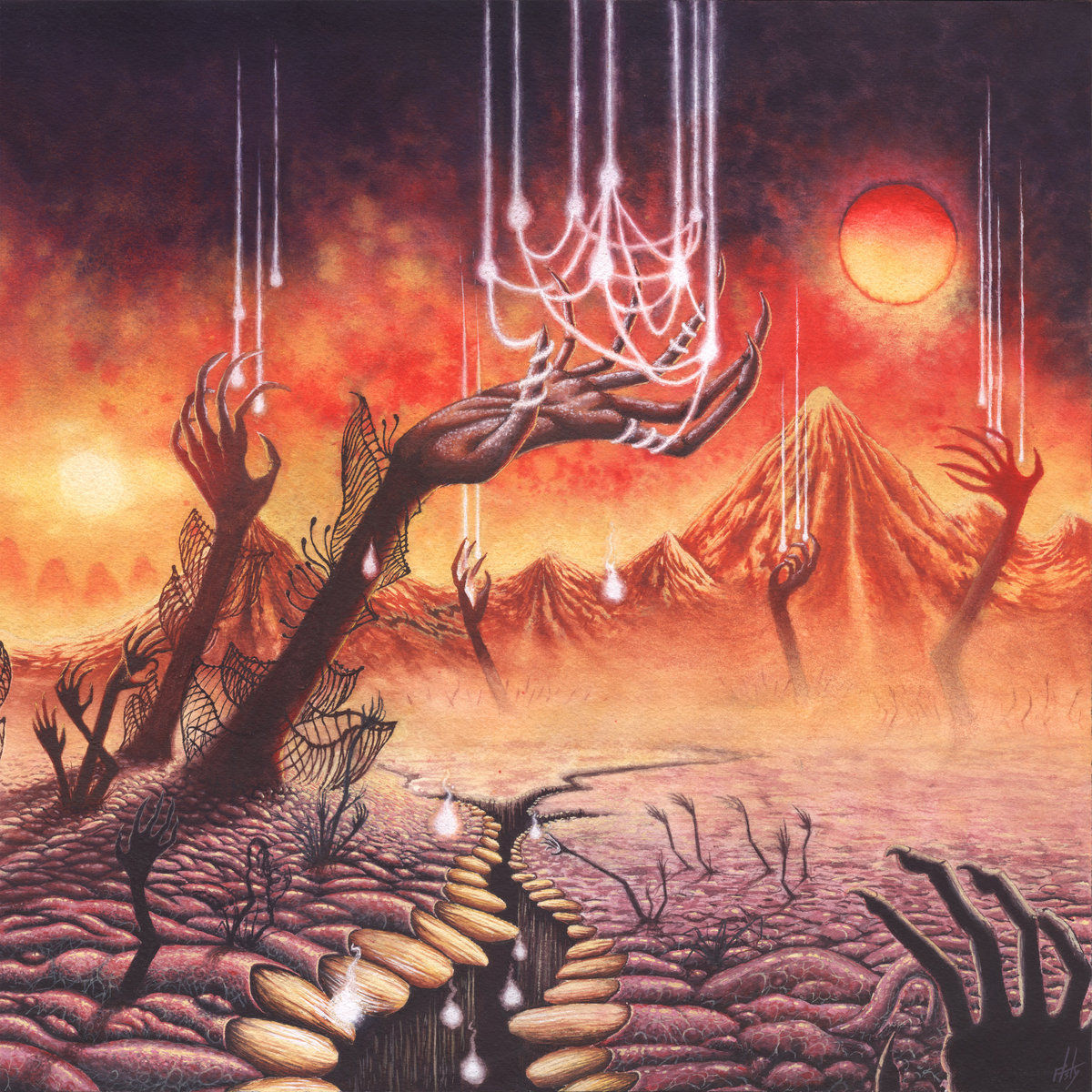
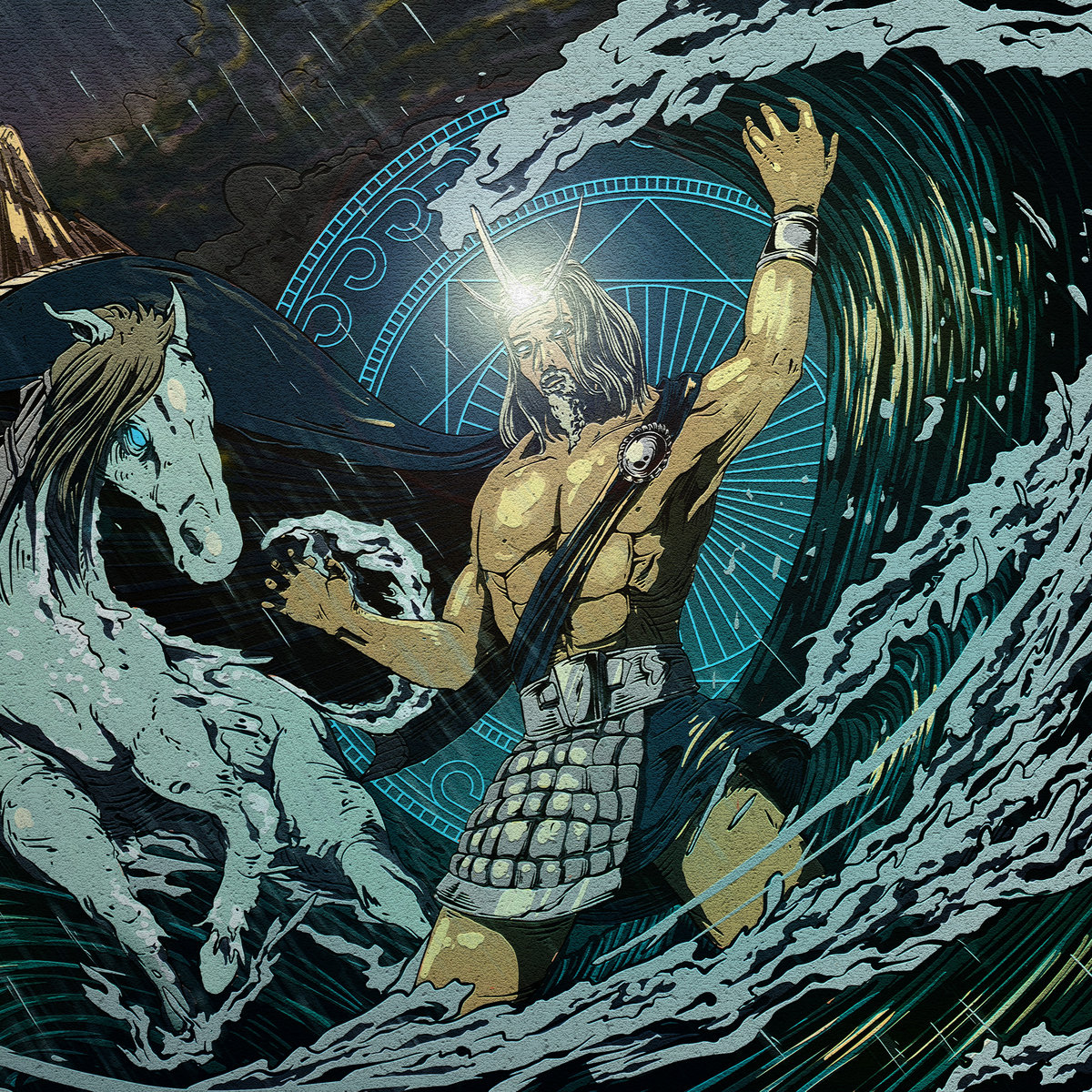
Sometimes I run across albums with artwork that does not seem to fit the music. Yearning: Promethean Fates Sealed, the first full-length album from Chicago-based Fleshvessel, doesn’t quite gobsmack me, but it’s not really what I was anticipating. Twisting trees made of arms and chasms lined by teeth led me to expect a gruesome onslaught of relentless death or black metal. But instead, this band has put out an impressively diverse, cohesive, and thoughtful record. Yes, there’s no shortage of harsh metal here, but there’s so much more.
This instrumental release has a nice diversity of sounds on it, and the prominence given to jazz flavors works in its favor. The saxophone and keyboard parts especially call to mind early jazzy prog acts, like Frank Zappa, Magma, and Soft Machine. At points, they even veer into territory comparable to Return to Forever. The only real weak point here is the sprawling closer, which atmospherically meanders for eleven-plus minutes without saying or doing all that much. That aside, this is a really enjoyable release.
Score: 76/100
Band: Aton Five | Album:Aton Five | Genre: Progressive rock | Bandcamp
This instrumental Russian quartet plays a relatively heavy variety of prog that often treads the line between rock and metal. The riffs are flashy, complex, and weird, and the guitar and keyboard tones deployed are all great. Dashes of jazz and classical crop up throughout the record for some pleasant moments of contrast. The speed and complexity of these riffs call to mind bands like Liquid Tension Experiment. The closing 22-minute “Lethe” might be a touch long, but it still has plenty of great ideas in it that channel acts like Pink Floyd and Elder.
Magma casts a very long shadow over the zeuhl scene, especially for bands hailing from their native France. And it’d be weird if they didn’t; they invented the damn micro-genre, after all. But that means a lot of bands seem to be almost pigeonholed into being Magma clones (or near-clones, at least). It can be a difficult balancing act to prominently display the influence of such a singular, idiosyncratic band as Magma without just sounding like you’re recording Attahk, Pt. 2.
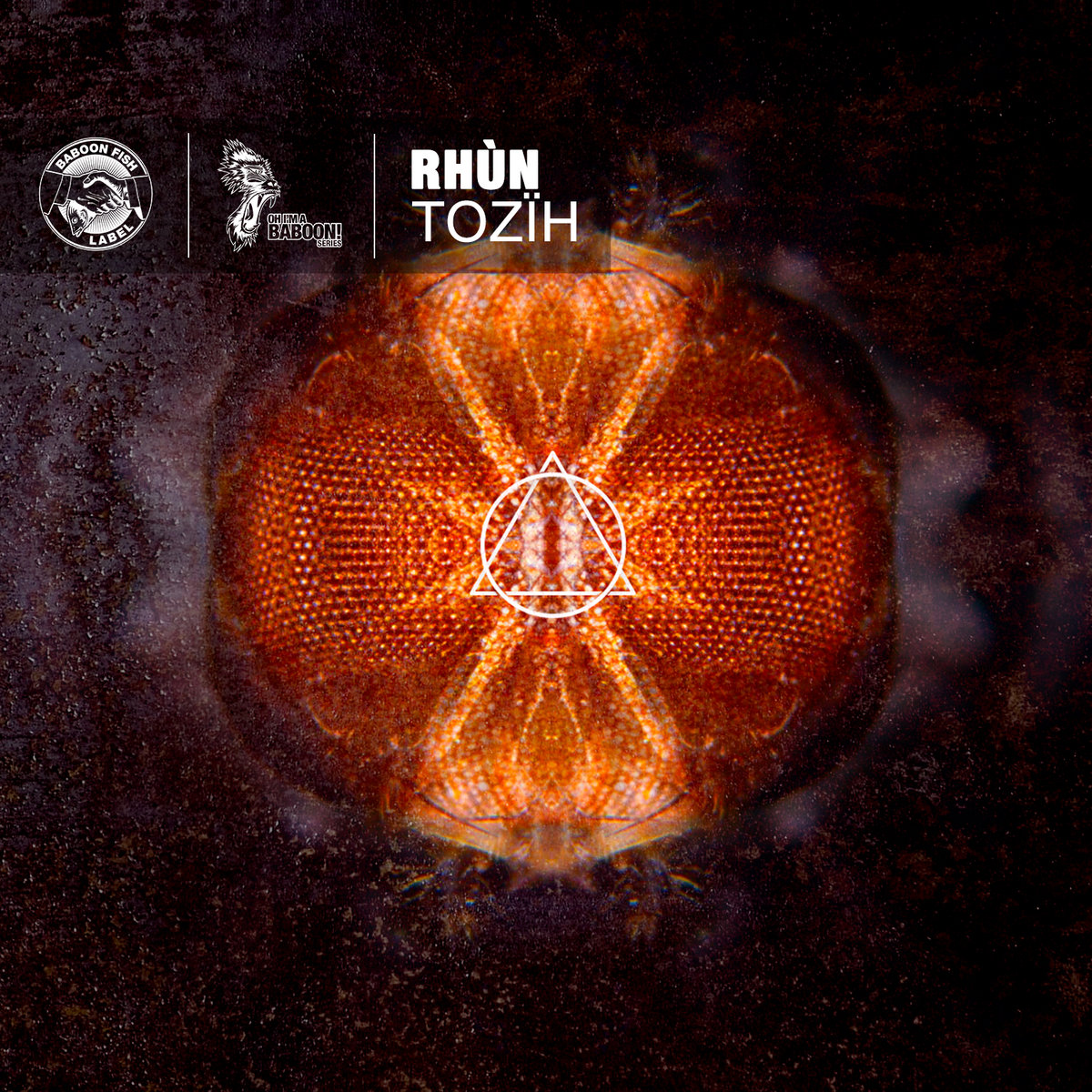
Rhùn manages to thread that needle pretty well. Their 2013 debut, Fanfare du chaos, is a decent zeuhl record. It is very Magmatic, sometimes too much so. The band shows a lot of creativity on it, even if they do occasionally wander into some overly-well-trod zeuhl tropes. Tozïh, their ten-years-in-the-making sophomore release,shows some clear improvement over its predecessor. The astral, jazzy weirdness of Magma is still front-and-center, but they’ve managed to make this record sound more their own.
I’ve talked at length about Scandinavia’s 21st Century ascent to being one of modern prog’s hotspots. Even within that small ecosystem, Norway’s scene is especially vibrant, with plenty of creative cross-pollination between acts. Actionfredag (Norwegian for “Action Friday”) is a collaboration between members of several bands, including Tusmørke and Jordsjø, with guest contributions from members of a number of other Norwegian prog acts.
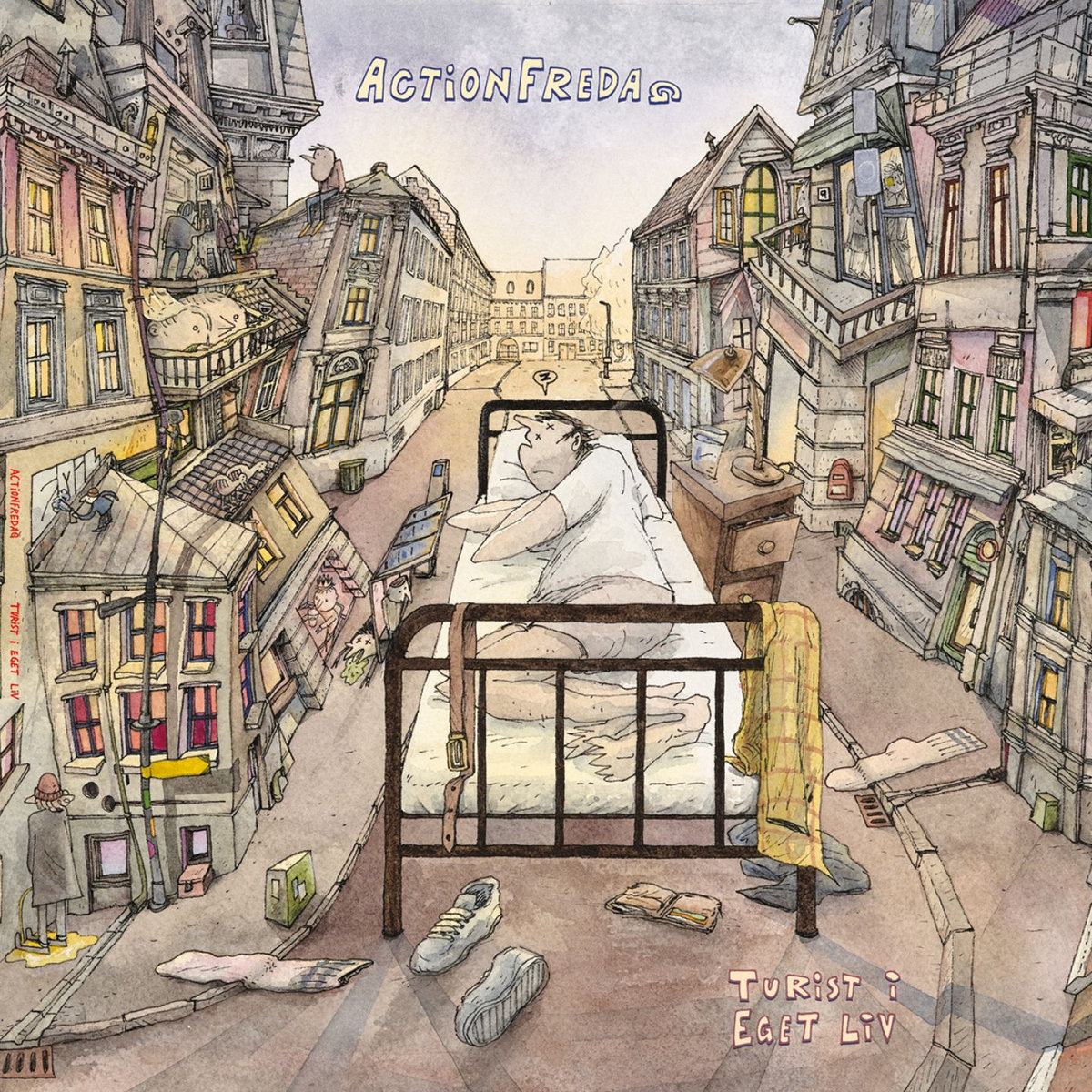
Turist i eget liv (Tourist in My Own Life) is the first album from this band, and it’s a strong outing. But considering the members’ pedigrees, that should hardly come as a surprise.
For the last three years, my album of the year has been a debut record (Moura’s self-titled in 2020, Papangu’s Holoceno in 2021, and The Mighty Orchid King’s Mycelium Music Vol. 1 in 2022). It’s a bit of a strange coincidence. So far this year, I’ve found some good debut records, but none are quite in that top echelon to vie for the top spot on my year-end list.
Dominic Sanderson’s new album, Impermanence, isn’t technically a debut, but it is his first full-length release. (Prior to this, he released an EP in 2020.) This record is an impressive collection of some of the darker sounds of classic prog, synthesized into something modern and exciting.
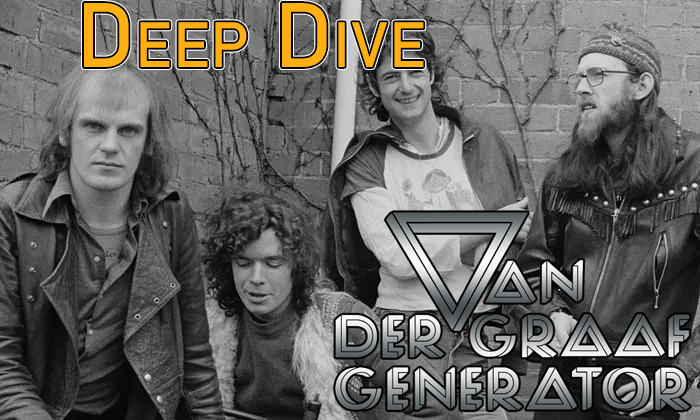
Welcome back to Deep Dive, where I look at the full studio discographies and histories of some of the major names in progressive rock and progressive metal. It’s here that I highlight output beyond an act’s “classic” releases.
For those who don’t feel like reading this massive entry, I’ve included a TL;DR and ranking of albums at the end. I’m opting to explore albums chronologically, as opposed to a ranked-list format. The context in which albums were made is important, and this is an element often missed in a ranked-list.
Van der Graaf Generator (VdGG) were (and continue to be) a weird, weird band. Their classic lineup lacked guitars of any sort, but they managed to use organ and saxophone as cudgels to lay down nasty, proto-metallic music. Peter Hammill is one of the most distinctive vocalists in all of progressive rock; and paired with such unique instrumentation, VdGG managed to carve out a singular niche.
Hammill is also one of the few lyricists whose words I feel significantly added to his music. I’ve written at length about my general ambivalence to lyrics, but this band’s dark but often relatable imagery feels like an integral element of their identity.
Band: Chafouin | Album:Trois, quatre | Genre: Math rock, Progressive rock | Bandcamp
I liked this band’s 2021 album Toufoulcan, so I was excited when I saw they had something new coming out. Where Toufoulcan had a sense of sonic continuity between the tracks, this release feels more like a collection of unrelated (or barely-related) songs. The music itself is good, and none of the songs overstay their welcome. When taken as a whole, though, Trois, quatre feels a bit unfocused.
Score: 74/100
Band: Numidia | Album:South of the Bridge | Genre: Hard rock, Progressive rock | Bandcamp
This album was a huge disappointment. I loved this band’s Middle Eastern-tinged debut record, which expertly blended Near-Eastern flavors with prog and psych in very satisfying ways. Here though, the band has stripped away anything that makes them unique and put out a bland, bluesy hard-ish, vaguely-prog-adjacent record that often reminds me of ‘90s Pink Floyd (and not in a good way). The music isn’t bad, per se, especially if you’re looking for something evocative of certain 1970s blues rock acts, but it’s a major step down from their self-titled, in terms of both creativity and impact.
Lars Fredrik Frøislie is the keyboardist and a backing vocalist of Wobbler, and Fire Fortellinger (Four Stories) is his first solo album. I had a few people reach out, independent of one another, to tell me about this album, and they all had a line to the effect of, “I know you’re not really a fan of Wobbler, but…” I would like to clarify something: I don’t dislike Wobbler. I think they’re over-praised in modern progressive rock discourse, but I don’t think they’re bad. Dwellers of the Deep was a mixed bag of a record, yes; but From Silence to Somewhere, Rites at Dawn, and Hinterland are all pretty solid. They’re not doing anything groundbreakingly original, but they’re putting out good, classic-style, Mellotron-and-organ-powered prog.
So, I went into Fire Fortellinger less skeptical than many people probably expected me to be. This guy’s the keyboard player for a very keyboard-forward band, so I knew about what to expect. And sure enough, this album is pretty decent, classic-style prog.
The 24th album from these prolific Aussies sees them dipping their toes back into thrash metal. 2019’s Infest the Rats’ Nest is a modern thrash masterpiece, and the band’s eco-apocalyptic lyrics suit the grim nature of that music. PetroDragonic Apocalypse is in a similar vein, but the songs are more progressive and ambitious. The riffs are fast, impactful, and complex, and Stu Mackenzie’s hoarse vocals are distinctive throughout.
PetroDragonic Apocalypse was recorded in a manner similar to that of their 2022 album with a long-winded title, Ice, Death, Planets, Lungs, Mushrooms and Lava. Where that album was recorded one song per day from scratch, with songs evolving from jam sessions, Mackenzie explained that he wrote the general concept for this album first and then worked backward from there. However, there is much less bloat here than on IDPLML. The songs are often long, but they’re bursting with ideas and frequently take surprising, unexpected turns.
When I first had this album recommended to me, I was a bit skeptical. When I think of mixing big-band jazz with rock music, my mind immediately goes to Diablo Swing Orchestra, and I hate Diablo Swing Orchestra. However, the person who recommended this to me is a reader who has given me a number of other good suggestions, including Daniel Rossen’s You Belong Here, so I decided to give this a shot.
I’m glad I did. The massive ensemble assembled by bandleader, guitarist, and vocalist Monika Roscher manages to form amazingly coherent songs from disparate musical ideas. Aside from rock and jazz, electronica, blues, and avant-garde music all get their moments across this sprawling record.