

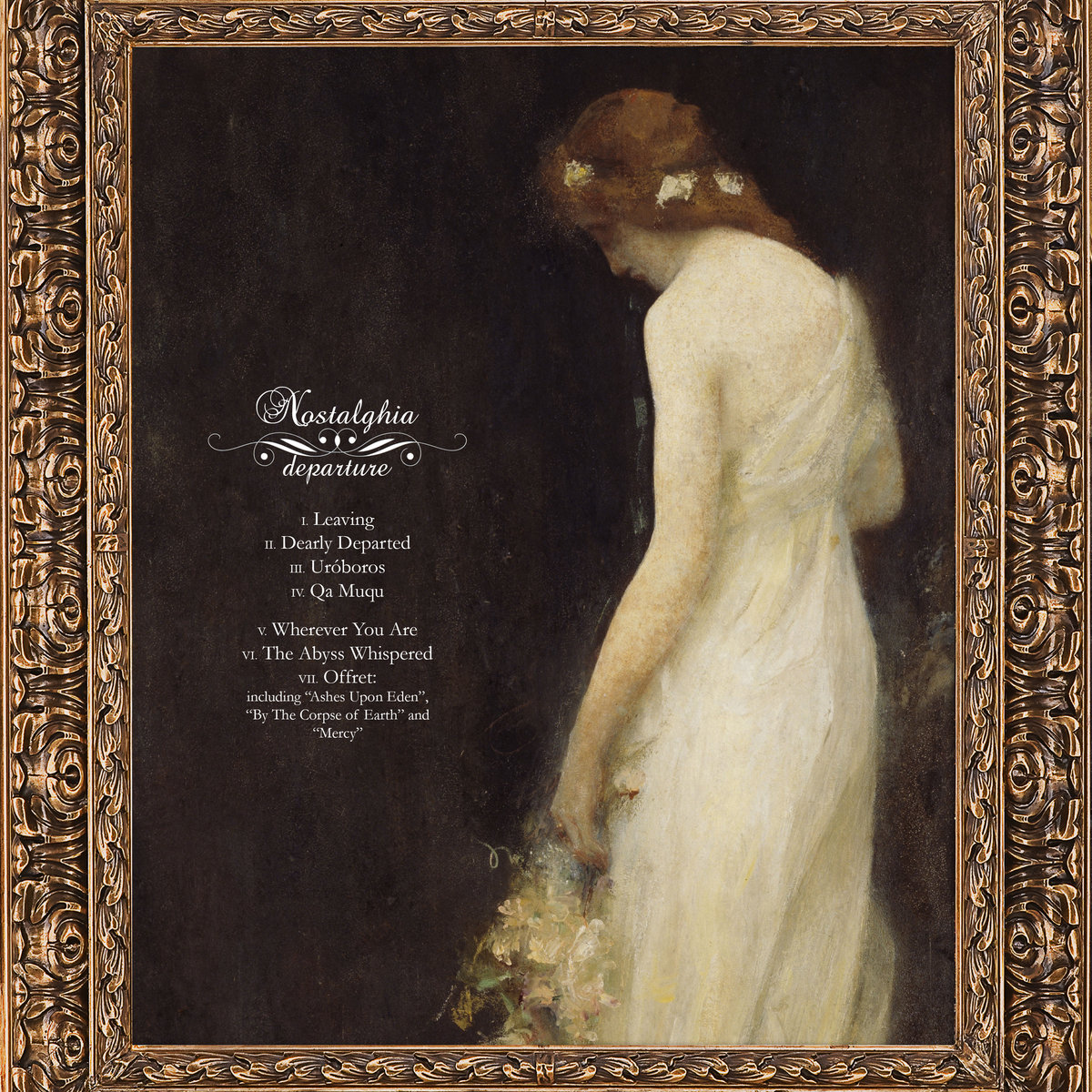
Band: Nostalghia | Album: Departure | Genre: Progressive metal | Year: 2026
From: Mexico City, Mexico | Label: Independent
For fans of: Opeth, Enslaved, Riverside
Nostalghia is a one-man project helmed by Mexican multi-instrumentalist Alex Becerra. This album is my first exposure to Nostalghia, but it looks like this is a very prolific project. According to RYM, this Departure is Nostalghia’s 14th release since their debut in 2020. The music on this record is stunningly diverse and ambitious. Aside from the band’s black metal roots, jazz, classical, alt-rock, classic prog, and more all play important parts here.
“Leaving” opens the album on a restrained note. Acoustic guitar lines weave around one another in a way that draws from Baroque composers. When the vocals enter, they’re restrained. Rattling percussion, anxious strings, and tinkling piano build a sense of claustrophobia before suddenly cutting out and giving way to a melodic, piano-led passage that flows directly into the more-immediately-impactful opening of “Dearly Departed”.
Riverside and Enslaved are both obvious influences in this song, with rapid, wiry guitar runs and vocals that vacillate between soulful and harsh. Latin jazz emerges about midway through as a nice bit of contrast. Many acts attempting such an incorporation come off as hokey and ham-fisted, but Nostalghia’s composition feels coherent and thought-out.
The opening of “Uróboros” features some chamber music influence alongside restrained proggy folk, akin to acts like Jordsjø or Änglagård. When metal eventually emerges, there’s a wonderful, blistering solo supported by rich string arrangements. This sort of metal-classical hybrid is a not-uncommon trope in the realm of prog, but few acts pull it off this well.
“Qa Muqu”, sung in a Mayan language and directly adapted from the Popol Vuh, has a peppy, jazzy opening. Enslaved-flavored black metal propels this piece along, with brass and piano exclamation points throughout. During instrumental passages, jazz once more comes to the forefront, and time signatures and rhythms get wonky as hell. The transitions between heavy and gentle moments are often sudden, but it all feels earned.
Somber piano opens “Wherever You Are”. This is a mellow piece overall that gives the listener some appreciated breathing room. Riverside, Porcupine Tree, and Dream Theater’s better slow songs are all clear influences on this piece.
“The Abyss Whispered” jumps back into metal, and tinkling chimes give it a celestial, otherworldly feel. The arrangements of the different parts of this song are diverse and complex, with some parts leaning into harsh black metal and others utilizing dissonant modern classical music.
The final song on the album is the 10-minute “Offret (including “Ashes upon Eden”, “By the Corpse of Earth” and “Mercy”)”. “Ashes upon Earth” is led by clean guitar and pulls in elements of classical and dark folk music. I especially get flashes of some of Agalloch’s mellower output here. As distortion builds, so does the sense of majesty, before suddenly cutting out in the transition to “By the Corpse of the Earth”. Muted, atonal strings pluck and plink awkwardly and hauntingly, like the score to a horror film. Rattling chains and distant piano add to the ambiance. In the hands of less-skilled composers, this movement could easily become grating, but Becerra sells the tension and the anxiety. The final movement, “Mercy”, leans heavily upon ethereal atmospherics, with angelic vocals lifting everything skyward.
Departure is a moving piece of music that displays an impressive breadth and depth of musical knowledge and skill. The songs demonstrate complex and technical instrumental ability, while the structures manage to be both diverse and coherent. The fusion of jazz and classical feels impressively natural, and I know there is a ton to discover upon repeated listens.
Score: 92/100
 The Elite Extremophile