

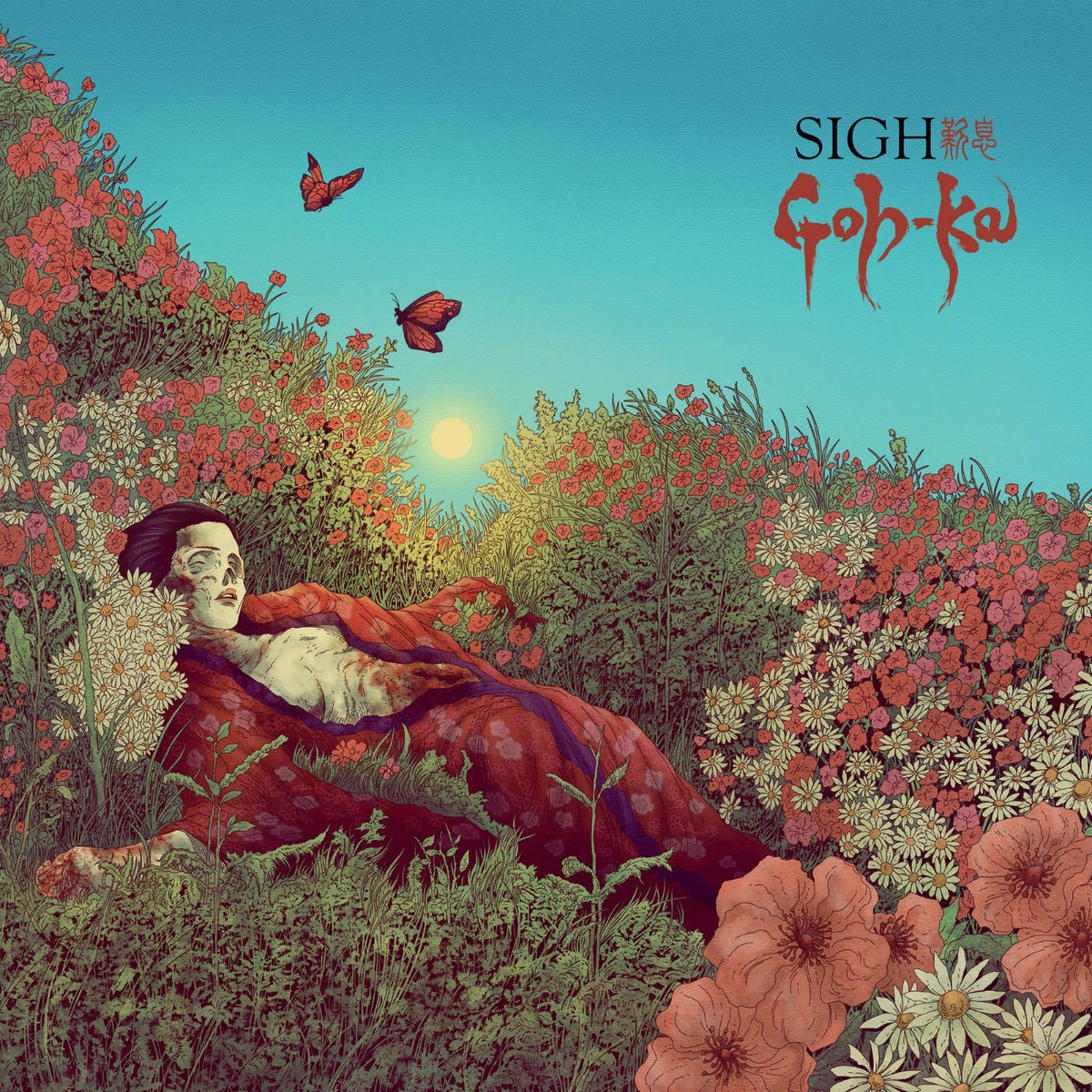
Band: Sigh | Album: Goh-Ka | Genre: Progressive metal | Year: 2026
From: Tokyo, Japan | Label: Peaceville
For fans of: Enslaved, Between the Buried and Me, Opeth
Sigh is one of the longest-running and most influential progressive metal bands out there. Starting off as a symphonic black metal band in the early 1990s, they quickly took a more experimental turn and never looked back.
Goh-Ka is the band’s 14th full-length release (or 13th, if you want to categorize last year’s re-recording of their 2007 album, Hangman’s Hymn, a little differently). This album is based on kusōzu, a Japanese artform depicting the nine stages of decay described in Buddhism. These are used as a means of meditation on impermanence.
The music here sticks to Sigh’s usual style. But where the last album of theirs I listened to–Shiki–left me unimpressed, this is one of their strongest outings. Avant-garde, progressive, and Japanese folk elements play large parts on this album, and the use of recurring musical themes ties everything together. Japanese folk was more prominent than usual on Shiki, and that trend continues here.
Goh-Ka opens with the nine-minute “Kuso-shi 1, 2, and 3”. Sigh’s signature synth tones weave and burble amid heavy guitar lines, accented with traditional Japanese instrumentation. This cut is relatively restrained by Sigh’s standards, but that degree of focus pays off here. The power of the music is apparent, and the band’s decision to up the Japonic elements helps this to stand out. The shifts between avant-garde metal, organ-fueled prog, and Japanese folk are fluid and organic.
“Jigoku-Zoshi 1: Unkamusho” has an anxious opening with some nearly-Latin-sounding percussion. But soon enough it plunges into melodic black metal with speedy synth flourishes and classical-influenced guitar lines. This is classic Sigh, and it’s a lot of fun.
Things slow down on “Anzenshokon”. Acoustic guitar, flute, and clean vocals lend this a mournful feel in its opening. Crushing, doomy guitars burst in on occasion to punctuate the verses, and psychedelic production adds a dreamlike quality, all of which do an incredible job at evoking a corpse rotting in a field, but in a reflective way. In the last couple minutes, the band incorporates obvious early King Crimson influences for a dramatic conclusion.
“Kuso-shi 4, 5, and 6” comes next, opening with lush, symphonic doom metal tones. The drumming here (and elsewhere on the album) is stellar, with lots of fancy fills and flourishes. A sinister acoustic passage follows this, evoking some of Opeth’s better quiet moments. Themes from parts 1-3 are revisited here, as are the psychedelic acoustic tones of the preceding song, adding a sense of cohesion. I really like the intermingling of electric and acoustic elements. Not only are Japanese instruments used (maybe it’s a shamisen? Or a koto? I’m not sure.), but some Western-style classical guitar shows up, as well. This is a lurching, foreboding composition that highlights all this band’s best tendencies.
“Shoso” is an eerie, one-minute electronic instrumental interlude that leads right into “Unputenpu”. This is a savage, biting composition that sees guitar and shamisen harmonizing beneath raving vocals. Melodic moments contrast against this, and Mikael Åkerfeldt of Opeth shows up to provide a solo. I really love the unorthodox percussion choices deployed during the chorus.
Some sinister synth and shamisen open up “Jinmenjushen” as the band dips back into some slower riffage. The verses are much more energetic, though, focusing on melodic black metal, sometimes bordering on black ‘n’ roll. There’s a clear sense of drama here with the group vocals during the chorus, and some unexpected saxophone harmonizes with synthesizer during a particularly exciting instrumental break. This is a breakneck composition that hardly takes its foot off the accelerator once things get going. The final minute does slow down a bit, but there’s no lack of intensity.
“Jigoku-Zoshi 2: Tokatsujigoku” immediately bursts forth with powerful black metal. The drumming is again a highlight here. The chorus of this song dips into avant-garde orchestral elements. I’d compare this to some of BTBAM’s odder songs, but Sigh’s been doing weird metal for much longer than those guys.
A pair of sub-two-minute songs follow. “Kushukankyo” feels Andean, with breathy flute, gently strummed guitar, and understated hand percussion. It’s a wonderful little breather. “Kuso-shi 7”, on the other hand, consists mostly of sound effects and weird synthesizer bloops.
The album closes on its longest song, the 11-minute “Kuso-shi 8 and 9 / Mettaijakujo”. After a dramatic, theatrical opening, the first verse is relatively grounded. Acoustic and electric passages contrast wonderfully. Dashes of electronic and psychedelic music crop up amid the crushing riffs. Plenty of bands throw things together and hope they work; Sigh is one of the bands that best integrates strange inclusions in a way that makes sense.
Folk elements, topped with big, melodic guitar lines lead off the second half of this song. More musical themes from earlier in the record are revisited in a satisfying way. Rock elements eventually melt away altogether as this piece enters its final movement. Orchestral music takes over in a macabre march, eventually dissolving into a synthesizer drone. After some warbling static, the album ends on a warm and peaceful electric piano passage, underscoring the overall concept of this album: accepting the impermanence of life.
Goh-Ka is another excellent work from Sigh. Everything here is lively and played with so much passion. The band does an amazing job at varying tempo and texture, and their ability to change direction so suddenly and skillfully is always impressive.
Score: 96/100

