I’ll be the first to admit that I don’t know much about the contemporary Chinese musical scene. Within the Sinosphere, the only acts I’ve got any familiarity with are Zhaoze–a post-rock act I’ve covered which is based out of Guangzhou–and Taiwan’s Chthonic, a relatively well-known metal band. I did recently run across WV Sorcerer Productions on Bandcamp, a French label which specializes in underground Chinese psychedelia, but I haven’t dug too deeply into that yet. The point I’m trying to make is that I don’t know what current trends or strains are running through Chinese music.
Ὁπλίτης (Hoplites) is a Ningbo-based band I’ve been aware of for about a year. I ran across their debut album Ψευδομένη (Psevdomeni, Eng. Counterfeit) early last year. It’s a striking, smothering technical black metal record that utilizes dissonance in an interesting way. The fact that all the song titles and everything else are in Greek also made it pop out to me on Bandcamp when scrolling through the “progressive metal” tag. They put out two more albums over the span of 2023, but none of them really felt like a proper fit for this site. Παραμαινομένη (Paramainomeni, Eng. Perpetuated), though, is their most overtly proggy release yet.
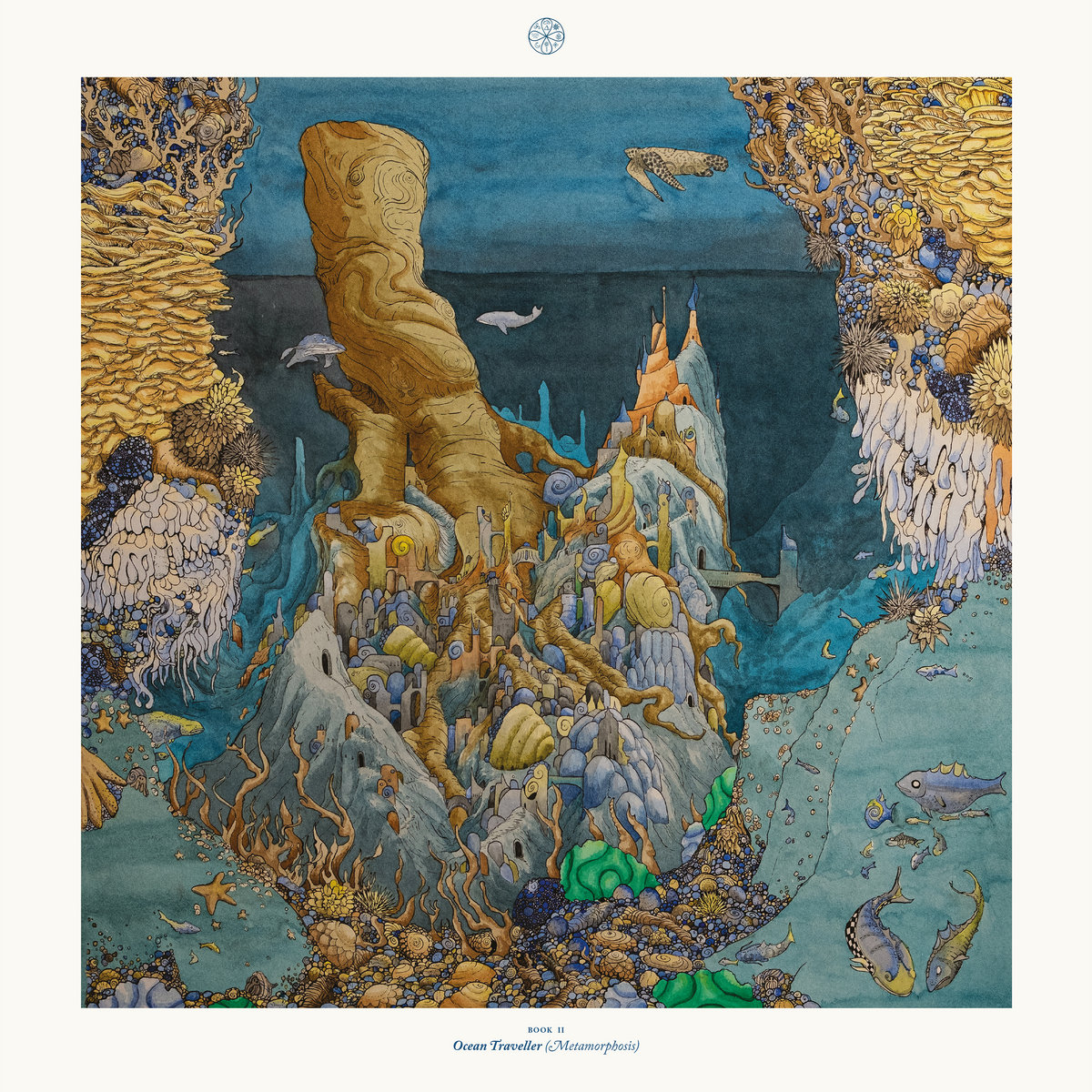
I went over the three-decade background of this band in my review ofBook 1, and I mentioned that I hoped the three planned installments would have distinct characters. Where Book 1 covered the lands of Airoea–hills, valleys, forests, and so on–Book 2 focuses on the waterways of this realm. There is a noticeable tonal and timbral difference between these two records, and I appreciate that effort. The songs here have a distinctly aquatic vibe.
I do my best to avoid falling into ruts on this site. I’m purposely vague about what constitutes “progressive rock,” “progressive metal,” or any other “weird and/or experimental” music I cover on this site. This approach also extends to my attempts to highlight a lot of different record labels. At times, I feel like this site can border on being a showcase for Spinda, Karisma, or InsideOut. One of those labels I frequently feature–and possibly my favorite metal-focused label at the moment–is I, Voidhanger. This Italy-based label focuses on experimental and extreme metal, and their page always makes up a significant portion of my Bandcamp wishlist. I’ve covered multiple acts of theirs in the past, including Creature, Neptunian Maximalism, and Fleshvessel.
Bekor Qilish is another of I, Voidhanger’s acts that I’ve covered before. Their release from last year, Throes of Death from the Dreamed Nihilism, was one of my favorite short releases of 2022. The Flesh of a New God continues in a similar sonic vein, featuring scourging black metal and rich keyboard tones.
I like Merlin. I’ve covered them a couple times before. The Mortal is a pretty solid stoner metal release with healthy doses of prog and psych, and “Merlin’s Bizarre Adventure” is a mind-bending cavalcade of incongruous musical ideas that somehow gel. I’m also pretty fond of their albums The Wizard and Christ Killer. (The latter is based on Nick Cave’s bonkers idea for a sequel to the film Gladiator; read about it!) In addition to putting out good music, they’ve got one of the best social media presences I’ve run across. Their Facebook page consists of scores of strange, self-deprecating memes that always amuse. (One such meme, posted probably a year ago or so, said something to the effect of of, “Yeah, we’re into NFTs: Not Fucking Touring.” Though Merlin might not tour, I apparently missed an opportunity to see them live early in their career. I lived in Lawrence, KS, from late 2012 until late 2014, and they posted some photos from a show in 2014 they had at The Bottleneck, a live music venue in Lawrence. I went to a good number of live shows while I lived out there, so I am bummed I never happened to see them.)
Moving on to the substance of Grind House, their sixth LP, it’s tough to figure out where to start. Historically, they’ve been a stoner doom band with some artsy leanings. But back in 2020 or 2021, they put out this strange, jazzy single, “Master Thief ‘77”, which presaged the aggressive move away from the stoner doom they championed on “Merlin’s Bizarre Adventure”. In a Facebook exchange I had with the band’s vocalist, Jordan Knorr, he explained Merlin’s next album was going to be based around the theme music to a series of fictional films and that it would be completely different from the band’s prior output. And true to his word, this is a bizarre, unexpected, and very fun release.
PoiL is back for a second round of collaboration with Japanese musician Junko Ueda. I thought their last album–PoiL Ueda, from March of this year–would simply be a quirky, one-off thing. I was certainly hoping for more, as my one real gripe about PoiL Ueda was that, at only 31 minutes, it felt kind of short. I really liked the madcap fusion of PoiL’s avant-garde RIO stylings with Ueda’s singular vocal style and sharply-plucked biwa.
Yoshitsune picks up where PoiL Ueda ended, both lyrically and musically. Taking place after the naval battle described on their last album in “Dan-no-Ura”, this album tells the story of Minamoto no Yoshitsune, a military commander forced into exile.
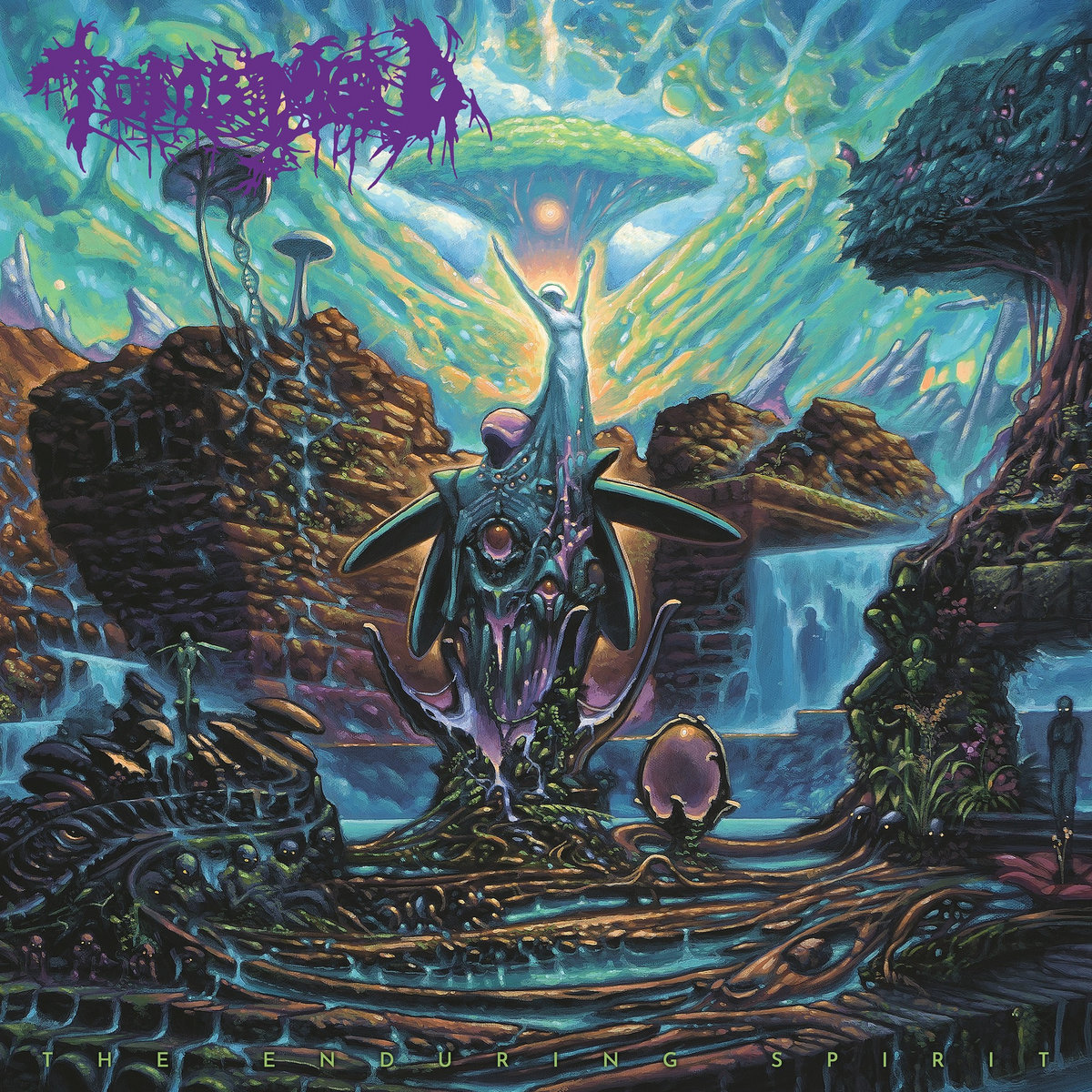
Tomb Mold is a name I’ve heard tossed around in the past. I was vaguely aware of them, and that people generally liked them, but I wasn’t even really sure what subgenre of metal they played. So when they dropped their first new album in four years and people started praising it as this wonderful prog metal release, I felt like I had to give it a listen.
The Enduring Spirit kicks off with “The Perfect Memory (Phantasm of Aura)”. It’s got a tight, complex, nasty main riff, and that title really nails the pretension of prog-death well. The playing is fantastic, and there are lots of neat flourishes. This is one of my favorite songs on the album. The following “Angelic Fabrications”, though, is considerably more generic. It’s not bad, but it’s pretty run-of-the-mill blackened death metal.
I generally do my best to be positive on this site. I cover music I like (mostly), and I aim to give acts the benefit of the doubt when possible. I’ve heard it said that critics should be curators, not gatekeepers, and that is an ethos I strive for. But every now and then, you run across a flaming pile of shit so spectacularly bad, you have to stop and gawk. It’s a trainwreck with bodies strewn everywhere, and the mere sight of it makes you sick, but you can’t look away. And to top it all off, the person driving the train is a notoriously unpleasant curmudgeon. When a situation like this arises, it’s hard not to react to the spectacle.
Having a nice, long hate on an album can be a fun, cathartic exercise on occasion. I haven’t really done that on this site before now, but it’s something I did a number of times when I was writing reviews on my personal Facebook page. The Astonishing, Dream Theater’s overblown, under-thought rock opera, was a particularly fun record to bash. I’m looking forward to expanding on that in my eventual Dream Theater Deep Dive. (I did bash Leprous’s last two albums pretty hard, but even my Aphelion review found some limited good.)
I touched on this briefly in my Pink Floyd Deep Dive, but Roger Waters is pretty easy and fun to dislike. He often comes off as a self-important douche who is deeply unpleasant to spend time around. Normal, likable people don’t get married five times or have irreparable rifts with coworkers. Sure, his politics are not too terribly different from my own on most fronts, but his sanctimony goes a long way in making me second-guess those overlapping views.
He only seems to have gotten more unpleasant in his old age, too. His spats with David Gilmour, which seemed to have quieted down a bit in the mid-2000s, have only flared back up as nasty as ever in recent years. And the dude is even on Russia’s side in the ongoing Russian invasion of Ukraine. Add into that mix some additional ridiculous, egotistical statements–like his bitter, petulant outburst that he is “far, far, far more important” than The Weeknd when the Canadian press didn’t give his tour enough attention–and it’s easy to see why it’s hard to look away from his nonsense.
Now, to Roger’s credit, he’s not intending for this to be a replacement for The Dark Side of the Moon. This work is presented as a different take on things. The album is a reflection on life and death, and re-recording it with another fifty years of life experience sounds like a concept that could work… theoretically. The problem is, Roger’s best work was always strongly reliant on David Gilmour and Rick Wright providing significant musical input. This manifestation of Dark Side simply lacks that ineffable spark that made the original one of the greatest rock albums of all time. In many ways, this release feels like him attempting to diminish the importance of the other members of Pink Floyd and cast himself as the act’s true creative force.
It’s been a decade since Steven Wilson’s last good solo album. (I almost said just “album,” but Closure/Continuation was good. Not great, but good.) Especially considering the trajectory of his last two solo releases, I did not have high hopes for The Harmony Codex. He’s been teasing this album for a while as a return to form, and he had repeatedly said it’s less pop-oriented than The Future Bites. Then again, I’m sure that Roger Waters also thinks his dogshit re-recording of The Dark Side of the Moon is good. Needless to say, I took Steven’s word with a (large) grain of salt.
And I am pleased to say my skepticism was mostly misplaced. The Harmony Codex is notably stronger than The Future Bites and To the Bone. Its album art is even an improvement over both those works! In addition to being his most interesting album in a while, it’s also his most electronic since his (quite crappy) 2004 collection of electronic music. Latter-era Porcupine Tree often dabbled with electronic elements, and Wilson is part of the electronic duo Bass Communion, so this pattern isn’t unprecedented.
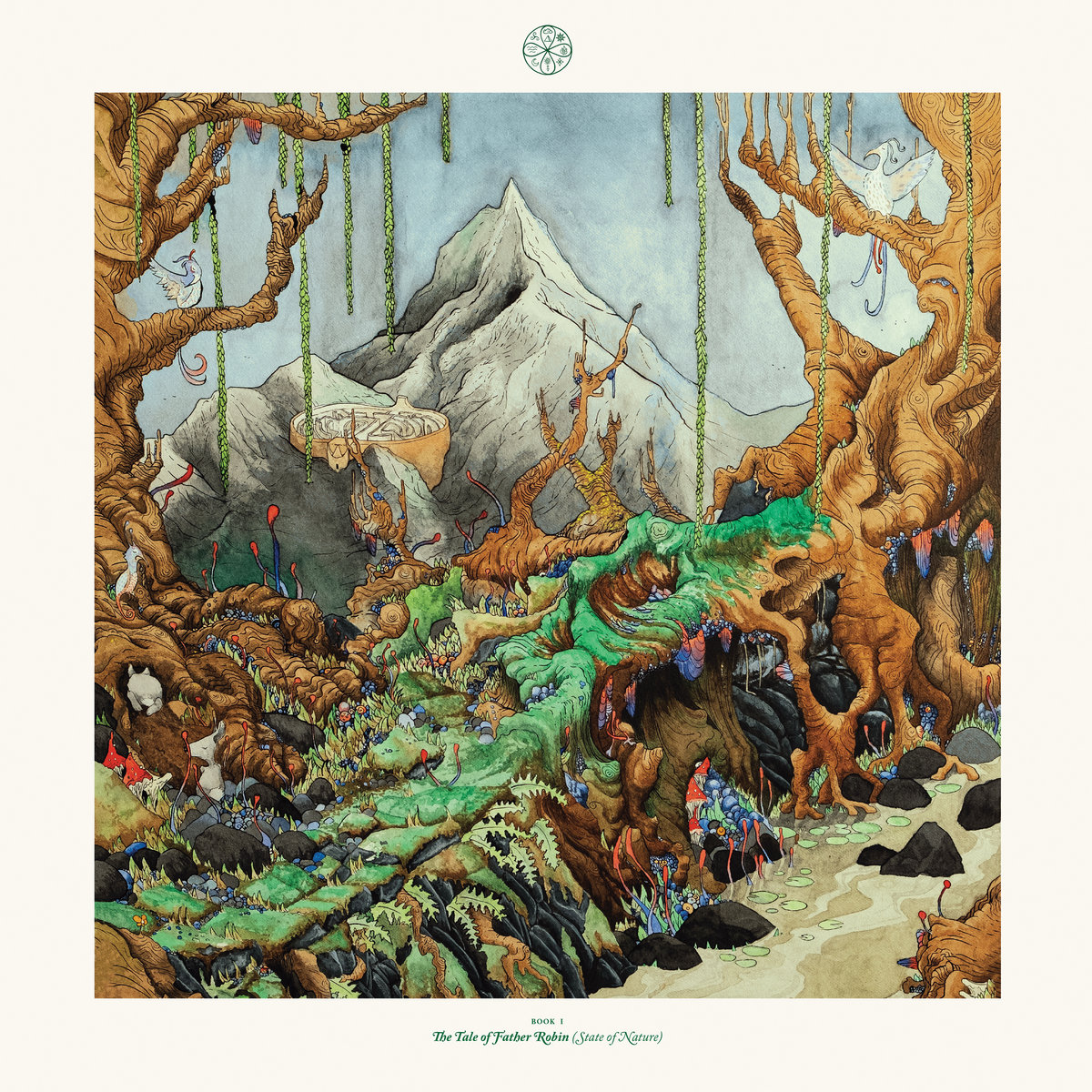
The Chronicles of Father Robin are a band that dates back to the inception of Scandinavia’s modern prog scene. (The Nordic countries also put out some good material in the 1970s, but bands like Kaipa, Friendship Time, and Haikara don’t have much of a direct connection to the modern scene.) Originally formed in 1993, they made plans for a sprawling triple album built around one unifying story thread. Nothing came of it at the time, and the band members went on to be in major acts, like Wobbler, Tusmørke, and Jordsjø, among others. Now, nearly 30 years later, the band has reunited.
The Songs & Chronicles of Airoea – Book 1 is the first part of this planned three-part album arc. Multi-album story arcs are nothing new to me, not that I ever give much mind to lyrics. I am curious to hear just how musically cohesive this project winds up being across subsequent releases. I’m hoping it’ll be something a bit more interesting than just the same album three times over, but only time will tell.
I really couldn’t find too much about The Anchoret. “Canada” is the extent of what I could find about their origin, and their record label doesn’t have much more information on them. This is a five-piece band that plays a melodic variety of progressive metal, with a number of notable jazz inclusions. With such a scarcity of information, let’s jump right into their debut record, It All Began with Loneliness.
Despite the title, it actually begins with “An Office For…” This features some jazzy–if somewhat overwrought–guitar soloing before launching into a slow-moving, languid verse. The saxophone which shows up is also a bit on the corny end of things. But don’t worry, things improve after this somewhat weak opening!








 The Elite Extremophile