As a rule, I don’t review friends’ music, but I’m not above promoting it! I’ve got a couple buddies in Savsatt, and they put out their debut album a few weeks ago. If you’re into atmospheric(-ish) instrumental black metal, check ’em out and maybe buy their record.
People make fun of Ohio a lot (especially online), but it’s not without its contributions. They gave us Devo and, uh, chili on spaghetti and…multiple mediocre presidents. But Perfect! Now there’s something Ohio can hold its head high about! Perfect is an Akron-based quintet that plays a daring, experimental variety of jazz-inflected rock. Monkey Jockey Man and the Safari Tick Sugar is their sophomore album. Since their debut, they’ve ditched brass instruments in favor of some intriguing noise influences, and the results are quite strong.
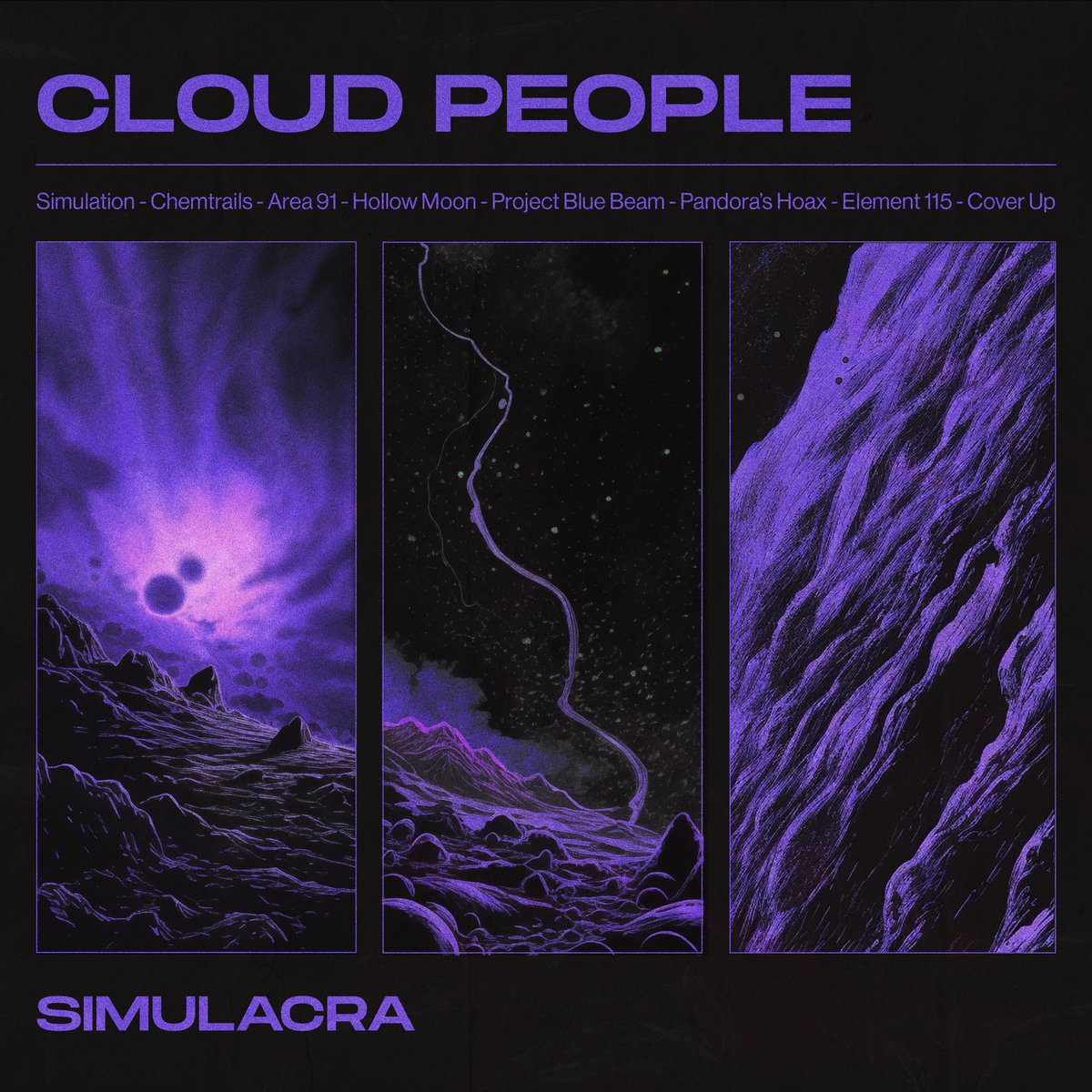
Band: Cloud People | Album:Simulacra | Genre: Progressive rock, Jazz-fusion | Bandcamp
This Norwegian sextet’s debut album is themed around conspiracy theories, and it’s a pretty fun listen. The music ranges from delicate and anxious to fairly heavy and aggressive. Bits of tinfoil-laden narration are woven into the music in a way that enhances the overall effect. I love the keyboard tones the band deploys, and saxophone is integrated wonderfully. Electronic elements are incorporated smoothly to give many cuts an edgy, sci-fi feel.
Last year, Rhùn put out Tozïh, their second album, ten years after their debut, Ïh. Tozzos was recorded at the same time as Tozïh, but the band opted to wait and release two separate albums instead of one double album, and I’m glad they did. Tozzos is enjoyable, but it’s not on the same level as Tozïh. Here, the band incorporates more overt avant-garde influences, which aren’t always a success. The weirdest bits of acts like Frank Zappa and Samla Mammas Manna are difficult to synthesize, and while Rhùn mostly does a good job, significant swaths of this record come off as muddled and unfocused. I still enjoy this record overall, but there are some drawbacks to it.
Eunuchs are an Australian quartet who employ a whole host of assisting musicians to construct dense, symphonic soundscapes. At the heart of things, they are a rock band, but traditional rock instrumentation is often minimized or buried beneath dense layers of strings, woodwinds, and reeds. Bubbling up amidst all that is a chaotic, angry energy that provides for unique contrasting effects.
In many ways, these Aussies remind me of black midi, the foremost band in the current avant-prog scene (insofar as there even is such a scene). These guys lean even harder into non-traditional instrumentation, though. Large swathes of this album push the very definition of “rock.”
Rock in Opposition (usually shortened to RIO) is a movement I’ve referred to a few times, but I’ve never really delved into it too deeply. Narrowly speaking, it refers to a specific group of five (initially, later expanded to eight) experimental rock bands who toured and played together in 1978 and 1979. These oddball bands (including Univers Zero, Henry Cow, and Samla Mammas Manna) were opposed to the music industry’s “refusal” to promote them. This stance, to me, comes off as a bit petty and self-centered. These bands played weird, aggressively un-commercial music. At a certain point, one needs to be realistic about their target audience. A major label isn’t going to promote an album like Hérésie. More broadly speaking, though, RIO now refers to the bands which are stylistically descended from these initial bands. I’ve used that label to refer to acts like PoiL, Cratophane, and Ahleuchatistas.
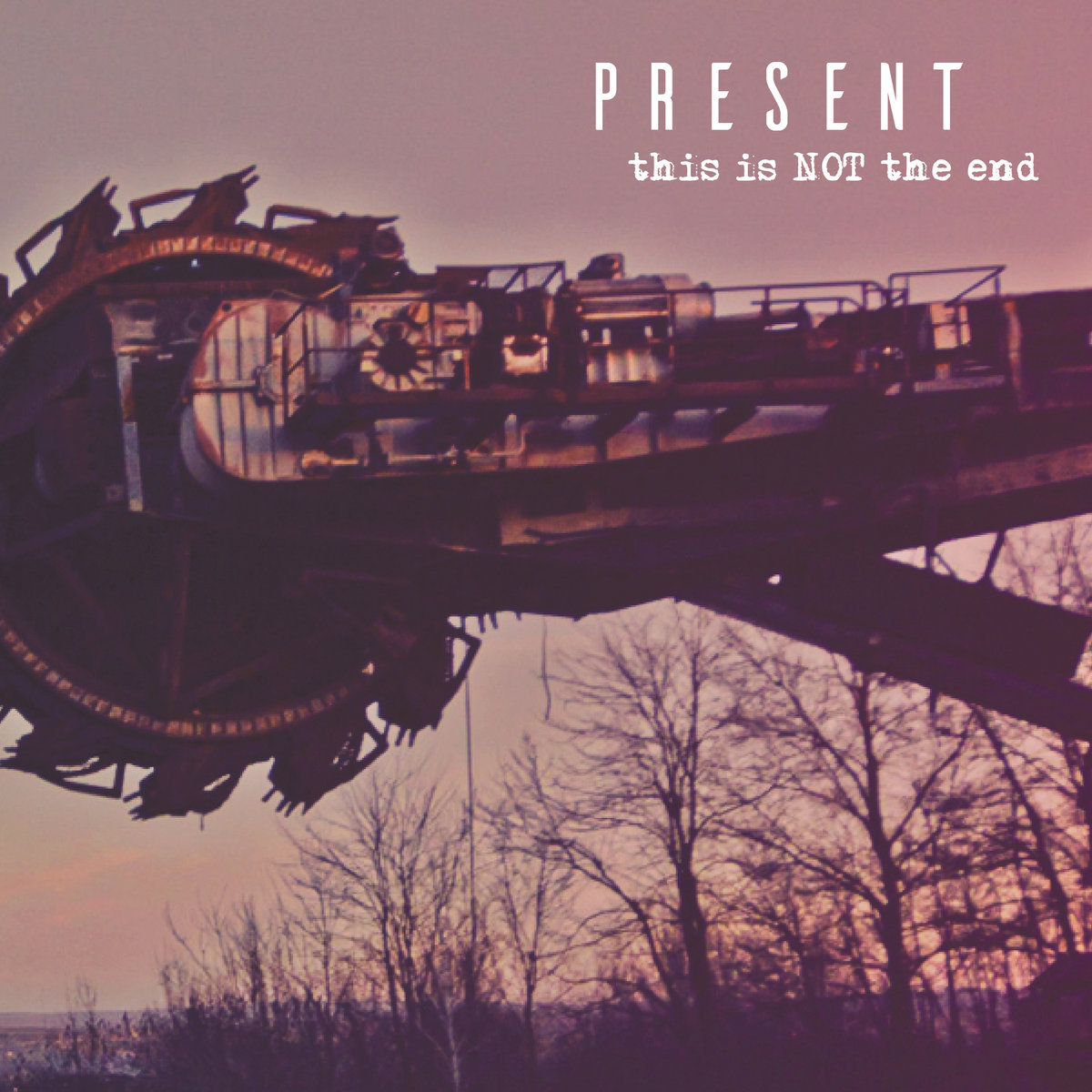
Though not a member of the eight “official” RIO bands, Present appeared not long after. It was founded in 1979 by Roger Trigaux, a founding member of Univers Zero, which is a band I respect more than I enjoy (and that sentiment can largely be applied to the original RIO movement as a whole). They’re often minimal and moody and influenced by chamber music. I can appreciate it on a certain artistic level, but I don’t really like it that much.
This Is NOT the End was my first exposure to Present, and I like it a lot. It has a lot less of the chamber music-influenced stuff I associate with Univers Zero, but it has plenty of exciting, experimental, and overall-weird passages. This release is the band’s first since 2009, but it is, despite its title, the band’s final release. Trigaux, the band’s driving force, passed away in March of 2021, in the midst of recording.
It’s never too early to get planning! Last year, I posted a poll soliciting reader input for the next Deep Dive, and I liked that. I’m repeating it this year, with a slight tweak. Last year, you could only vote for one artist. This year, you can vote for as many as like. This poll is, ultimately, non-binding, but I will seriously consider the results before choosing an act.
I’ve embedded it below, but in case WordPress gets all funky on me, you can view the poll here, too.
If there’s a band/artist you’d like me to cover you don’t see here, add them to the poll! A few notes about whom I’m willing to consider.
ELP probably has the smallest discography I’m okay covering, and they put out 10 studio albums (including Emerson, Lake & Powell). I may make considerations for other bands, but don’t expect me to cover Änglagård’s three-album repertoire.
I’d strongly prefer the band to either be defunct (or at least no longer recording) or putting out music infrequently. I regret covering Steven Wilson while he’s still fairly prolific. I don’t like going back and updating that Deep Dive with every new album.
Chief Bromden is a Czech post-punk act that integrates a lot of progressive rock into their music. They’ve got inventive, unorthodox structures, and their instrumental passages are exciting and masterfully played. I liked their debut album Slunovrat a lot, so I was excited to hear their follow-up. In/tense Logic comes about four years after their debut (and two years after their Noise Forever EP, which I simply just never got around to).
Scottish one-man experimental act Caverns Measureless plays a creepy, unsettling, and adventurous variety of folk-rock on their self-titled sophomore album. Acoustic guitar and mandolin plink alongside violin and flutes, while the occasional brash stab of electric guitar sends the atmosphere careening in another direction. The compositions are wiry and fluid, often changing path suddenly. All the songs here are complex, creative, and moody.
Hizbut Jámm is an interesting quartet. It consists of two Poles on guitar and drums, a Senegalese musician on guitar and vocals, and a Burkinabe musician playing the kora–a type of lute from West Africa. The lyrics are sung in Wolof and French, and West African melodies and scales are woven into the music. But this fusion also draws heavily from the tradition of Euro-American psychedelia. Textures are lush and dreamy, and the overall mood is hypnotic. Hizbut Jámm is an entrancing listen, and it’s a rewarding experience both as passive background music and as the subject of more active listening.
Dvne (presumably pronounced like “dune,” though Google Translate also tells me it’s Bosnian for “days ago”) is a Scottish quintet, and they’re one of the more talked-about bands on the parts of the Internet where I spend my time. Voidkind is their third full-length album, coming three years after their last release. Dvne is a band I’ve listened to and contemplated covering before, but for whatever reason Etemen Ænka, their 2021 album, just didn’t quite catch my fancy. (2021 was also an exceptionally good year for the type of music I like, so they had some stiff competition for my attention. 2024, in contrast, is shaping up to be a slower year for me.)
Disregarding my above disparaging of the current year, Voidkind is a legitimately good album. Dvne’s sludge metal roots have gone in a more atmospheric, post-metal-type direction. Normally, I’d be a bit wary about that–unless it’s preceding the word “punk,” the prefix “post-” is often an indicator there’s a higher risk I’ll be a bit bored–but the songwriting is smart, and the playing is crushing and dynamic.
Poetry isn’t really my thing, and that is borne out in my usual disinterest in lyrics. Obviously, though, poetry and lyrics speak strongly to some folks, and one of those folks is Kentuckian singer-songwriter Stuart Wicke. Rubáiyát of Omar Khayyám is Wicke’s eighth full-length release, coming just four months after his last effort. Consisting of just two long songs, each of them draws their lyrics from poetry.
Opening the album is “Song on the End of the World”, a three-part, 15-minute epic. Part two draws its inspiration from the poem of the same by Czesław Miłosz, and parts one and three are based on “America: A Prophecy” by poet William Blake.