

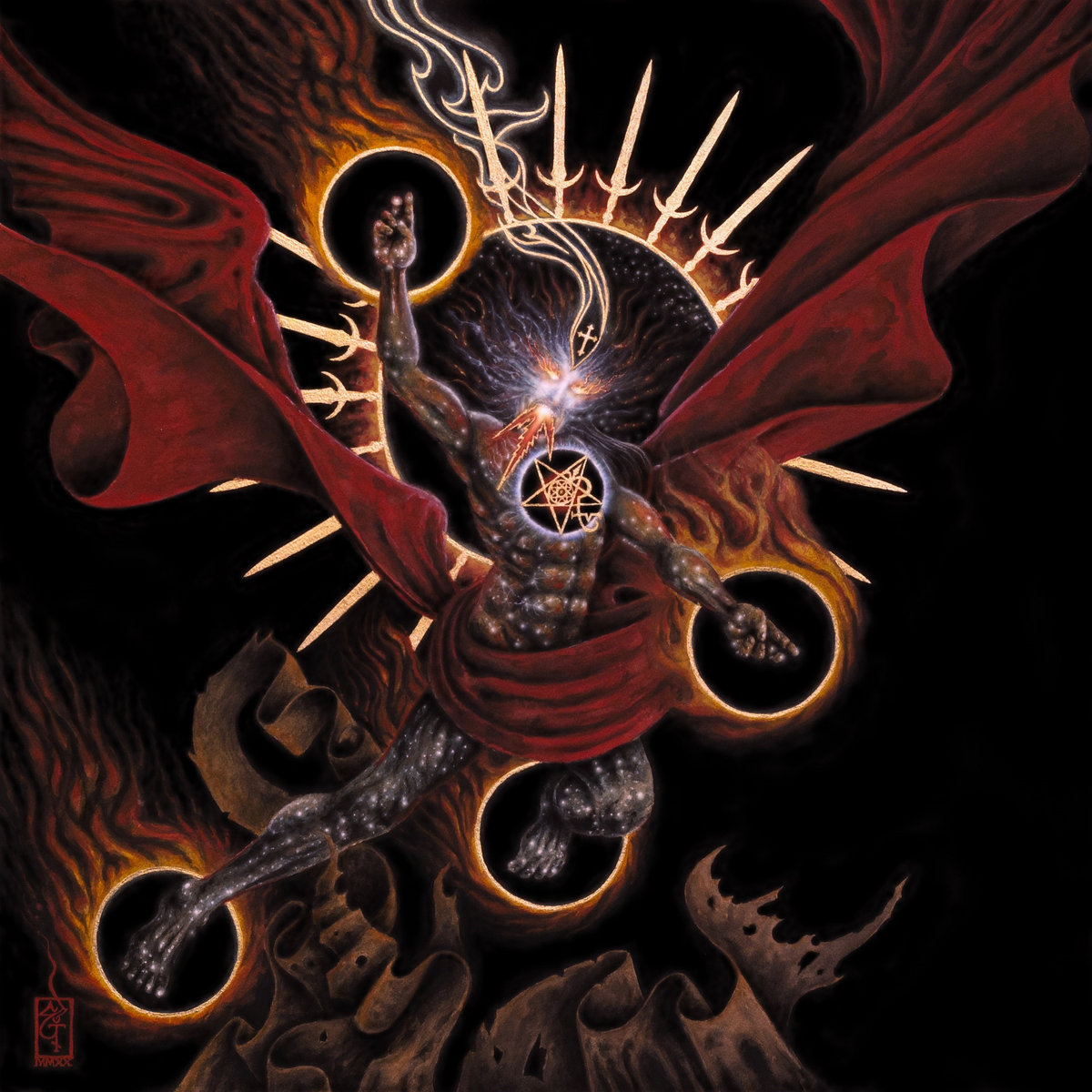
Bands: Deathspiral of Inherited Suffering, Elysian Blaze, Panegyrist, Maerund | Album: Sunthema | Genre: Black metal, Progressive metal, Post-metal | Year: 2026
From: Memphis, USA; Adelaide, Australia; Chicago, USA; Tallinn, Estonia | Label: Rubeus Obex (USA); I, Voidhanger (Europe)
For fans of: Cormorant, Enslaved, Batushka
I first found out about this record through Rate Your Music’s handy “Upcoming Releases” feature. It was there that I saw Panegyrist had their first new music since 2018 coming out! Their lone LP, Hierurgy, is a stunning, unique release. It blends avant-garde black metal with liturgical music and lyrics so dense and obscure that I feel like I need a theology degree to understand them.
Sunthema, the four-way split LP with Panegyrist and three other acts, continues on that trend. (Side note: Personally, I would have transliterated the Greek “συνθεμα” as “synthema,” but to each their own. The word is more often found in its plural form, synthemata, and it refers to any signs, symbols, or material tokens, especially those associated with certain rituals. Esoteric terms and ideas are prominent on this record.) All four acts here weave their brands of forward-thinking metal with Christian mysticism to make something powerful and enthralling.
This album begins with three songs from Deathspiral of Inherited Suffering, a Memphis-based trio whose only other output was on a different split LP from I, Voidhanger back in 2018. “Grailcrushing Wounds” features buzzy, scouring blackened death metal at a deliberate pace. The sense of weight is enormous, with the plodding rhythm and jittery lead guitar in constant tension with one another. The outro of this song also features some wonderfully eerie electric piano for some much-appreciated variation.
“Resurrectionist” explodes right out of the gate, with a fiery, apocalyptic tone. The gut-rattling riffs on this song bounce around, constantly shifting and morphing; some provide a deep-down rumble, and others provide sharp, biting contrast. Concluding DoIS’s contribution to Sunthema is “Houses of Abysmal Masks”. They lean into death metal most obviously here, with a pervasive dark and occult mood.
Elysian Blaze–an Australian atmospheric black metal act–offers up one 17-minute opus for Sunthema. “Ascenturion” is starkly different from what preceded it. The vocals are gentle and airy, and the overall sound is hazy and obscure. There’s a sense of both desperation and triumph as this piece progresses. The band skillfully juxtaposes tinkling keys and clean vocals against crushing, doom-influenced guitars. There’s a nearly meditative feel to the main riff of this song.This band demonstrates great textural and atmospheric variation, drawing heavily from post-metal and post-rock. The soundscape the band builds is crushing and majestic all at once, and this composition feels shorter than it really is.
Panegyrist’s pair of songs are next. Both clock in at 12 minutes and 14 seconds (I’m sure there’s some esoteric numerological reason for that), and the first is “Twilight Take Our Faces”. Unorthodox riffs rush forth, as tangled guitar lines traverse uncommon scales. This work takes on the maximalist sound of Panegyrist’s debut, but it shows amazing maturation and development. Dissonant black metal merges with moments of melodic power metal and liturgical chanting to make something truly impressive and inspiring.
“Luciferous” opens with cascading guitars and tumbling drums. The guitars twist and slash, making for a fantastically disorienting experience. Growls and angelic choirs weave into one another as this epic barrels furiously forward. Hints of classic prog rock crop up on occasion, especially when piano enters to slow things down for a moment. Heading into this epic’s final movement, the music takes on some triumphal tones. The brutality and strife inherent to black metal is still there, but the composition somehow is still uplifting.
On the rare occasions Christian music has come up on this site, I’ve consistently lambasted it for being hokey and unimaginative. Panegyrist, though, shows how to invoke a sense of mystical glory and wonder. Their music feels like a divine revelation. Most Christian music I’ve heard is the musical equivalent of a nondenominational church in a strip mall. This example, however, is an auditory basilica. If Panegyrist had put this music out on their own, it would be hard to knock it off the top of my year-end list.
The fourth and final act present on Sunthema is a new band, Maerund. It’s a one-man project from one of the co-owners of Rubeus Obex, the label distributing this album in the US. After doing a little digging, I think they’re based out of Chicago, since the other co-owner of the label is Elijah Tamu of Panegyrist.
(EDIT: After receiving my physical copy of Sunthema, the booklet states that Maerund’s material was written and recorded in Tallinn. But the return address for the package–which listed the sender as Rubeus Obex–was somewhere in New York. So who knows! ¯\_(ツ)_/¯)
“HAVAH LAYAHLAH” reminds me of Batushka. It’s stormy, noisy, doomy black metal with chanted vocals. The clean vocals have a mildly processed sound to them, which I love as well. This song mostly ruminates on one riff, but it works, and things remain exciting for the whole runtime. “Transcendence of the World Through the Cross Inverted” stays in a similar vein, but there are some creative inclusions with unusual percussion. Ultimately, though, these two songs are pretty similar and don’t both feel necessary.
“Manna Pharmaika” has a riff that’s a bit more distinctive than the two preceding songs, and the chanted vocals fit the hypnotic nature of the backing. Maerund shows some more variety on this track than on the previous two songs, and that’s much appreciated. The music is furious and pounding, but with some nice internal variation. Closing out the album is “Red Crystal Lattice”. It’s another intense composition, and I really like the way the bass is strummed to provide the melodic lead.
Sunthema is a dense, challenging record, but it’s a resounding success. Each of the bands here shows a unique take on progressive and avant-garde black metal that makes the four quarters stand out. At the same time, they all complement one another. The dense, esoteric lyrics and complex musical arrangements show what black metal can do when pushed to its artistic extremes.
Score: 91/100
 The Elite Extremophile