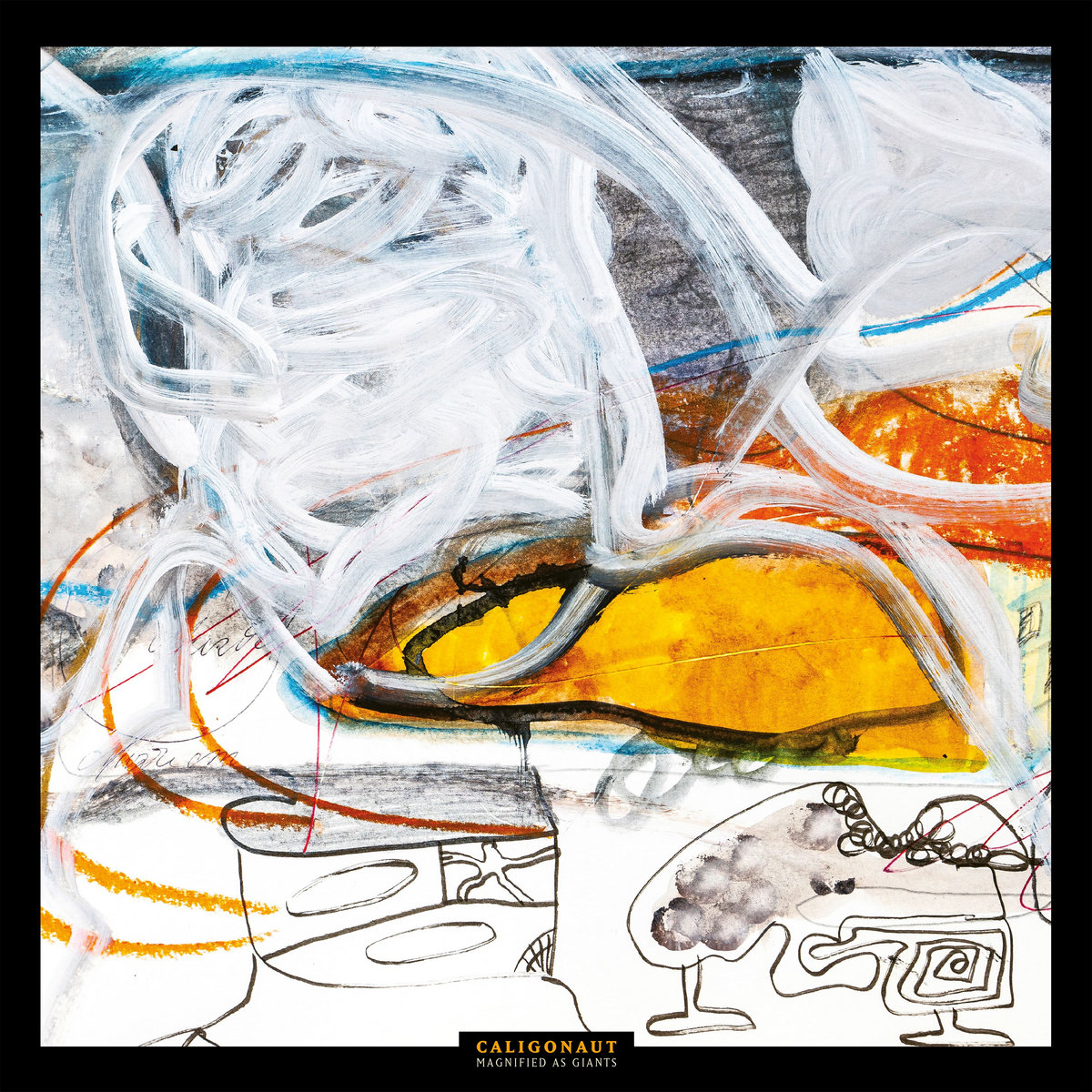
Album Review: Ciccada – Harvest

Band: Ciccada | Album: Harvest | Genre: Progressive rock, Progressive folk | Year: 2021

From: Athens, Greece | Label: Bad Elephant Music

For fans of: Gentle Giant, Gryphon, Renaissance, PFM

Bandcamp

“Retro-prog” does not necessarily need to be a negative term. It usually is, and I most often deploy it when describing unoriginal Yes and Genesis clones. But there are acts who manage to successfully evoke certain elements of the first wave of progressive rock without being derivative. The most enjoyable of these draw from oft-overlooked corners, such as the Italian scene and progressive folk acts like Comus and Gryphon.

Harvest is the third record from Greek septet Ciccada, and it is easily my favorite of theirs so far. All the prog tropes are here—long and obtuse song structures, retro-futuristic synth tones, and top-notch musicianship—but they’re blended with under-utilized and unexpected influences. The eclectic inclusions range from jazz to Greek folk to the Canterbury scene to Baroque music, and beyond.

Continue reading “Album Review: Ciccada – Harvest”

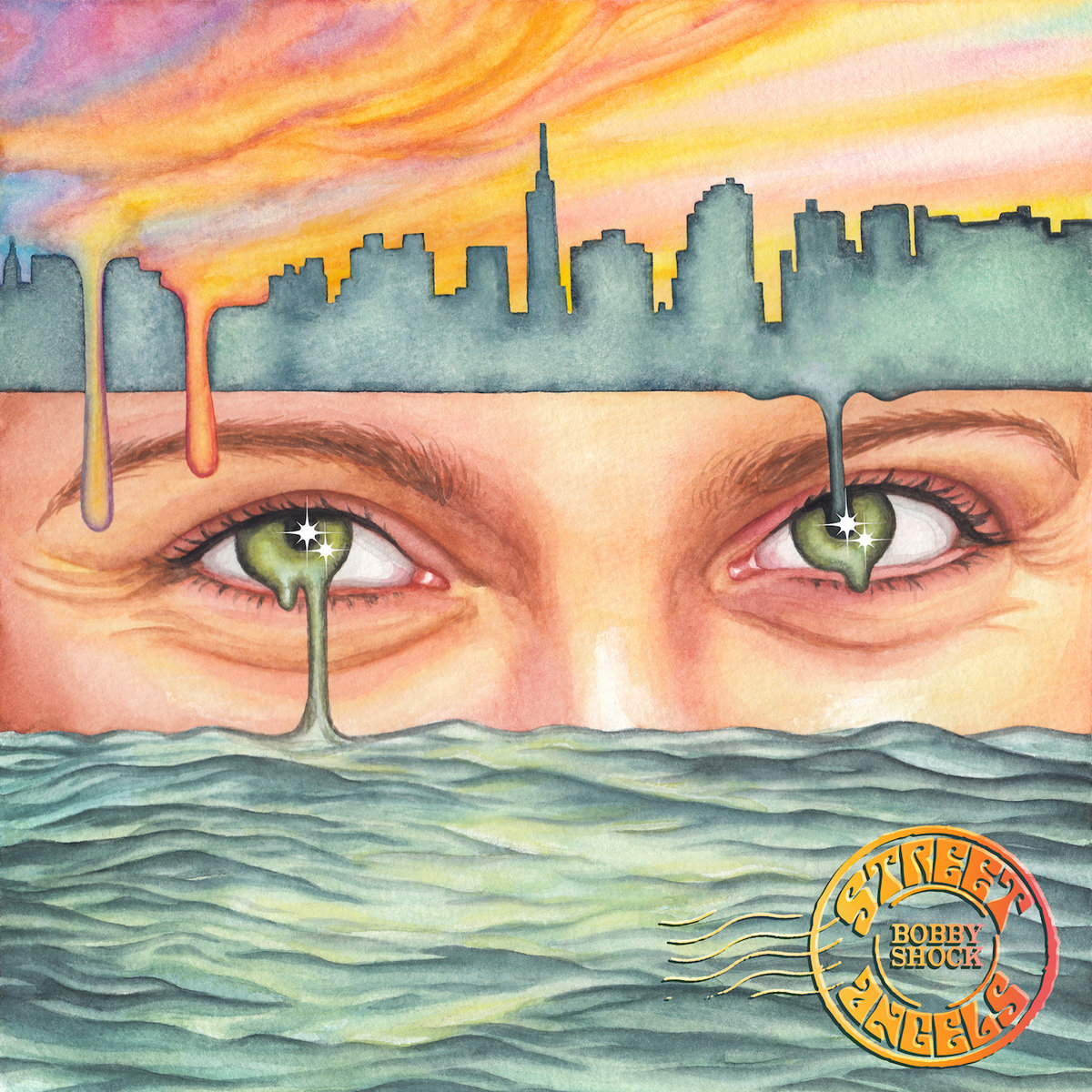
Album Review: Bobby Shock – Street Angels

Artist: Bobby Shock | Album: Street Angels | Genre: Progressive rock | Year: 2021

From: New Jersey, USA | Label: Independent

For fans of: Chris Squire, Patrick Moraz, The Alan Parsons Project

Bandcamp

Bobby Shock is a New Jersey-based composer and multi-instrumentalist, whose last album—The Unforeseen—was a pleasant surprise for me last year. It was lush, diverse, and bass-forward. The compositions were unquestionably smart and progressive, but the music was still accessible.

Shock’s latest release continues with that general trend. The obvious focal point of this album is its 20-minute title track, but the other four songs are no less enjoyable.

Continue reading “Album Review: Bobby Shock – Street Angels”

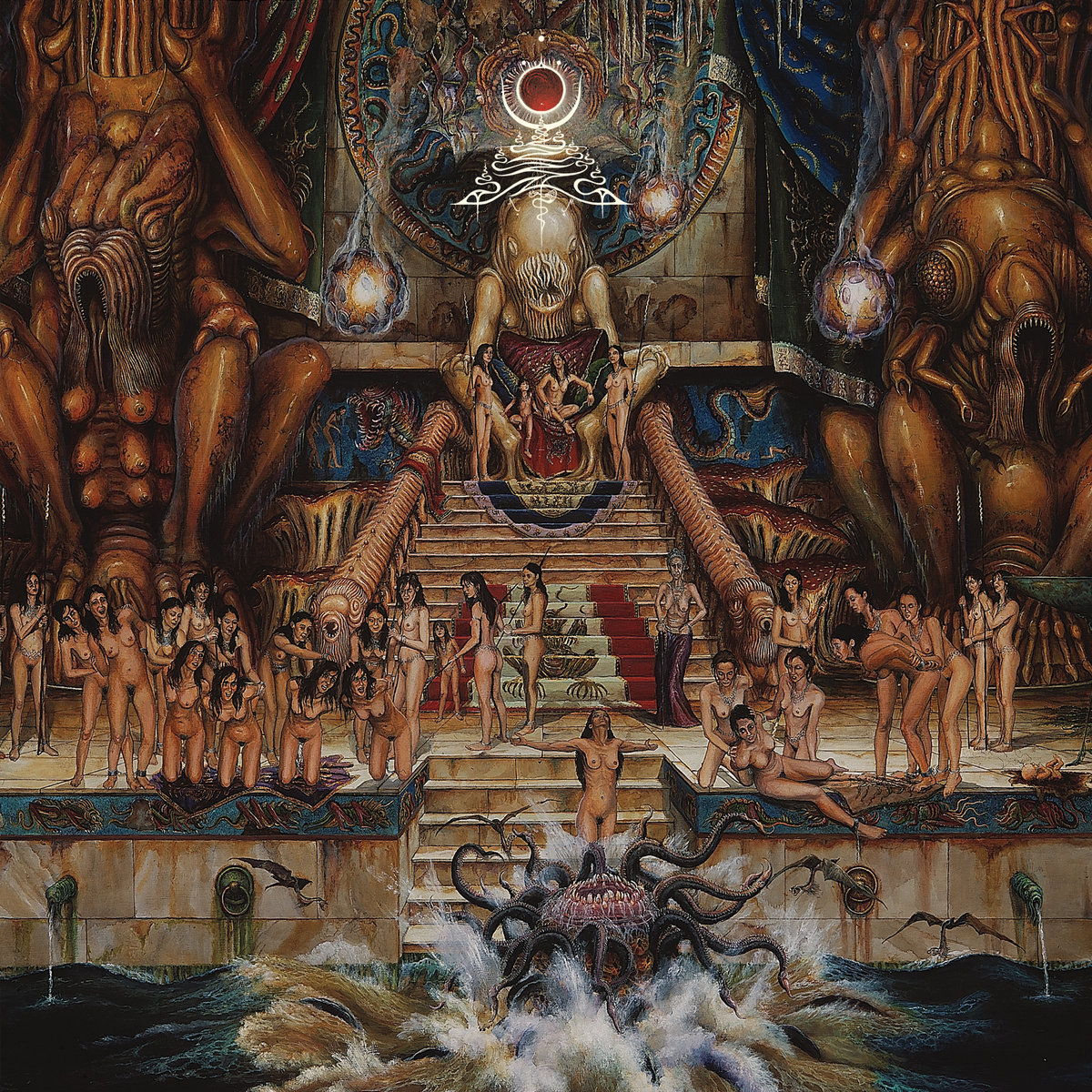
Album Review: Æthĕrĭa Conscĭentĭa – Corrupted Pillars of Vanity

Band: Æthĕrĭa Conscĭentĭa | Album: Corrupted Pillars of Vanity | Genre: Black metal, Progressive metal | Year: 2021

From: Nantes, France | Label: Independent

For fans of: Ihsahn, Enslaved, Panopticon, Van der Graaf Generator

Bandcamp

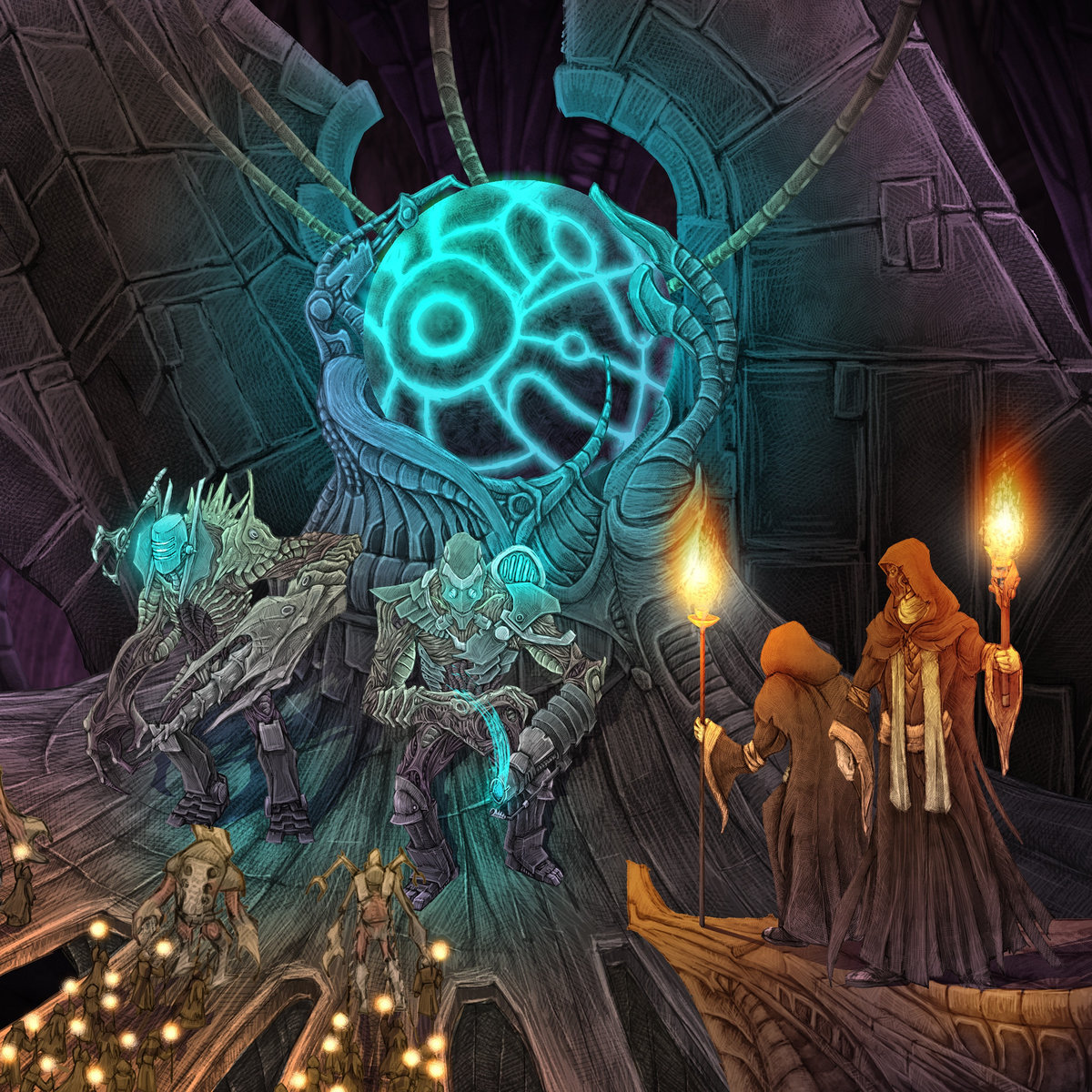
Progressive rock and progressive metal are notorious for high-minded concept albums which feature dense, intricate worldbuilding full of invented names and esoteric jargon. Ranging from the complex, Kobaïan mythos of Magma to Dream Theater’s multiple over-the-top multithreaded stories, you often don’t need to range too far afield to find a record which sounds like it started off life as an idea for a sci-fi novel.

Æthĕrĭa Conscĭentĭa is a French quartet which uses saxophone-infused progressive black metal to tell their tales of astral mysticism. Their 2018 debut, Tales from Hydhradh, is a powerful record which marries jazz, prog, and metal elements beautifully. Their 2021 follow-up, Corrupted Pillars of Vanity, takes that strong base and improves on it.

Continue reading “Album Review: Æthĕrĭa Conscĭentĭa – Corrupted Pillars of Vanity”

Odds & Ends: April 5, 2021

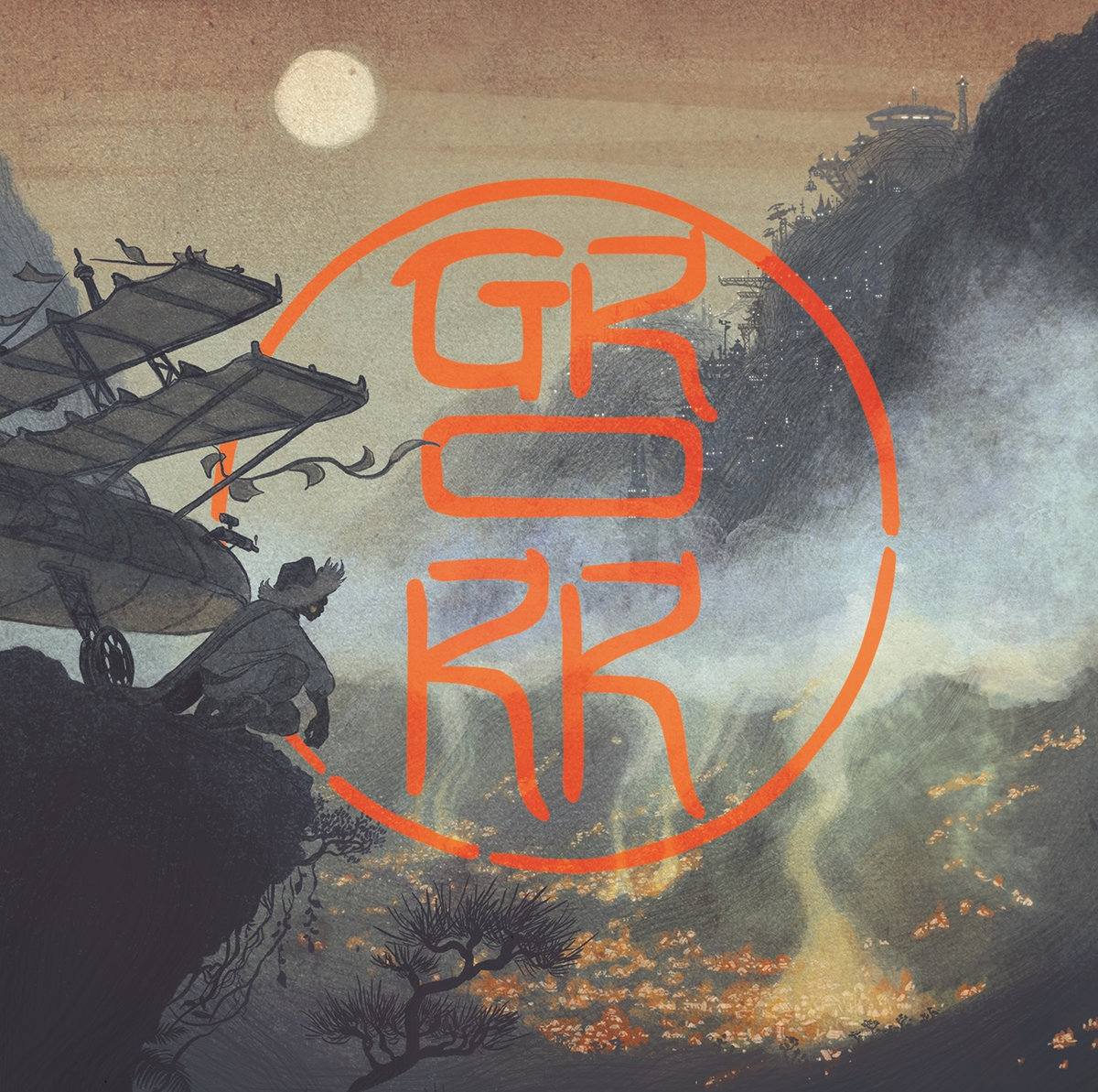
Band: Grorr | Album: Ddulden’s Last Flight | Genre: Progressive rock, Progressive metal | Bandcamp

Grorr are clearly trying to conjure up vaguely “Eastern” aesthetics on this album. The band’s logo evokes Chinese seals, and the album art draws from Chinese and Japanese styles. This continues in the music, though the influences are muddled and slapdash. The opening track is mostly scene-setting, but it give the listener musical whiplash by swirling together the entire continent of Asia. It’s got throat singing (from Mongolia and southern Siberia), sitars and tablas (from the Indian subcontinent), and the melodies are stereotypically “Chinese.” (Instruments which sound like guzhengs and erhus can be heard later on the album.) Moving beyond this mish-mash, Ddulden’s Last Flight is an alright album. The metal is melodic, and there are some inventive riffs. I’m especially impressed with the textures and timbres deployed here. After a while, though, the Oriental instrumentation becomes distracting. I absolutely hated the sitar by album’s end. And that’s unfortunate because Grorr demonstrated that they’ve got a creative vision and that they’re capable of composing some strong cuts. Ultimately, this record’s overbearing and half-baked Asiatic flare is what does it in. I really wish they would have toned it down a bit, or at least shown a bit more geographic restraint.

Score: 58/100

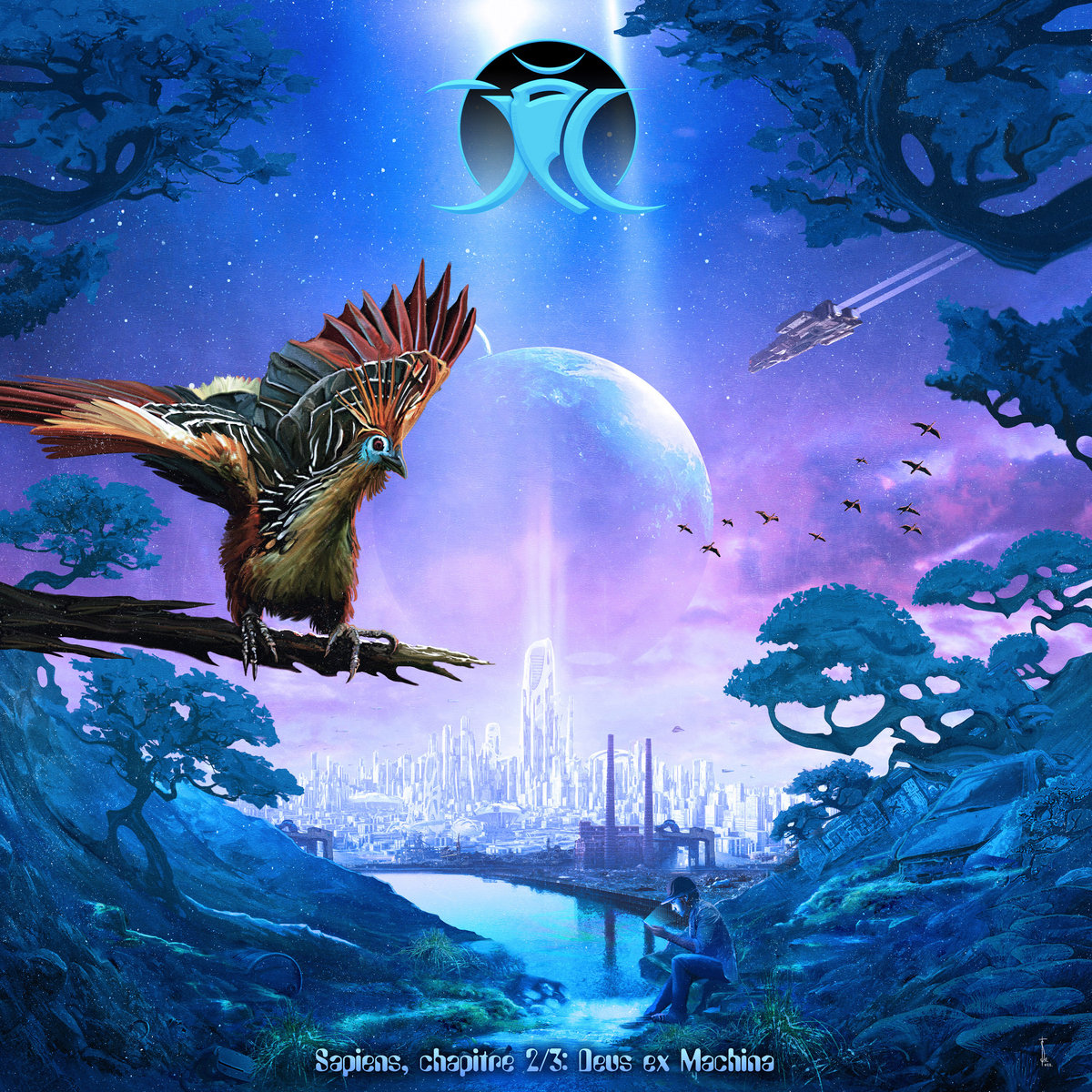
Artist: Jean Pierre Louveton (JPL) | Album: Sapiens – chaptire 2/3: Deus ex Machina | Genre: Progressive rock, Progressive metal, Jazz-fusion | Bandcamp

When I saw JPL is the leader of the band Nemo, I didn’t get my hopes up. Nemo is an alright act, but I classify them in the same group Spock’s Beard and other schlocky, overblown retro-prog acts. Thankfully, this album wound up being a pleasant surprise. Sapiens is a bit more metallic than Nemo’s usual fare, and while there’s plenty of pomp and show-off-y instrumental moments, it mostly avoids needless indulgence. Jazzy touches are present throughout, and the overall bloat is minimal.

Score: 75/100

Continue reading “Odds & Ends: April 5, 2021”

Album Review: Genghis Tron – Dream Weapon

Band: Genghis Tron | Album: Dream Weapon | Genre: Progressive metal, Cybergrind | Year: 2021

From: Poughkeepsie, USA | Label: Relapse

For fans of: Cynic, Gorguts, Justice, the more electronic side of krautrock

Bandcamp

Part of the reason these reviews have been less frequent as of late is that I’m simply having a harder-than-usual time finding new music which really speaks to me. Unless it’s a fairly big-name act, I don’t have much motivation to write 400-800 words on a record where the score will be in the 50s. Thankfully, Dream Weapon came along and snapped me out of that funk.

I’d never heard of Genghis Tron before this album, and I can see why that might have been. They were initially active in the mid-2000s before taking a 13-year hiatus. I’d also never heard of the cybergrind genre, but it’s a fitting name. It takes the aggression and energy of genres like mathcore and grindcore and pumps it through synthesizers galore. (Interesting sidenote: “mathcore” is considered a real word by MS Word, but “grindcore” is not.)

What this record almost reminds me of is Justice’s debut album. Where is an electronic album with a significant hard rock/heavy metal substrate, Dream Weapon feels like it’s coming from the other direction. It’s definitely a metal album, but electronic music thoroughly imbues its DNA.

Continue reading “Album Review: Genghis Tron – Dream Weapon”

Album Review: Meer – Playing House

Band: Meer | Album:  Playing House | Genre: Progressive rock, Art pop | Year: 2021

From: Hamar, Norway | Label: Karisma Records

For fans of: Bent Knee, Phideaux, iamthemorning

Bandcamp

Over the last two decades, Scandinavia has become one of the most prolific producers of prog in the world. Big-name acts (by prog standards) like Wobbler, Opeth, and Beardfish have made huge waves in the scene. Meer, a Norwegian octet, continues in this trend, blending complex compositions and arrangements with accessible, catchy pop tendencies (another Scandinavian tradition, which I’m considerably less fond of).

The eleven songs on Meer’s sophomore album, Playing House, show intense structural ambition. The music is densely layered, and the band utilizes dynamics to great effect.

Continue reading “Album Review: Meer – Playing House”

Deep Dive: Pink Floyd

Welcome to another installation of Deep Dive, where I take a look at the extended studio discographies of some of the biggest names in progressive rock. I’ve included a TL;DR and ranking of albums at the end. I’m opting to explore albums chronologically, as opposed to a ranked-list format. The context in which albums were made is important, and that is an element often missed in a ranked list.

Today, I’m covering a doozy. Pink Floyd is the most commercially successful progressive rock act by a wide margin. Their global sales tally somewhere between 200 and 250 million records since their debut in 1965, placing them eighth all time among recording artists. The second-most successful prog act is Genesis, with roughly 100 million sales and significant non-prog output.

Jethro Tull and Pink Floyd were my two primary introductions to progressive rock, and those are my second- and third-most-listened-to acts, respectively, according to my Last.fm profile, trailing only The Beatles. I have a deep, intense love of their music, and Richard Wright is probably my single biggest influence as a musician. At the same time, don’t expect this to be a one hundred percent worshipful lovefest, as I have some (strong) opinions which are heterodox among the Pink Floyd fandom.

Unlike other artists I have covered or will cover in this column, Pink Floyd has a huge amount of material which either never saw official release or was released in unusual ways. As such, there is a significant portion of their output which will not be included in the ranking at the end, though I will address it in the body of this essay. Most of this oddball material was recorded 1965-1970 and was released as a part of the 2016 box set The Early Years, 1965-1972.

I will also refrain from ranking Pink Floyd’s live output, as that strays beyond the limitations of this column. That’s unfortunate, too, as Pink Floyd bootlegs from 1968-1972 are something of an addiction for me. Their live performances from this time period are fantastic and deeply interesting, and I really recommend you look into this material yourselves.

Part I: The Barrett Years (1963-1968)

Prior to becoming “Pink Floyd,” Roger Waters (bass), Nick Mason (drums), Richard Wright (keys), Syd Barrett (vocals, guitar), and Bob Klose (guitar) performed rhythm and blues and cut a handful of singles under the name The Tea Set. And immediately upon starting this piece, I’m struck by the issue of Pink Floyd’s massive catalog of unreleased and non-album material.

Continue reading “Deep Dive: Pink Floyd”